Embargoes Lift — Metacritic 86 on Day One of Reviews
Review embargoes for Control Resonant lifted on September 18, 2026 — six days ahead of its September 24 launch. The current aggregate stands at Metacritic 86 and OpenCritic 84, beating the original Control's 82 and making this Remedy's highest-rated game to date.
The critical consensus, per TheGamer's roundup, is that Control Resonant is the best game the Finnish studio has made. The split comes on the combat system: swapping Jesse Faden's telekinetic gunplay for Dylan's melee-focused shapeshifting weapon has landed differently across reviewers, and Metacritic 86 with a standout 76 from PC Gamer reflects a real variance, not a consensus.
Sources: PC Gamer review (76/100) · TheGamer review roundup
At a Glance
| Detail | Info |
|---|---|
| Title | CONTROL Resonant |
| Developer / Publisher | Remedy Entertainment |
| Genre | Action RPG / Open World |
| Release Date | September 24, 2026 |
| Platforms | PS5, Xbox Series X|S, PC (Steam + Epic), Mac (later 2026) |
| Price (Standard) | $59.99 / £49.99 / €59.99 |
| Metacritic | 86 |
| OpenCritic | 84 |
| Reviewer Playtime | 35 hours (Kotaku) |
The Story: Dylan Faden Gets His Turn
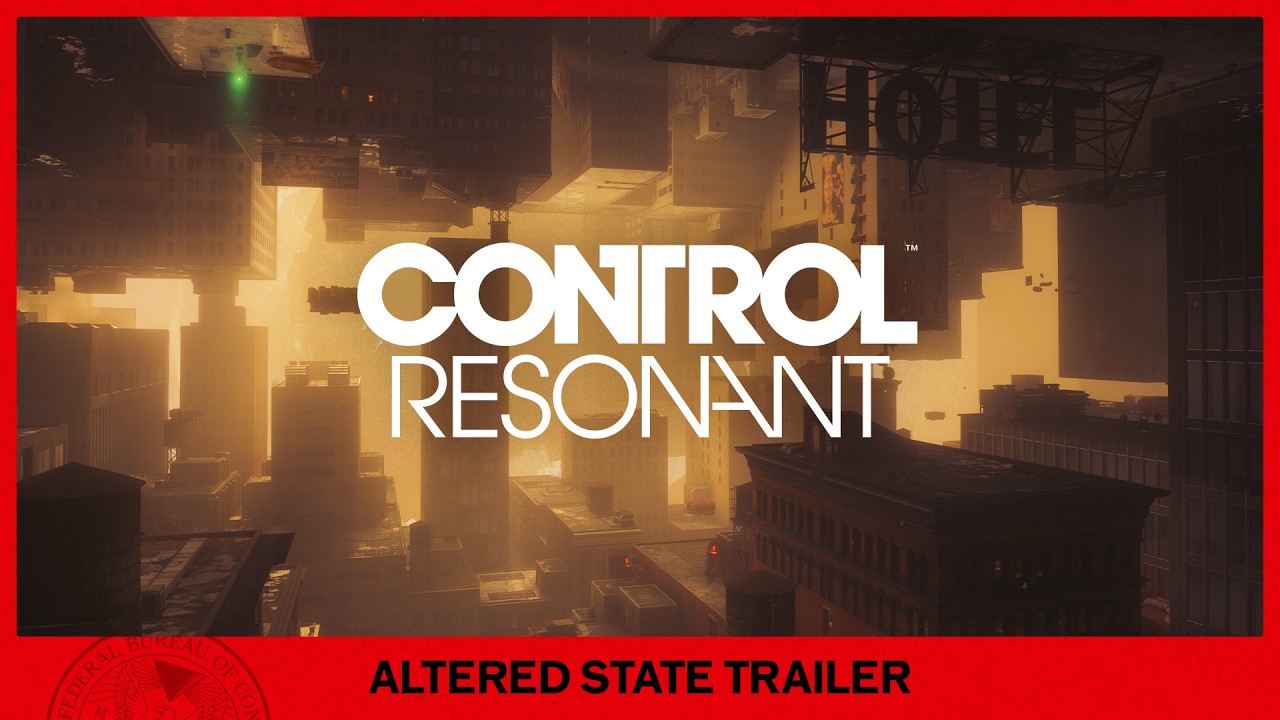
Control Resonant is set seven years after the events of the original Control. Dylan Faden — younger brother of Control's protagonist Jesse — has spent those years in a coma inside the Federal Bureau of Control's Oldest House, locked away after his earlier possession by the Hiss. Jesse stabs a supernatural shape into his chest to wake him, then vanishes.
What follows is Dylan's story: a reluctant hero who didn't ask for any of this, navigating a Manhattan fractured by two converging supernatural forces:
- ▶The Hiss — the extradimensional entities that seized the Oldest House in the first game have now spilled across New York City.
- ▶The Patterning — a newer, stranger cosmic force that sorts buildings, vehicles, street signs, and unvacuated residents into vast, inscrutable radial patterns.
Dylan's handler, Zoe De Vera, is assigned to track his movements. TechRadar's George Yang called the relationship between Dylan, Zoe, and returning character Emily Pope "the game's most underrated strength — it keeps the story from being a lonely trip."
The game includes an in-game recap trailer narrated from Jesse's perspective, designed explicitly for players who haven't touched Control. But those familiar with the broader Remedy universe — including the Alan Wake connections quietly woven in since 2019 — will get considerably more from the layered lore.
Sources: PlayStation Blog hands-on preview · TechRadar full review
Remedy's Track Record as Sequel Makers
| Year | Title | Metacritic |
|---|---|---|
| 2010 | Alan Wake | 83 |
| 2019 | Control | 82 |
| 2023 | Alan Wake II | 89 |
| 2026 | CONTROL Resonant | 86 |
Kotaku's Cole Kronman opened his review by calling Remedy "Video Game Sequel Mavens" — and the pattern holds: Alan Wake was an arcade shooter, Alan Wake II a methodical survival horror; Control was a shooter-Metroidvania, and Resonant is a twitchy melee action RPG closer in feel to Devil May Cry.
That willingness to completely overhaul gameplay with every sequel is Remedy's signature. It also explains the score variance: a studio that never repeats itself will always split audiences who come expecting the last thing they loved.
The Aberrant: One Weapon, Many Forms
Jesse wielded the Service Weapon — a paranatural firearm that shifted between gun configurations. Dylan's equivalent is the Aberrant: an object lodged in his sternum that transforms into melee weapons on demand.
Confirmed forms from the State of Play gameplay reveal and reviews:
| Form | Combat Style |
|---|---|
| Hatchet | Fast light attacks |
| Scythe | Wide-arc sweeps |
| Twin Blades | Dash-based combo chains |
| Hammer | Slow, high-damage single strikes |
| Drill | Sustained damage while pressing in |
| Orbiting Sawblade | Ranged — floats and circles nearby enemies |
The combat design requires stacking temporary damage bonuses — earned by staggering and executing weaker enemies — before basic attacks deal meaningful damage to heavyweight foes. PC Gamer's Lincoln Carpenter called this "aggressively fine" in the opening hours, noting the design takes time to open up. Kotaku's Cole Kronman, who played 35 hours, reached the opposite conclusion once later unlocks arrived:
“"This is, without a doubt, the most demanding, most video-game-per-square-inch video game Remedy has ever made. Imperfect, but relentlessly, characteristically interesting." — Cole Kronman, Kotaku
Open World Manhattan
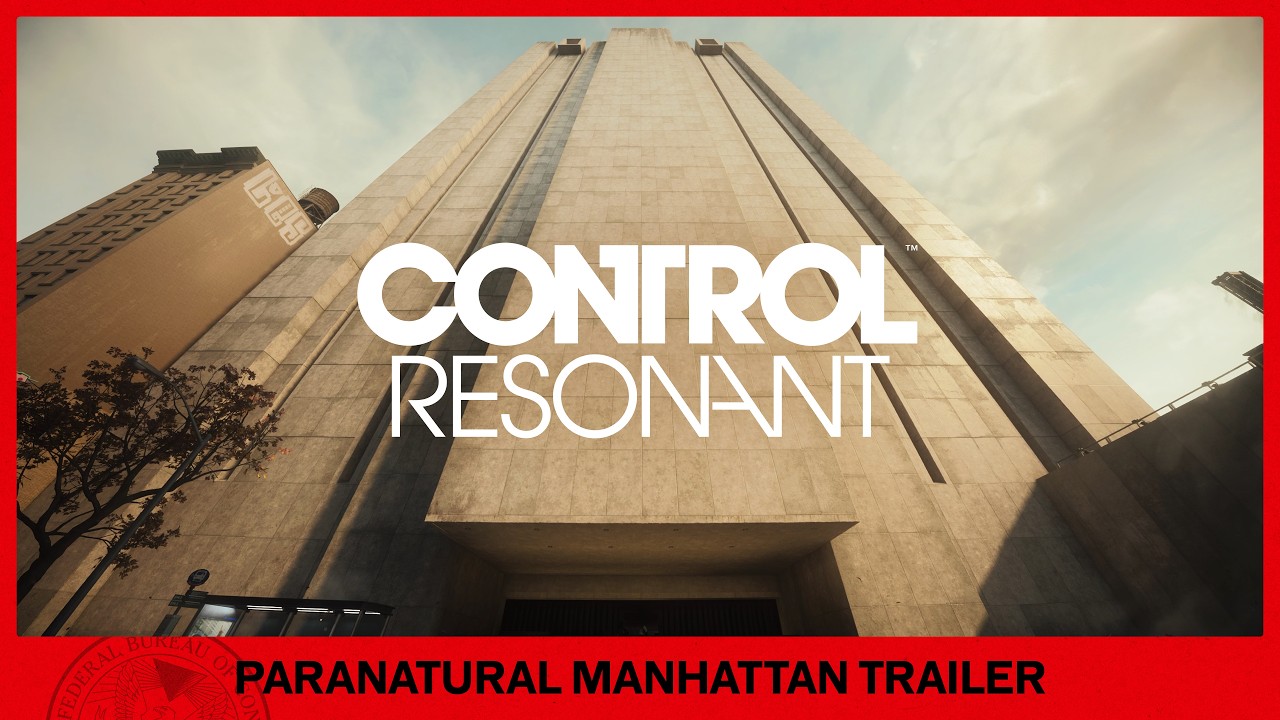
Control took place almost entirely inside a single brutalist skyscraper. Resonant takes everything that made the Oldest House surreal — the impossible architecture, the physics violations, the bureaucratic horror — and pours it across an open-world New York.
Roads have become cliff faces. Buses are pinned vertically to building walls. Entire neighborhoods spiral inward, outward, or upward according to the Patterning's alien logic. Abandoned cafes and laundromats sit untouched beside structures that have folded in on themselves.
TechRadar compared the leap from Control to Resonant to "how Final Fantasy 7 Remake transitioned to Final Fantasy 7 Rebirth — a high-risk bet on scale that mostly pays off."
Dylan's traversal abilities are significantly more mobile than Jesse's:
- ▶Levitation, double jump, air dash — baseline movement
- ▶Afterimage dash — rapid repeat dodge leaves a visual trail
- ▶Reach (grappling hook) — unlocked via Jesse Quests
- ▶Gravity reorientation — late-game unlock, freely change which direction is "down"
PlayStation Blog's Corey Brotherson noted a specific design choice worth highlighting: "Despite his vast power, Dylan staggers, wobbles, and even clumsily topples over after long falls — a stark contrast to the typical superhero landings we're used to." That physical awkwardness, intentional or not, grounds the character in ways that make the open world feel less like a playground and more like a place someone is actually trying to survive.
Review Score Breakdown
| Outlet | Score | Reviewer | Platform |
|---|---|---|---|
| PC Gamer | 76/100 | Lincoln Carpenter | PC (RTX 4070 Super) |
| Kotaku | Strong recommendation | Cole Kronman (35 hrs) | PS5 |
| TechRadar | Strong recommendation | George Yang | Xbox Series X |
| 80.lv | Positive | — | Multiple |
| Metacritic | 86 | Aggregate | — |
| OpenCritic | 84 | Aggregate | — |
What Critics Praised
Art direction — PC Gamer called Remedy's environmental artists "at the height of their powers" even while criticizing the combat. The surrealist Manhattan, with its bent physics and oilslick Hiss-corrupted zones, received near-universal praise.
Traversal — Every reviewer praised the mobility system. Moving through the distorted city is described as fast, expressive, and consistently rewarding.
Narrative — The sibling dynamic between Dylan and Jesse provides a clearer emotional thread than Control's more abstract story structure. TechRadar found the time-dilation and alternate-timeline sequences "gripping."
Build variety (late-game) — Reviewers who pushed into later unlocks consistently reported a richer combat system than the opening hours suggested.
What Critics Flagged
Early-game combat — The absence of satisfying hit-feel in basic attacks before unlocks arrive is the most common complaint. PC Gamer's 76 reflects this most sharply.
Enemy HP — Multiple reviewers flagged "spongy" enemies — extended fights with heavy enemies that drag on without the feedback loop of more established action games.
Open-world bloat — Standard open-world questing and traversal objectives between story missions received mixed notices for pacing.
Editions and Pricing
| Platform | Edition | Price | Notes |
|---|---|---|---|
| PS5 | Standard | $59.99 | — |
| PS5 | Digital Deluxe | TBD | Includes 48-hour early access (Sep 22) |
| Xbox Series X|S | Standard | $59.99 | Not currently in Game Pass |
| PC (Steam) | Standard | $59.99 | AppID: 3669870 |
| PC (Epic Games Store) | Standard | $59.99 | — |
| Mac | Via Steam / App Store | TBD | Launching later in 2026 |
Sources: Remedy official announcement · Steam store page
Who Should Buy It
Buy at launch if:
- ▶You played and enjoyed Control or Alan Wake II — this is Remedy at their most ambitious
- ▶You're drawn to surreal art direction and lore-dense storytelling over mechanical polish
- ▶You want something that will sustain 30–40 hours of engaged play with a cohesive world
- ▶PS5 owners who want the Digital Deluxe early access window on September 22
Wait or watch if:
- ▶You want Control's telekinetic gun combat back — this is a fundamentally different game
- ▶The slow-opening combat sounds like a deal-breaker — the first few hours are the weakest part
- ▶You'd rather see more post-launch reviews from players before committing $60
Skip Control 1 and start here if:
- ▶The built-in recap trailer and Dylan's outsider perspective make Resonant a valid entry point for newcomers
The Verdict
Control Resonant is the rare sequel that outscore its predecessor by doing something almost completely different. Metacritic 86 — five points above Control's 82 — reflects a studio that has earned enough trust to keep reinventing itself, even when that reinvention creates friction in the opening hours.
For players already inside the Remedy universe, it's a five-day wait that looks entirely justified. For newcomers, it's as good an entry point as any — and if you get hooked, Control sits at $6–$10 during Steam sales most months.
Sources: PC Gamer full review · Kotaku full review · OpenCritic aggregated reviews