Onimusha: Way of the Sword launched September 4, 2026 on all platforms simultaneously — Capcom's first mainline Onimusha entry in 20 years. Review embargoes lifted August 31, and 86+ outlets published their verdicts. The consensus that emerged tells two truths at once: the swordplay is exceptional; the campaign length is contested.
Sources: IGN Review (10/10) — Will Borger · TechTimes — Review Roundup · Windows Central Review · tech-insider.org — Switch 2 scores
At a Glance
| Item | Detail |
|---|---|
| Title | Onimusha: Way of the Sword |
| Developer / Publisher | CAPCOM Co., Ltd. |
| Release date | September 4, 2026 |
| Platforms | PS5 · Xbox Series X|S · Nintendo Switch 2 · PC (Steam) |
| Metacritic (Switch 2) | 89 |
| Metacritic (PS5) | 86 |
| Metacritic (PC) | 83 |
| Metacritic (Xbox Series X|S) | 82 |
| OpenCritic recommend rate | 94% |
| Game Pass | Not included |
| Campaign length | 20–25 hours |
| Multiplayer | None — single-player only |
Critic Scores
| Outlet | Score | Notes |
|---|---|---|
| IGN | 10/10 | Reviewer: Will Borger |
| Nintendo Life | 9/10 | Switch 2 |
| Nintendo World Report | 9/10 | Switch 2 |
| Nintendo Insider | 9/10 | Switch 2 |
| Game Informer | 8/10 | — |
| GameSpot | 8/10 | — |
| PCGamesN | 8/10 | PC |
| PC Gamer (US) | 83/100 | PC |
| Hardcore Gamer | 4.5/5 | — |
| Giant Bomb | 4/5 | — |
| GamesRadar+ | 3.5/5 | — |
The Switch 2 version holds the highest platform aggregate at 89, ahead of PS5 (86), PC (83), and Xbox Series X|S (82). For a demanding RE Engine game, outscoring console and PC counterparts on a hybrid device is a notable result — and it's the score driving most of the discourse this week.
What the Game Is
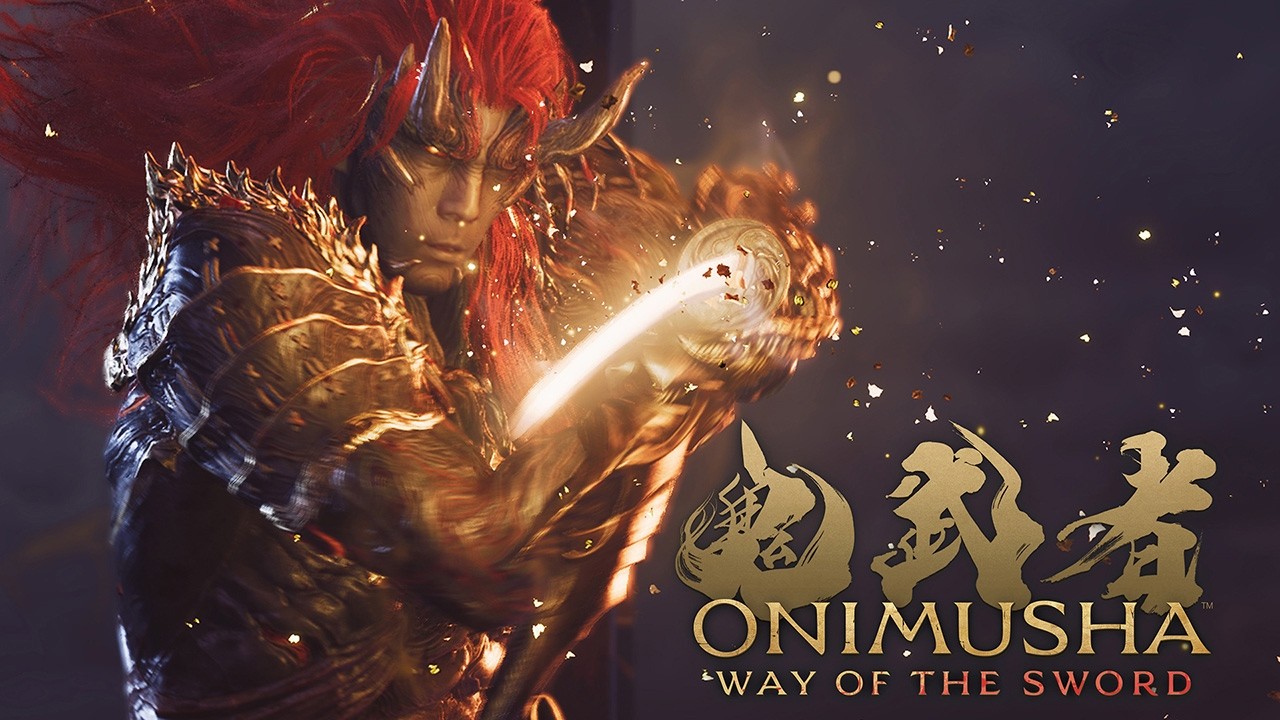
This is a standalone story with no narrative connection to prior Onimusha games or the 2023 Netflix anime. The last mainline Onimusha entry was Onimusha: Dawn of Dreams in 2006.
The protagonist is a fictionalized Miyamoto Musashi — Japan's most celebrated historical swordsman — arriving in Edo-period Kyoto as the city falls to a supernatural Genma menace. He acquires the Oni Gauntlet, an artifact that absorbs the souls of fallen enemies and converts them into resources and power. The tone is described as darker and more atmospheric than the premise suggests, with moments of levity provided by Musashi himself — TechRadar's Gamescom preview describes him as flipping "between stoic warrior and sharp-witted comedian at the drop of a hat."
Capcom modeled Musashi's face after the late actor Toshiro Mifune through a two-year collaboration with Mifune Productions using archival reference material. Windows Central's review describes the outcome as "industry-leading facial motion capture with RE Engine," capturing not just the likeness but Mifune's "habit of scratching the back of his head and the way he walks."
His historical rival Sasaki Ganryu appears as a major early antagonist, directly referencing the real Ganryūjima duel of 1612.
What All Critics Agree On: The Issen System
The score split exists against a backdrop of near-unanimous agreement on one element. The Issen counter — a precision parry mechanic that converts a perfectly-timed block into a kill opportunity — is the game's defining mechanic, and every review cites it positively regardless of final score.
IGN's Will Borger wrote in the 10/10 review:
“"For as long as I can remember, I have wanted to be perfect for 10 seconds... There are moments in Onimusha: Way of the Sword where everything else fades. The controller falls away, the universe collapses, and the distance between you and Miyamoto Musashi is annihilated." — Will Borger, IGN (10/10)
The pattern in the review data is consistent: boss duels and the game's linear narrative sequences are its strongest moments. The Issen system rewards the sustained focus those sequences demand. Reviewers who scored the game highest found the open-world sections manageable in exchange for the combat system's depth. Reviewers in the 3–4 out of 5 range identified the same combat quality — but weighted the structural padding more heavily.
Where Critics Diverge: Open-World Padding
Polygon's summary became the most widely cited critique:
“"An excellent 12-hour action game stretched into a 25-hour slog." — Polygon
Game Informer echoed it, noting the game "struggles to justify the repetition" of re-encountering identical mini-boss types with no discernible escalation. Kotaku called it a "game at war with itself," arguing Capcom "removed too much of the series' identity" by building an open world with side missions and collectibles rather than the tightly scripted, interconnected environments of the original PS2 entries. GamesRadar+ scored it 3.5/5:
“"Reaches in too many directions — identity becomes blurred." — GamesRadar+
The opposing position is equally represented. Windows Central's Jez Corden acknowledged the open-world drag but concluded it "is not enough to stop the game being a must-play 2026 title." IGN scored it 10/10.
The structural fault line is precise: focused boss encounters and linear story sections are where the game peaks; open-world side content — side missions, collectibles, repeated mini-boss encounters — is where the bulk of the 25-hour total comes from, beyond the 12-hour core.
Why Switch 2 Outscored PS5 and PC
Switch 2's Nvidia Ampere GPU shares its architectural generation with DLSS-capable PC hardware. RE Engine already implements DLSS hooks in PC builds; Capcom applied the same upscaling pipeline to the Switch 2 port. In TV mode the Switch 2 version targets upscaled 1080p at 30fps with handheld targets separate. For a hybrid device running on a fraction of PS5's GPU budget, reviewers found the output held up better than anticipated.
Nintendo Life, Nintendo World Report, and Nintendo Insider all landed on 9/10 for the Switch 2 version, feeding the platform's 89 aggregate. The Switch 2 score of 89 is, per the aggregated data, the highest Metacritic score of any platform this game shipped on — a data point that has prompted its own discussion in hardware communities about RE Engine's portability.
The 21-Day Release Date Pull-Forward
Capcom originally announced September 25. On July 2, the company moved it forward 21 days to September 4, citing the demo's one million downloads as evidence of stronger demand than anticipated. Capcom's statement described the pull-forward as a desire to bring the game to players sooner.
The date change had a logistics consequence: existing pre-orders were automatically cancelled and had to be re-placed. Capcom did not offer compensation or price incentives for the cancellation.
The demo remains available on PS5, Xbox Series X|S, Nintendo Switch 2, Steam, and the Epic Games Store — giving undecided buyers a way to assess the Issen combat before committing.
Buying Guide
The score split maps cleanly onto what you're actually buying for:
| If you want... | Verdict |
|---|---|
| Precision samurai combat with demanding boss encounters | Buy — this element is praised by every reviewer across the score range |
| The tight, focused campaign structure of the PS2 Onimusha games | Manage expectations — the open-world sections add 10–13 hours beyond the core |
| An open-world action game with dense, varied side content | Look elsewhere — this is where reviewers consistently cite the weakest material |
| Best-performing platform by aggregate score | Switch 2 (89) leads PS5 (86), PC (83), and Xbox (82) |
| Game Pass value | Not included at launch |
| Demo before buying | Available on all five platforms |
Capcom's 2026 Context
The release window is notable. GTA 6's looming launch pushed many developers out of Q3 2026. In that same window, Capcom shipped back-to-back AAA releases the same week: Rebel Wolves' The Blood of Dawnwalker (83 Metacritic, September 3) and Onimusha: Way of the Sword (86 PS5, September 4). Windows Central's review observed: "GTA 6 is around the corner, but 2026 should probably be remembered as the year of Capcom."
Onimusha: Way of the Sword is not on Xbox Game Pass at launch. It is a strictly single-player experience, with Capcom estimating a 20-hour campaign and reviewer accounts ranging to 25 hours depending on side content engagement.