
Big Walk is out today. The co-op open-world puzzle adventure from Melbourne-based developer House House and publisher Panic has landed on PC, PlayStation 5, and Nintendo Switch 2 with a Metacritic score of 93 — the highest-rated new release of 2026, beating out Forza Horizon 6 (90) and Mina the Hollower. With 13 scored reviews plus a wave of unscored praise as of launch day, critics are calling it one of the best co-op games ever made. Nobody predicted that when the game was first announced.
- ▶Sources: Polygon — "Big Walk is 2026's unexpected GOTY frontrunner following high Metacritic score" (Aug 3, 2026) · Checkpoint — "Big Walk Review – All friend, no slop" (Aug 3, 2026) · Kotaku Review by Rebekah Valentine (Aug 3, 2026) · Metacritic · Steam Store — Big Walk
At a Glance
| Developer | House House (Melbourne, Australia) |
|---|---|
| Publisher | Panic |
| Genre | Co-op open-world puzzle adventure |
| Platforms | PC (Steam / macOS), PlayStation 5, Nintendo Switch 2 |
| Release Date | August 4, 2026 |
| Players | 2–12 (online co-op) |
| Metacritic | 93 (13 scored reviews as of launch day) |
| Previous Game | Untitled Goose Game (2019) |
The Developer: House House
House House is a small studio based in Melbourne, Australia. They first became a global indie name with Untitled Goose Game (2019) — the slapstick stealth game where you play as a goose menacing a quiet English village. That game crossed 1 million sales in under two weeks and became one of the most viral games of its era. It was also published by Panic, the Portland-based company behind Celeste and the Playdate handheld.
Big Walk is House House's second game, arriving seven years after Goose Game. The team took a substantially different direction — scale, scope, and ambition all elevated — and the reviews suggest it paid off.
Big Walk — Official Release Date Announcement Trailer (House House / Panic, June 2026)
What Is Big Walk?
Big Walk drops 2 to 12 players into an open, realistic-looking Australian landscape filled with colorful, cartoonishly oversized structures that stand out against the natural terrain. There are no weapons, no combat, and no fail states. The game is built entirely around communication puzzles: challenges that force players to describe what they see, coordinate their movements, and work through abstract problems together.
Unlike most co-op games that give every player equal information and ask them to execute, Big Walk deliberately limits what each player can see or do. You and your group have to actually talk. Critics report that across 20+ hours of play, the game trains friend groups to communicate more effectively with each other — inventing shared shorthand, learning to read each other's movements, and becoming progressively better at solving problems nobody has seen before.
Puzzles scale dynamically to the size of your group: a two-player game plays meaningfully differently than a twelve-player session. The Australian landscape itself shapes the experience — there is no urgency here. Big Walk is a walk. Exploration is the point.
Review Score Breakdown
| Outlet | Score | Reviewer |
|---|---|---|
| GameSpot | 9/10 | Mark Delaney |
| Eurogamer | ★★★★★ | Chris Schilling |
| Checkpoint | 9.5/10 | — |
| Restart | ★★★★★ | Imran Khan |
| Kotaku | Recommended | Rebekah Valentine |
| Polygon | Recommended (co-review) | Colantonio, Lee, Yu |
| Metacritic aggregate | 93 | 13 scored reviews |
What Critics Are Saying
Puzzle Design
Puzzle design earns universal praise. Across multiple reviews, critics describe a collection of challenges that grow in complexity without becoming repetitive, and that specifically reward groups who have developed their own communication style.
""There's a lot of puzzles in Big Walk and as our group did more and more, we got better and better at learning to communicate within the game's absurd contexts, at interpreting how each other think, at knowing exactly what it means when someone sits down and raises their arms above their heads." — Imran Khan, Restart (★★★★★)
Checkpoint observed: "The puzzles are well implemented and varied, often building upon past ideas but never so closely that it feels reductive. There's a clear care and thought put into not just the game's puzzles but every small system here."
Open World and Discovery
House House built a world that trusts players to find their own way through it — an unusual choice for a puzzle game, and one critics singled out.
""Big Walk's world speaks for itself. Across its realistic-looking landscape are many more cartoonishly colored structures of all shapes and sizes that stick out by contrast, and developer House House trusts each friend group to carve out their own adventure through the world, letting their curiosity guide them and building on shared learning hour after hour." — Mark Delaney, GameSpot (9/10)
Friendslop vs. Real Friendship
The term "friendslop" — a recent tag for co-op games engineered around viral moments rather than meaningful play — appears repeatedly in coverage of Big Walk, specifically as critics argue it is the inverse of that trend.
""I don't think I could ever play this game a second time. It's not 'friendslop.' Its magic is brilliant, and it also is single-use. Once you know the tricks, you can't be surprised by them again. But oh, the memory of being surprised that first and only time!" — Rebekah Valentine, Kotaku
Polygon put it directly: Big Walk is "an unforgettable hang-out game that pushes you to form closer bonds with your friends."
The Ending
Critics are unanimous: Big Walk's ending is something special. They are, to a person, refusing to explain it.
""I'm reluctant to even hint at it, so I'll just say that it feels like a subtle but ingenious twist on a familiar game design maxim. If the best video game challenges test everything you've learned, this is more about what you've come to understand about the people you've shared this journey with, and the weird and wonderful ways you've invented to overcome the difficulties you've faced together." — Chris Schilling, Eurogamer (★★★★★)
Kotaku's reviewer, after approximately 20 hours of play, noted that something exists beyond the credits: "There is also a post-game something that we are making time to do next week. I cannot stop thinking about it and wondering what we'll discover."
Checkpoint confirmed: "Big Walk is majestic, surprising, uncompromising, and effortlessly fascinating."
Minor Criticisms
No review is a clean sweep. Critics flagged:
- ▶Small technical glitches that occasionally required restarting the game to fix (Checkpoint)
- ▶Proximity voice chat that felt limited in range — possibly by design (Checkpoint)
- ▶Movement on uneven terrain could be awkward — getting stuck on shrubs and rocks, unclear whether some surfaces are climbable (Kotaku)
None of these complaints moved any score below 9/10. They are edge cases in an otherwise praised experience.
Platform Availability
| Platform | Notes |
|---|---|
| PC | Steam and macOS — Buy on Steam |
| PlayStation 5 | PS5 native |
| Nintendo Switch 2 | Switch 2 native |
Big Walk supports 2–12 players online. As of launch, no local co-op or single-player mode has been announced. You will need at least one other person to play.
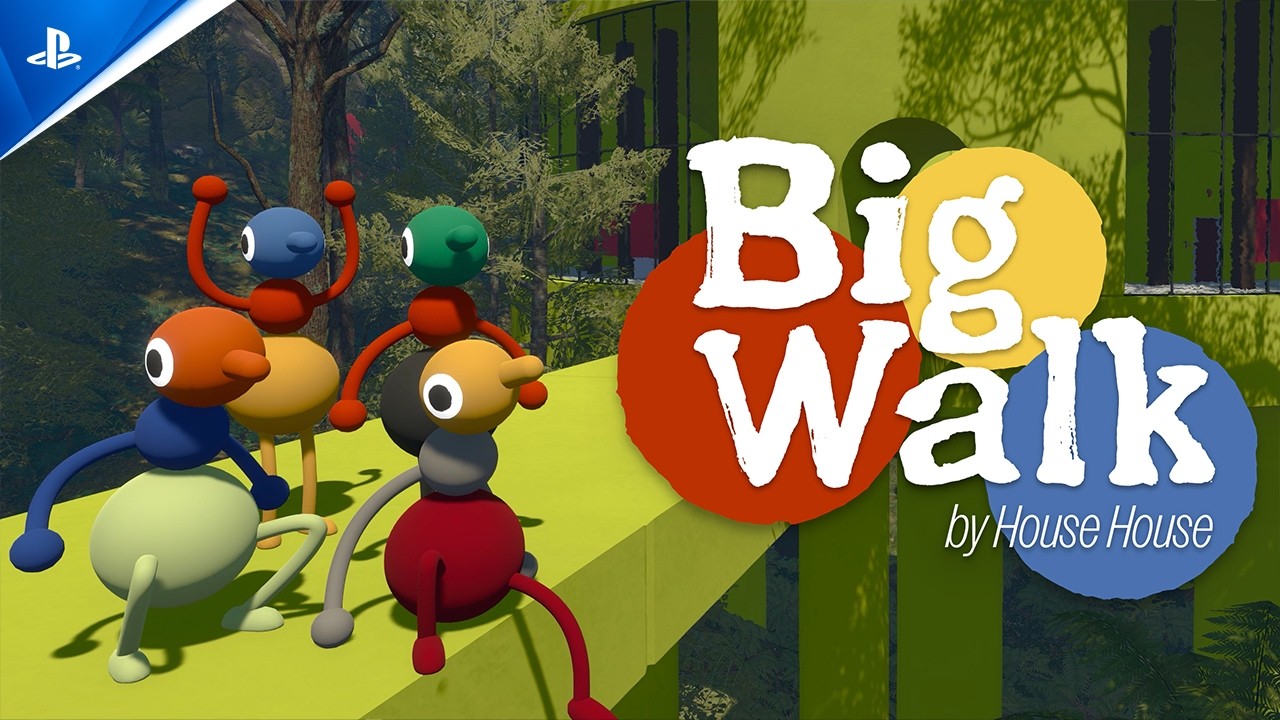
Big Walk announcement trailer for PS5. The game features 2–12 player online co-op across an open Australian landscape. (House House / Panic)
Context: Where Big Walk Sits in 2026
To understand the Metacritic 93, it helps to know what it beat. Forza Horizon 6 entered 2026 as an early GOTY contender, arriving with strong critical and commercial numbers. Mina the Hollower, the long-awaited follow-up from the Shovel Knight team, was widely praised. Big Walk's 93 places it above both.
The game's score also arrives at a time when the "friendslop" genre — casual multiplayer games engineered to generate viral clips — is large enough to draw its own backlash. Critics responding to Big Walk are notably specific about the distinction: this is a game designed to generate memories, not clips.
House House previously needed seven years between Goose Game and Big Walk. The result, at least by critical measure, is the strongest co-op game released in years.
Buying Guide
Who should play this:
- ▶Anyone who regularly plays co-op games with friends online
- ▶Groups of 2–12 looking for a shared experience built around genuine communication
- ▶Players who want something memorable and replayable-only-once
- ▶Fans of Untitled Goose Game or Panic's publishing catalog (Celeste, etc.)
Who should wait:
- ▶Solo players — Big Walk requires at least two participants
- ▶Players looking for action-heavy co-op; there is no combat
- ▶Anyone who wants a long single-player story mode
Where to buy:
- ▶Steam (PC and macOS)
- ▶PlayStation Store (PS5)
- ▶Nintendo eShop (Nintendo Switch 2)
GamePeak's Take
A Metacritic 93 on launch day does not happen by accident, and it does not happen for a small co-op puzzle game unless the game is doing something genuinely new. The consistent thread across every Big Walk review is that critics describe it in terms of people, not mechanics — what their group figured out together, who surprised them, what they'll remember. That is a harder thing to design for than any combat system.
Big Walk is available right now on PC, PS5, and Nintendo Switch 2. If you have friends to play it with, the only question worth asking is when you're starting.
| Metacritic | 93 — highest-rated new release of 2026 |
|---|---|
| Best for | Groups of 2–12 looking for a memorable co-op experience |
| Publisher | Panic (Celeste, Untitled Goose Game) |
| Developer track record | House House (Untitled Goose Game, 2019) |
| Verdict | Play it before someone spoils the ending |