Double Fine Productions laid off 23 employees on July 28, 2026 — roughly one quarter of the studio — just three weeks after Microsoft's Xbox division spun it out as an independent company. Bloomberg's Jason Schreier first reported the layoffs. Studio founder Tim Schafer confirmed them the same day in a post on Double Fine's official Bluesky account.
- ▶Sources: Kotaku — Double Fine layoffs confirmed · Eurogamer — Double Fine hit with layoffs after Xbox exit · Polygon — After splitting from Xbox, Double Fine lays off 23 · PC Gamer — Schafer statement
Schafer's Statement
Tim Schafer posted directly to Bluesky rather than issuing a formal press release — a format he has used before when speaking candidly to the community:
""Today, Double Fine Productions let go of 23 members of its staff. As a small, tightly knit team, these actions are not taken lightly. Only the survival of our studio would ever make us consider such a painful action. Our transition to becoming an independent company means becoming a size that we can sustain. The people we are losing were all important. They all made an impact on our games and culture, and they will be missed. We are committed to supporting each affected person as best as we can, and we thank them for their hard work and commitment to the creative spirit we cherish here at Double Fine." — Tim Schafer
Before Schafer's post went live, Kiln game designer Ben Johnson had already gone public on his own Bluesky account: "Layoffs at Double Fine hit, and I'm sorry to report that I was one of the ones hit. If you need a game designer with tech chops and 2+ decades of experience, here I am."
What the Restructuring Actually Meant
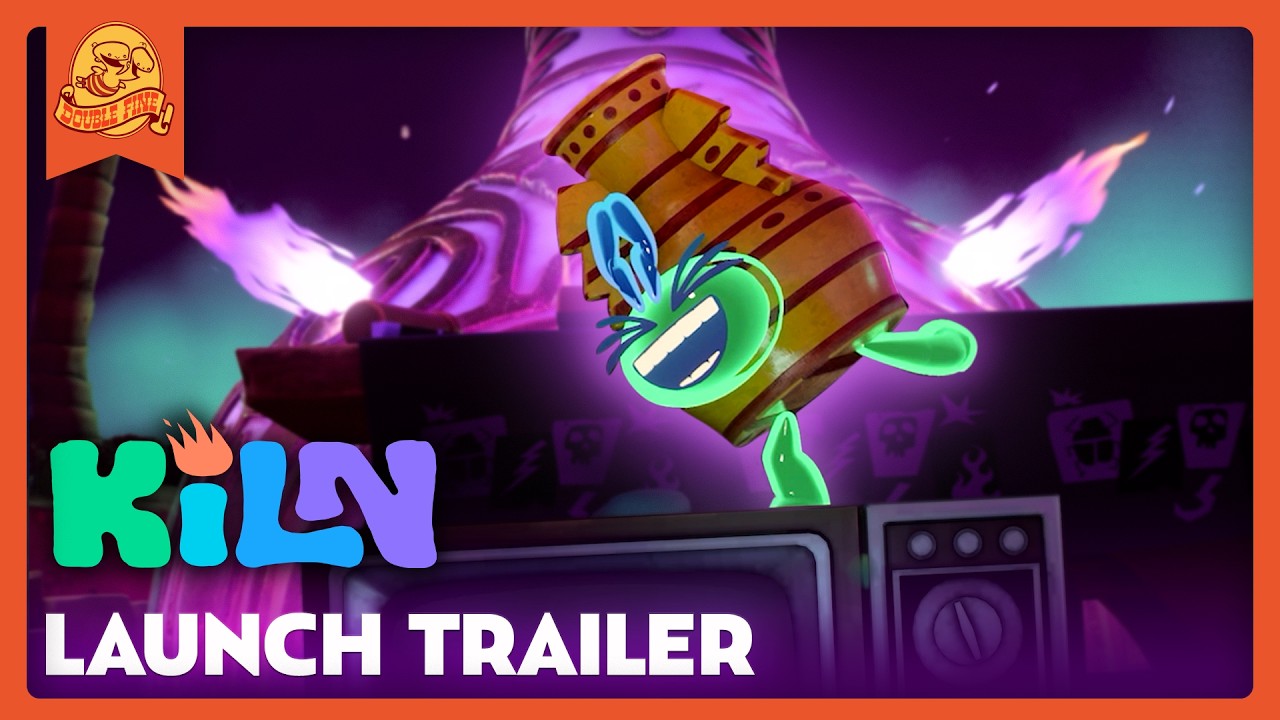
Double Fine's most recent release, Kiln — a multiplayer pottery party brawler — launched in April 2026 for PC, PS5, and Xbox.
Double Fine's independence was not a choice. In early July, Xbox CEO Asha Sharma announced that Microsoft would be parting ways with four first-party studios as part of a sweeping restructuring that eliminated 3,200 Xbox jobs — roughly 20% of the division's headcount. Sharma framed the split diplomatically: "It is neither possible nor desirable to own every great independent studio."
Double Fine and South of Midnight developer Compulsion Games were spun off as independent studios, retaining their IP, catalogs, and what Xbox described as "runway for their next games." Ninja Theory and Undead Labs were sold to undisclosed buyers. Arkane Studios' fate remains in procedural limbo due to mandatory labor consultation requirements in France.
An Xbox spokesperson confirmed the terms to Kotaku:
""Double Fine fully returned to independent management earlier this week, with their IP, catalog, and runway for their next games. As they begin their next chapter as an independent studio, we look forward to seeing what they create next."
That statement is technically accurate. What it omits is what "independence" costs in practice: the marketing infrastructure, distribution reach, and day-to-day operational financing that a parent company provides. Double Fine's statement makes the trade-off explicit. The studio wasn't closing, but it was now responsible for everything it previously took for granted.
The Timing: Layoffs Follow a Fresh Union Drive
The cuts arrived less than three months after Double Fine's employees formally organized.
On May 7, 2026, workers filed a petition with the National Labor Relations Board in conjunction with the Communications Workers of America, covering what the petition described as all regular part-time and full-time employees — a total of 42. Double Fine has not disclosed which departments or roles were affected by the July 28 cuts, so the overlap between those who had organized and those who were laid off is unknown.
The studio has not commented on the relationship between the union drive and the layoffs.
Double Fine's Recent Catalog
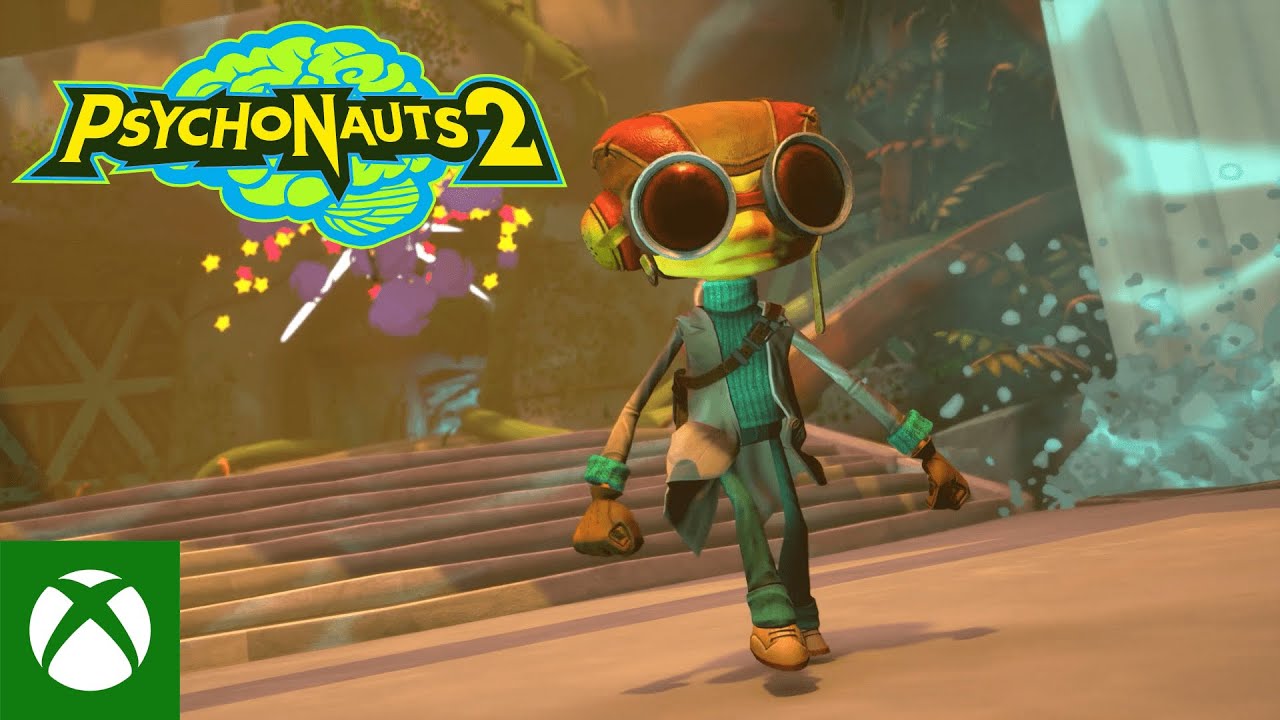
Psychonauts 2, released in 2021 under Xbox ownership, is Double Fine's most commercially successful and critically acclaimed title of the past decade.
Double Fine was founded in 2000 by Tim Schafer and other ex-LucasArts developers. Under its own funding and later Xbox backing, it built a catalog defined by experimental, creator-led design rather than franchise-driven commercial play. Its trajectory under Xbox:
| Year | Title | Notes |
|---|---|---|
| 2021 | Psychonauts 2 | Widely acclaimed; Game of the Year nominated at The Game Awards |
| 2025 | Keeper | Warmly reviewed atmospheric adventure; limited commercial impact |
| April 2026 | Kiln | Multiplayer pottery brawler; "fun and clever but not very popular" (Kotaku) |
The studio's catalog remains available on Steam, PlayStation, and Xbox storefronts globally.
A Pattern Across the Industry
Double Fine is the first of the four Xbox-spun-off studios to publicly announce layoffs — but it is not operating in isolation. Compulsion Games, the other studio that returned to independent status in the same restructuring, announced publicly within a week that it was actively looking for project work. The signal from both studios is the same: the parent company's exit left a funding gap that "IP and catalog" do not automatically fill.
The pattern is familiar in 2026. When a major publisher divests a mid-size studio, the framing tends to emphasize the positive — the studio keeps its work, its games, its identity. What gets less emphasis is the fixed costs, the distribution leverage, and the operational floor that the publisher had been quietly providing. Studios that were sized for a corporate parent's balance sheet are suddenly sized too large for what they can independently fund.
Double Fine's statement does not hint at which projects, if any, are affected by the cuts. The studio has not announced new work in development since Kiln's April launch.
Responses
| Party | Statement |
|---|---|
| Tim Schafer, Double Fine founder | "Only the survival of our studio would ever make us consider such a painful action." — Bluesky |
| Xbox spokesperson | "Double Fine fully returned to independent management with their IP, catalog, and runway for their next games." — via Kotaku |
| Ben Johnson, laid-off designer | "Layoffs at Double Fine hit, and I'm sorry to report that I was one of the ones hit." — Bluesky |
| Jason Schreier, Bloomberg | Reported ~90 employees at Double Fine before the layoffs |
GamePeak Take
The word "survival" in Schafer's statement is worth sitting with. Double Fine is not a failing studio by any ordinary measure — it shipped three games in five years, including one that earned Game of the Year recognition. What it is, is a studio that was sized for a Microsoft-backed budget and is now priced into an independent market.
The gaming industry spent several years treating first-party studio acquisitions as the stable outcome for experimental mid-size developers. What 2026 has demonstrated, repeatedly, is that the instability doesn't disappear when studios separate — it just shifts from "may be closed" to "must survive without the parent's infrastructure." For Double Fine, that shift cost 23 people their jobs in less than a month.
The question now is whether the remaining team — somewhere around 65 to 70 people by rough estimate — can develop and ship something that earns enough to sustain itself. That's the math that Tim Schafer is working with, and it has nothing to do with whether the games are good.