Nintendo's Splatoon Raiders launches exclusively on Nintendo Switch 2 tomorrow, July 23 — and the review embargo has lifted with a clear finding: the franchise's first standalone single-player game is a genuine success, if not a flawless one. As of July 22, Metacritic sits at 80 from 61 reviews, with OpenCritic at 81 across 19 reviews. The critical distribution skews high — the majority of major outlets gave 9/10 or equivalent — with a handful of lower scores pulling the aggregate down from where most critics landed.
- ▶Sources: Nintendo Official Store · Metacritic aggregate · Nintendo Life review · CGMagazine review · Instant Gaming News roundup
At a Glance
| Item | Detail |
|---|---|
| Title | Splatoon Raiders |
| Developer / Publisher | Nintendo EPD / Nintendo |
| Genre | Single-player action / dungeon crawler / roguelite elements |
| Release date | July 23, 2026 (tomorrow) |
| Platform | Nintendo Switch 2 exclusive |
| Price | $49.99 USD / €49.99 EUR |
| Metacritic | 80 (61 reviews) |
| OpenCritic | 81 (19 reviews) |
| Co-op | Online and local co-op up to 4 players (non-dungeon maps) |
| amiibo | Three Deep Cut figures (Shiver, Frye, Big Man) at launch |
What Is Splatoon Raiders?
Splatoon Raiders is the first full standalone single-player game in the Splatoon franchise. Where previous entries — Splatoon 1 through 3 — offered single-player story modes as side content alongside competitive multiplayer, Raiders inverts the priority: solo play is the product, with co-op as an optional layer.
The structural foundation comes from two sources. Salmon Run, the asymmetric co-op mode introduced in Splatoon 2, contributed the core combat idea: players fight waves of distinctly designed Salmonid creatures rather than other players. Side Order, the roguelite DLC in Splatoon 3, contributed the dungeon-layer structure and persistent progression. Raiders fuses both into a full game with more depth than either source mode individually.
The story premise keeps things light. Pop star trio Deep Cut — Shiver, Frye, and Big Man from Splatoon 3 — crash-land on the mysterious Spirhalite Islands while treasure hunting to pay off Splatsville's massive collective debt. Stranded for months, they build a floating base and begin exploring. The player controls the crew's pilot and mechanic, partnering with an Explorer Bot piloted by whichever Deep Cut member they choose. The narrative is not the point, but reviewers consistently praised the character writing — more animated cutscenes than any previous Splatoon game, giving Deep Cut genuine depth for the first time.
Developer: Nintendo EPD
Nintendo EPD developed Raiders — the same internal team behind all three mainline Splatoon games and the Side Order DLC. Their track record here matters: this is the group that turned Salmon Run from a bonus feature into one of the franchise's most beloved mechanics. Applying that same design philosophy to a full standalone game built around Salmon Run's combat logic is less a pivot than a logical extension.
Raiders is a Nintendo Switch 2 exclusive. Several reviewers noted the game doesn't make dramatic use of Switch 2's mouse controls or push the hardware for noticeably larger environments, which landed as a mild criticism given the platform's capabilities — particularly from CGMagazine, which called it "a weird choice" to ship a Switch 2 exclusive without mouse support.
The Customization System
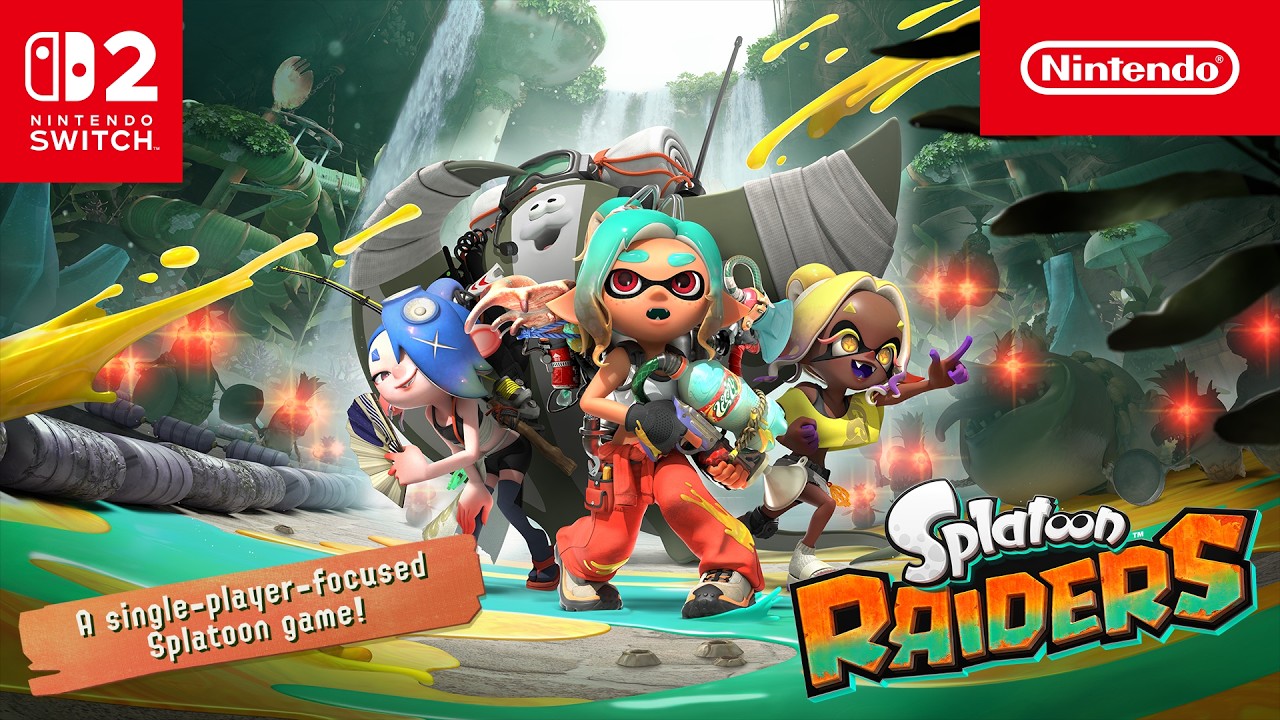
The biggest gameplay departure from mainline Splatoon is the ink tank and gadget system, replacing the fixed sub-weapons of the series' multiplayer games. Players choose from three tank types, each with two gadget slots:
| Tank Type | Playstyle Focus | Example Gadgets |
|---|---|---|
| Power | Heavy damage, area denial | Spatellites (orbiting ink drones), Bombloons (explosive balloons) |
| Speed | Mobility, fast repositioning | Blast Boot (aerial dash + shockwave on landing) |
| Tactical | Crowd control, support | Shot Pot (auto-turret), reinforced Sprinkler variants |
Gadgets accept modular parts that modify cooldowns, explosion radius, damage types, and more. This stacks with an RPG progression layer: leveling up grants skill points distributed freely across HP, weapon damage, and gadget part slots. The result is a loadout system that reviewers consistently described as deep enough that two players are unlikely to have the same build — or the same experience.
""The amount of customisation in how you play the game is absolutely staggering, to the point that I doubt you're likely to bump into anyone in real life that would have had the same experience as you with the game." — Nintendo Life
The Explorer Bot adds a third dimension: choosing which Deep Cut member pilots it determines the available Showstopper special attack. Big Man's Showstopper, for example, has him leap from the bot so the player can ride him John Woo-style while he blasts Salmonids. Tank type, gadget build, and pilot choice form three interlocking customization layers.
Dungeon Structure and Replayability
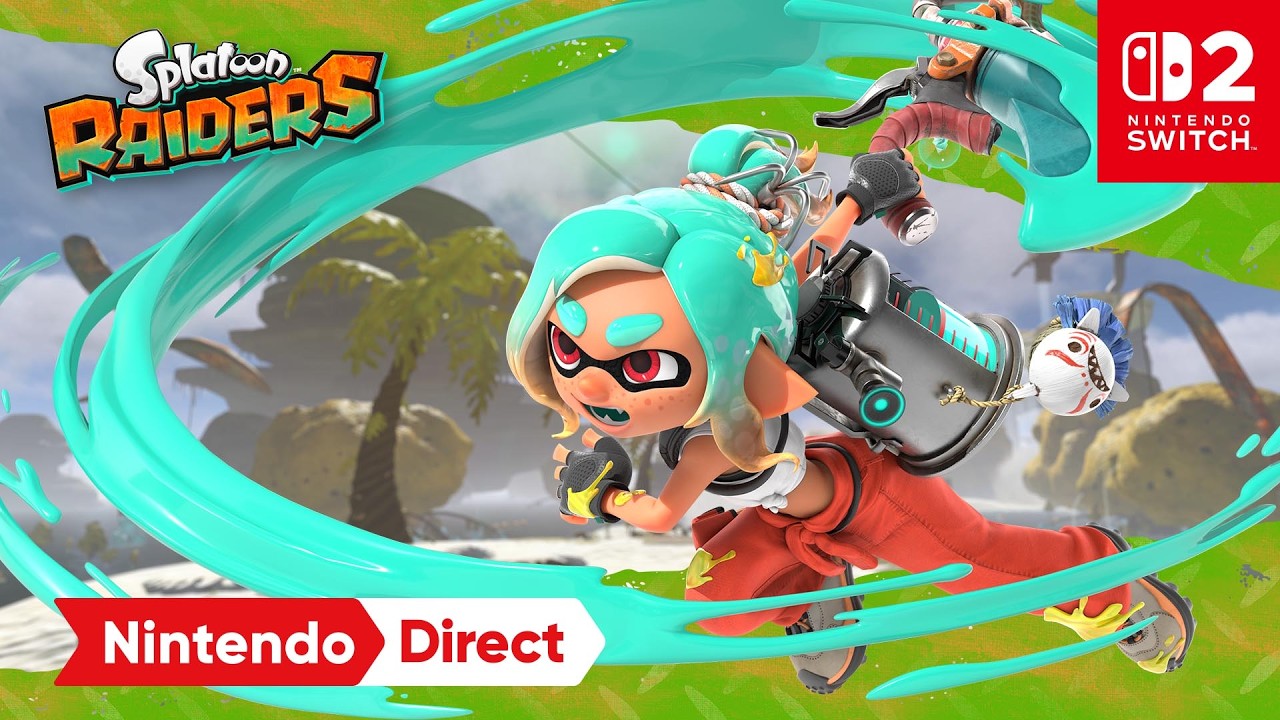
Levels fall into three broad types: linear push-forward dungeons, open collection stages (gather a set number of Power Eggs), and enclosed wave-defense arenas. Each chapter closes with a boss fight built around unique mechanics rather than repeated health-pool patterns. Challenge areas supplement the main dungeon path.
Difficulty scales across three settings — beginner, standard, and Survivalist (the hardest). Nintendo Life reviewed the full game on Survivalist and noted the difficulty calibration is strong at every level: "the game does a really, really good job of balancing things to make everything fun and achievable no matter your skillset."
The key replayability hook is Spicy Mode, which unlocks for completed stages and reshuffles enemy placements, adds new enemy types, and changes available rewards. Failed runs retain all collected EXP and items — there is no progress loss on death, only on clearing the stage.
""Splatoon Raiders may be missing the series' iconic Turf War, but what we have here is possibly the most variable and exciting game the series has ever offered." — Nintendo Life
New Enemy Design
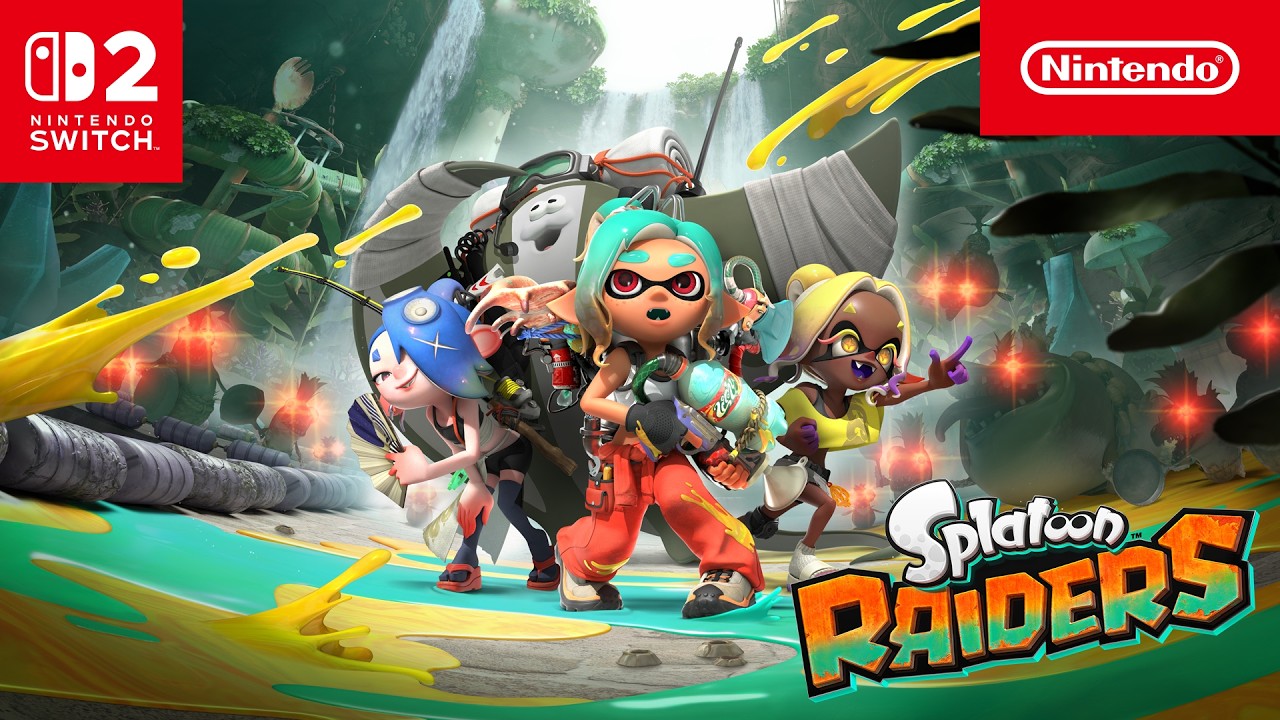
Every Boss Salmonid and Lesser Salmonid from previous games returns (except the Snatcher, which Nintendo Life notes "just wouldn't work with Raiders' new gameplay"), with meaningful mechanical adjustments. Maws and Flyfish can now be taken down with standard shots. Big Shots bounce around on large springs rather than remaining stationary.
The entirely new enemy categories are where Raiders earns particular praise. New Salmonid variants include:
- ▶Smokers: provide a gaseous protective bubble that reduces damage to any Salmonids within range
- ▶Salty Tongues: close-range grappling attackers
- ▶Salivators: lob gunk-filled bags that create damage vortexes on impact
A higher tier of enemy, which Nintendo Life called "Seasoned Salmonids," takes existing Salmonid designs to extreme versions — Nintendo Life described them as "the Dark Souls of Salmonids."
Co-op in a Single-Player Game
Despite being billed as single-player focused, nearly every non-dungeon level supports online and local co-op for up to four players. The implementation has a notable design choice: enemy levels scale with the number of players, but each player's individual difficulty setting is maintained — a beginner and an expert can share a session without either compromising their experience. Completing a level in co-op counts as progress for all participants.
For players who hit a solo wall, the Call for Help feature allows a one-session online invite. Reviewers flagged an arbitrary time limit on this feature as inconsistent with the game's otherwise flexible design.
Three Deep Cut amiibo figures (Shiver, Frye, Big Man) are available at launch, unlocking exclusive cosmetic options and additional in-game content.
Review Breakdown
| Outlet | Score | Notes |
|---|---|---|
| IGN | 9/10 | Praised gameplay variety, Deep Cut writing |
| TechRadar Gaming | 5/5 | Maximum score |
| TheSixthAxis | 9/10 | Strong recommendation |
| TryAGame! | 9/10 | Praised replayability |
| Nintendo Life | Essential | "Must-play for almost anyone" |
| CGMagazine | Positive | Flagged missing Switch 2 hardware optimization |
| VGC | 4/5 | Solid |
| Eurogamer | 4/5 | Solid |
| PPE.pl | 8/10 | Positive |
| Giant Bomb | 3.5/5 | Mid-positive |
| Stevivor | 6/10 | Average |
| The Guardian | 2/5 | Negative — repetition, short story |
| Metacritic | 80 | 61 reviews aggregated |
| OpenCritic | 81 | 19 reviews aggregated |
The score distribution is bimodal: most outlets grouped at 9/10 or equivalent, with The Guardian (2/5), Stevivor (6/10), and Giant Bomb (3.5/5) accounting for most of the downward pressure on the aggregate. Shared positives across the majority: customization depth, replay systems, and Deep Cut characterization. Shared criticisms: short main story arc, occasional technical issues, and limited Switch 2-specific features.
""Splatoon Raiders is proof positive the series can evolve past its competitive multiplayer roots, creating a fun and engaging ARPG experience that's hard to put down." — CGMagazine
The Longer Stakes: What This Means for Splatoon
Splatoon Raiders is a franchise milestone. Splatoon has always been defined by its competitive multiplayer — Turf War and Anarchy Battles — with single-player content playing a supporting role. Raiders is the first time Nintendo has committed a full $49.99 retail release to solo play with no PvP component.
The critical response suggests the experiment worked. The Splatoon movement system — ink-dive mobility that can feel restrictive in competitive arenas — becomes a tool for vertical traversal and high-speed repositioning across more open dungeon environments. Multiple reviewers noted the gadget customization system should become a template for future mainline games.
Whether Raiders becomes a recurring spin-off series is unknown. Nintendo has not commented on further standalone single-player Splatoon projects. The game's commercial performance on Switch 2 will likely shape that conversation.
Known Issues and Criticism
Short main story: The narrative is a light adventure premise. Players expecting a lengthy, complex story arc will find the runtime of the main campaign shorter than anticipated.
Repetition: As the game progresses, the dungeon structure can feel cyclical despite the enemy and gadget variety.
Technical polish gaps: CGMagazine specifically documented framerate drops on distant enemies, a missing sound effect and animation for Wall Dashing, and absent throw animations for some projectile gadgets. Nintendo Life independently noted similar minor animation absences.
No mouse controls: On a Switch 2 exclusive title, the absence of Joy-Con mouse support is a conspicuous omission that multiple reviewers raised independently.
Gadget restrictions: Gadgets are locked to their specific tank type, which reviewers noted feels like an artificial constraint in a single-player context.
Community Reception
Pre-launch interest has been substantial. The Nintendo of America release date trailer from April crossed 1.6 million views; the June 30 Splatoon Raiders Direct drew 749,000 views on the same channel. Community response to the review drop is broadly positive, with the Metacritic 80 generating debate given the majority of individual scores skew much higher.
The Deep Cut character writing has drawn particular attention from existing fans — many noting the game delivers more meaningful story for these three characters than all of Splatoon 3's content combined, including the base game and Side Order.
Buying Guide
Buy if you:
- ▶Own a Nintendo Switch 2 and want a first-party title with meaningful depth
- ▶Enjoyed Salmon Run or Side Order in Splatoon 3
- ▶Like deep single-player action RPG customization systems
- ▶Want something co-op playable without competitive pressure
- ▶Are new to Splatoon — the game is designed to be accessible without prior series knowledge
Skip if you:
- ▶Want Turf War or any PvP modes — Raiders is PvE only
- ▶Prioritize story length and narrative complexity over combat systems
- ▶Specifically want a showcase of Switch 2 hardware features like mouse controls
Pre-order on Nintendo's official store →
GamePeak Takeaway
Splatoon Raiders is a successful franchise experiment. Nintendo took the piece of Splatoon 3 that non-competitive players valued most — Salmon Run's creature combat — scaled it into a full $49.99 retail game, and built a customization system around it deeper than anything the franchise has attempted before. The Metacritic 80 aggregate undersells what the majority of critics actually concluded: this is a strong, replayable single-player game that makes a credible case for the franchise's future beyond Turf War.
The right frame is not "Splatoon without multiplayer." It's closer to what Splatoon's solo design was always pointing toward — and Raiders is the most complete version of that yet.