Something happened on July 15, 2026 that the industry didn't fully anticipate: a small Barcelona-based studio launched a game about skateboarding trains and walked away with a Metacritic 90 and 97% positive Steam reviews (317 verified user purchases). Denshattack!, developed by Undercoders and published by Fireshine Games and Boltray Games, is simultaneously one of the easiest games to dismiss on paper and one of the hardest to put down once it clicks.
This is a full review roundup covering every major outlet score, the mechanical reasons the game earned them, where it falls short, and whether the $19.99 price holds.
Sources: Polygon · IGN · gamebrief.net · Eurogamer · Steam store page
At a Glance
| Title | Denshattack! |
|---|---|
| Developer | Undercoders (Barcelona, Spain) |
| Publisher | Fireshine Games, Boltray Games |
| Release Date | July 15, 2026 |
| Platforms | PC (Steam), PS5, Xbox Series X/S, Nintendo Switch 2 |
| Genre | 3D Platformer / Arcade / Score Attack |
| Price | $19.99 (10% launch discount → $17.99, ends July 29) |
| Campaign Length | 9–15 hours (full achievement completion adds more) |
| Steam Achievements | 39 |
| Metacritic | 90 |
| Steam Reviews | Very Positive — 97% of 317 |
The Premise — And Why It Shouldn't Have Worked
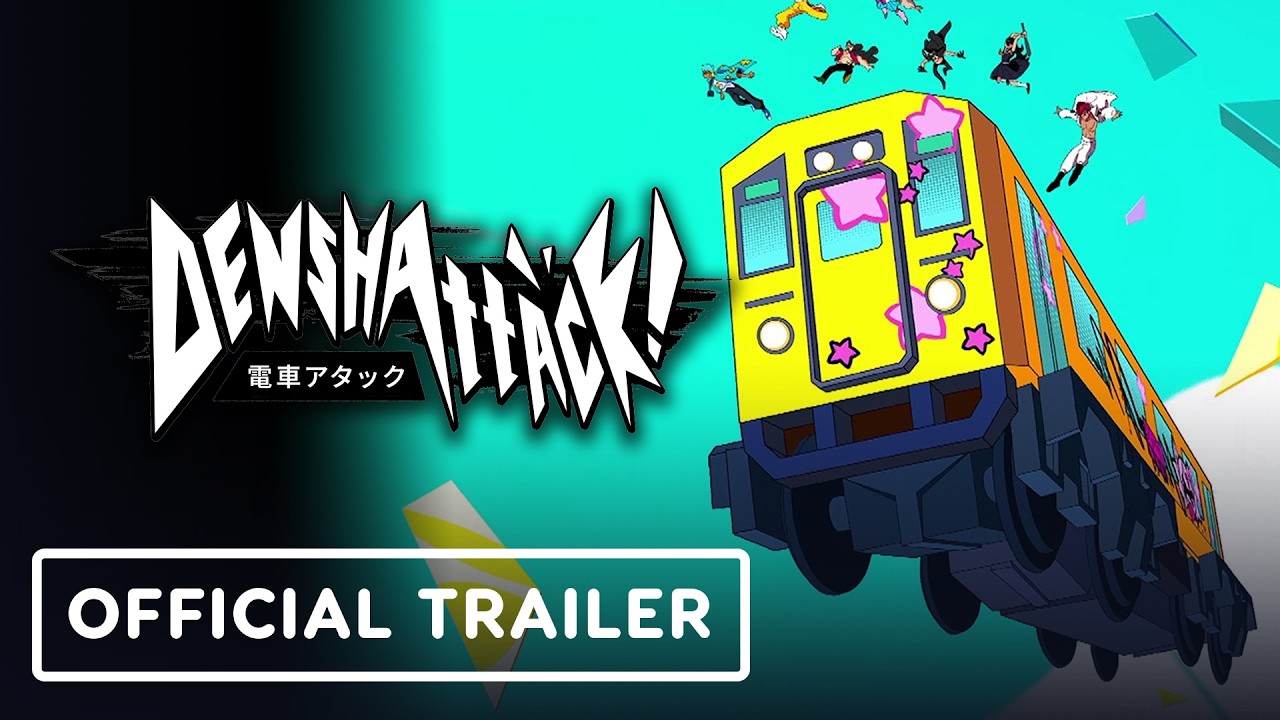
Denshattack! is set in a near-future Japan where climate change has forced cities under enormous domes managed by the Miraidō corporation. Trains are the only method of inter-city transport. Into this world steps a countercultural group called "Denshattackers" — people who perform extreme trick combos on their custom trains as an act of resistance. You play as Emi, a delivery driver pulled into the underground network fighting Miraidō's control.
That's the pitch. A game about skateboarding trains.
It is, historically, the kind of concept that gets described as "a gimmick" in pre-release previews. The early 2000s had enough room for absurd single-mechanic premises — the Tony Hawk franchise, Katamari Damacy, Jet Set Radio — but 2026's market tends to demand either a franchise name or a genre-blend that signals broad appeal. Denshattack! came in with neither. It came with a trailer that looked like an anime opening and a single mechanic: chain tricks on a train.
Polygon's Giovanni Colantonio, reviewing for one of the publication's highest scores of the summer, put it plainly:
""A game about skateboarding trains should not work; the fact that Denshattack! lands as one of 2026's most exciting indies is a testament to how much it captures the spirit of cool." — Polygon
IGN's Will Borger, scoring it 9/10, framed it differently:
""It's the kind of joint we used to get all the time in the PS2 era and is now only found in the indie space. Two thoughts ran on a loop while I was playing Denshattack: 'this rules,' and 'this really has no business being this good. How are they doing this?'" — IGN (9/10)
The Score Breakdown
| Outlet | Score | Key Line |
|---|---|---|
| Metacritic | 90 | Critic aggregate |
| IGN | 9/10 | "I enjoyed every second I spent in its world ... a joy" |
| Eurogamer | 5/5 | "Irreverent, unpredictable, funny, and unputdownable" |
| The Gamer | 5/5 | "One of the fiercest, fastest, and most lovable games I've played" |
| gamebrief.net | 8.6/10 | "Trick-chaining system that genuinely earns the Tony Hawk comparison" |
| Polygon | Recommended | "One of 2026's most exciting indies" |
| Steam Users | 97% positive | Very Positive (317 verified reviews) |
The Steam rating is worth pausing on. gamebrief.net's Finn Calloway wrote his review two days post-launch and flagged it specifically:
""That kind of alignment between player sentiment and critic score is rare enough to be worth checking." — gamebrief.net (8.6/10)
What the Trick System Actually Does
The game's six regions — Kyushu countryside, domed Osaka, domed Tokyo, Hokkaido snowfields, and stranger territory beyond — are each built as an interconnected rail network designed like an enormous skate park. Ollies, kickflips, grinds, manuals, crane swings, and dual-track slides chain into combos. The game introduces each new trick in isolation before folding it into longer strings, pacing the learning curve across the entire campaign rather than front-loading the tutorial.
The wrinkle that separates Denshattack! from being a Tony Hawk reskin is a fighting-game-style timed input layer. Standard combo games let you string inputs freely; Denshattack! adds a precision confirmation window. Hit the button inside the window and the combo extends. Miss and the chain drops. That one addition changes the experience from pattern execution to active rhythm management, and it's what sustains the mechanical depth across a 15-hour campaign.
Customization runs deeper than the promotional screenshots suggest. Trains take cosmetic and functional upgrades as you progress. The yellow star-covered grind car on most of the marketing art looks nothing like what you're piloting by the midgame.
Where the game loses points — and where multiple reviewers landed on the same two complaints independently — is the interface during high-speed combo chains. The trick-prompt HUD (the icons queuing your next input) blurs into noise at pace. And on the game's more dramatic camera angles, junction visibility occasionally fails right when you need to read ahead. Neither issue breaks a run on its own, but the camera problem compounds the HUD problem in a way that affects late-game tracks more than early ones.
Accessibility got real attention here. A Camera Comfort option reduces the most aggressive trick-cam angles. Per-channel audio sliders and a keyboard-only control scheme round out a suite of options that is notably better than what the genre usually ships with.
Boss Design and Campaign Pacing
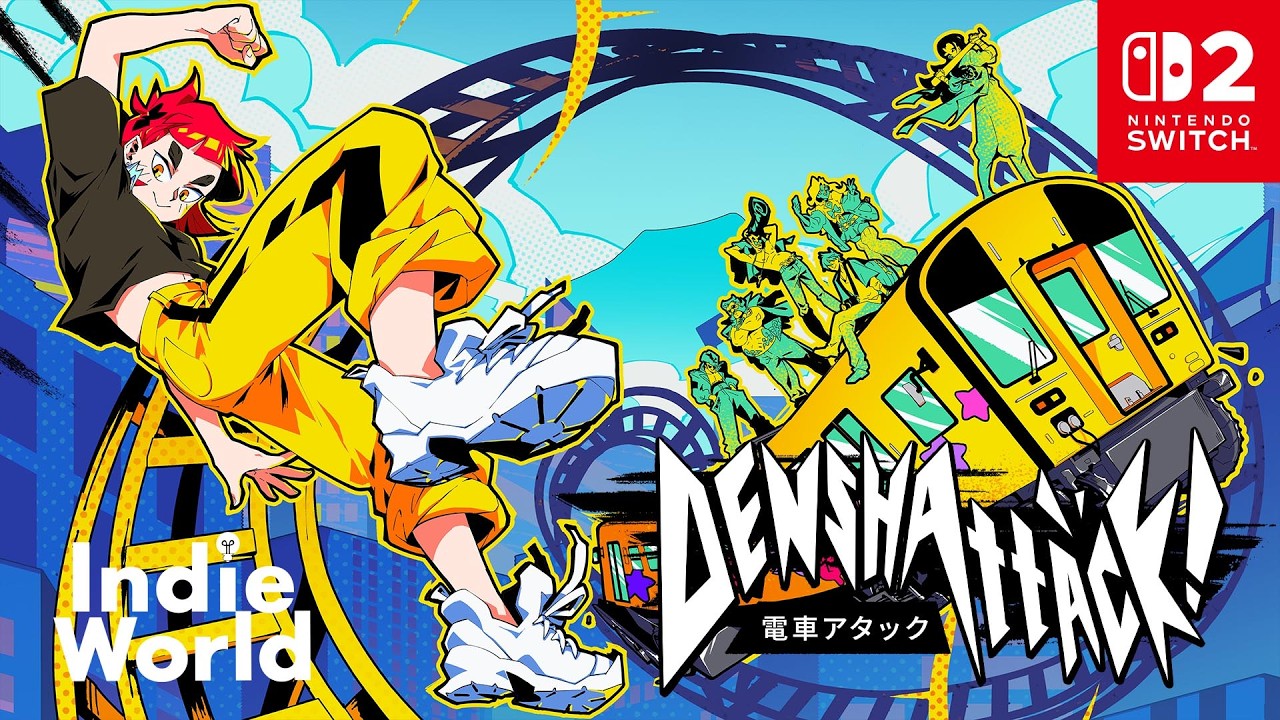
The boss encounters are the most consistently praised element across outlets, and the praise is specific: each fight is built around a distinct mechanical conceit rather than the health-bar-with-extra-steps formula. A stage built around dodging a rolling baseball-shaped launcher. A mecha rival duel. A fight inside a collapsing structure where the environment inflicts as much damage as the opponent. The Steam listing's "mecha magical girls to moving castles" line is not marketing exaggeration.
The campaign runs 9 to 15 hours depending on how aggressively you pursue optional content. There are 39 Steam achievements. The completionist track extends the run well beyond the main story without padding the core experience. The story itself — punk countercultural misfits versus a vaguely sinister megacorp, with some light anti-AI sentiment — is universally described as thin. It functions as a narrative frame, not a narrative payoff. Polygon noted that the thin story is "never tested" precisely because the campaign is short enough that it doesn't need to be.
The Polygon review described what makes the structure work:
""It's an explosion of creative energy that feels like it was born from several rounds of 'yes, and…' between developers." — Polygon
What Denshattack! Costs — and Whether It's Worth It
At $19.99 (currently $17.99 with the launch discount running until July 29), Denshattack! sits at the lower end of the mid-tier indie price range. The 9-to-15-hour campaign with 39-achievement upside makes the value case straightforward for a score-attack title.
A Digital Deluxe Bundle adds DLC cosmetic content and the full soundtrack for $27.43 (discounted from $29.19). The soundtrack is also sold separately at $9.19.
Denshattack! is not on Xbox Game Pass or any other subscription service at launch. It's a straight purchase across all four platforms.
| Edition | Full Price | Discounted Price (until July 29) | Includes |
|---|---|---|---|
| Standard | $19.99 | $17.99 | Base game |
| Digital Deluxe Bundle | $29.19 | $27.43 | Base game + DLC content + OST |
Good fit if you:
- ▶Have fond memories of Tony Hawk's Pro Skater 2 or Jet Set Radio
- ▶Want an arcade score-attack game with a real single-player campaign
- ▶Are looking for a polished 10–15 hour indie under $20
Skip it if:
- ▶Narrative depth is your primary motivation (the story is intentionally thin)
- ▶You're sensitive to motion or aggressive camera angles (the comfort option helps but doesn't fully solve late-game junction issues)
What Denshattack!'s Success Signals for the 2026 Indie Market
Denshattack! launched into a July that included DOOM: The Dark Ages — Revelations DLC (Metacritic 90, July 7), Palworld 1.0's full release (Metacritic 86, July 10), and Assassin's Creed: Black Flag Resynced (Metacritic 84, July 9). Holding a 90 alongside those names — and beating all of them in Steam user sentiment — is not what the release calendar suggested was likely for a first major launch from a Spanish indie studio.
The one-month delay from June 17 to July 15 appears to have been the right call. Undercoders cited additional polish, not added content, and reviewers broadly confirmed the game felt finished rather than rushed.
Eurogamer's five-star verdict was arguably the sharpest encapsulation of what makes the game matter:
""Irreverent, unpredictable, funny, and unputdownable." — Eurogamer (5/5)
That combination — irreverent enough to take a wild swing, polished enough to land it — is what the indie market can do that franchise development rarely allows. Denshattack! is the clearest example of it in 2026 so far.