What Happened
Hours after Tomb Raider: Legacy of Atlantis received a release date reveal trailer at Sony's State of Play June 2026 showcase, players discovered a disclaimer on the game's Steam page disclosing the use of AI tools during development:
“"AI-assisted tools were used during development to support some early exploration and temporary development content. Any AI-assisted assets were either replaced or refined by humans in order to maintain the creative and artistic vision of the development team." — Tomb Raider: Legacy of Atlantis Steam page
The disclosure triggered an immediate backlash across X (formerly Twitter) and Reddit. In response to the community reaction, co-developer Crystal Dynamics provided a statement to Eurogamer.
Timeline of Events
| Date | Event |
|---|---|
| December 11, 2025 | Tomb Raider: Legacy of Atlantis announced at The Game Awards 2025 |
| June 2, 2026 | Release date (Feb 12, 2027) + new trailer shown at State of Play June 2026 |
| June 2, 2026 | AI disclaimer spotted on Steam page, spread on X and Reddit |
| June 3, 2026 | Gaming media coverage begins (Aftermath, Eurogamer, The Verge) |
| June 3–4, 2026 | Crystal Dynamics issues official statement to Eurogamer |
Each Side's Position
Crystal Dynamics' Official Statement
Co-developer Crystal Dynamics told Eurogamer:
“"At Crystal Dynamics, we leverage AI tools to help our teams iterate on ideas faster and more efficiently, while ensuring that all finished content in the final product is human-crafted. Our goal is to empower the creativity and flexibility of our developers to deliver the highest-quality experiences for players everywhere."
The statement essentially mirrors the Steam disclaimer — AI was used in early/temporary phases, and the final product was made by humans.
Critics and Media
Luke Plunkett at Aftermath was pointed in his criticism:
“"Come on, your goal is to cut corners and save some cash, maybe lay off some artists down the line. You could at least be honest about it."
Plunkett's full argument: the artistic process — including early exploration and iteration — is itself the creative work. Using AI to shortcut that process removes the irreplaceable human element from the art, even if no AI-generated content makes it into the final game. The uncertainty itself is the problem.
Key critical points:
- ▶"Early exploration" is vague — players cannot know the actual scope
- ▶Even if final assets are human-made, AI involvement in ideation affects creative integrity
- ▶AI tools in development pipelines tend to reduce artist headcount over time
- ▶The suspicion and unknowing is itself exhausting for consumers
Pro-AI / Neutral Position
Some developers and community members argued:
- ▶AI tools in early prototyping are already industry-standard in 2026
- ▶If the final product is fully human-crafted, no tangible harm was done
- ▶Disclosing it proactively on the Steam page is actually more transparent than most studios
- ▶Condemning all AI usage risks condemning broadly used productivity tools
About the Game
| Details | |
|---|---|
| Title | Tomb Raider: Legacy of Atlantis |
| Genre | Third-person action-adventure |
| Developer | Crystal Dynamics / Flying Wild Hog |
| Publisher | Amazon Games |
| Release Date | February 12, 2027 |
| Engine | Unreal Engine 5 |
| Based On | 1996 Tomb Raider (reimagining) |
Tomb Raider: Legacy of Atlantis reimagines the original 1996 game, following Lara Croft through Peru, Greece, Egypt, and a mysterious Mediterranean island as she hunts for the Scion artifact. It was developed using Unreal Engine 5 and is being published by Amazon Games.
Screenshots
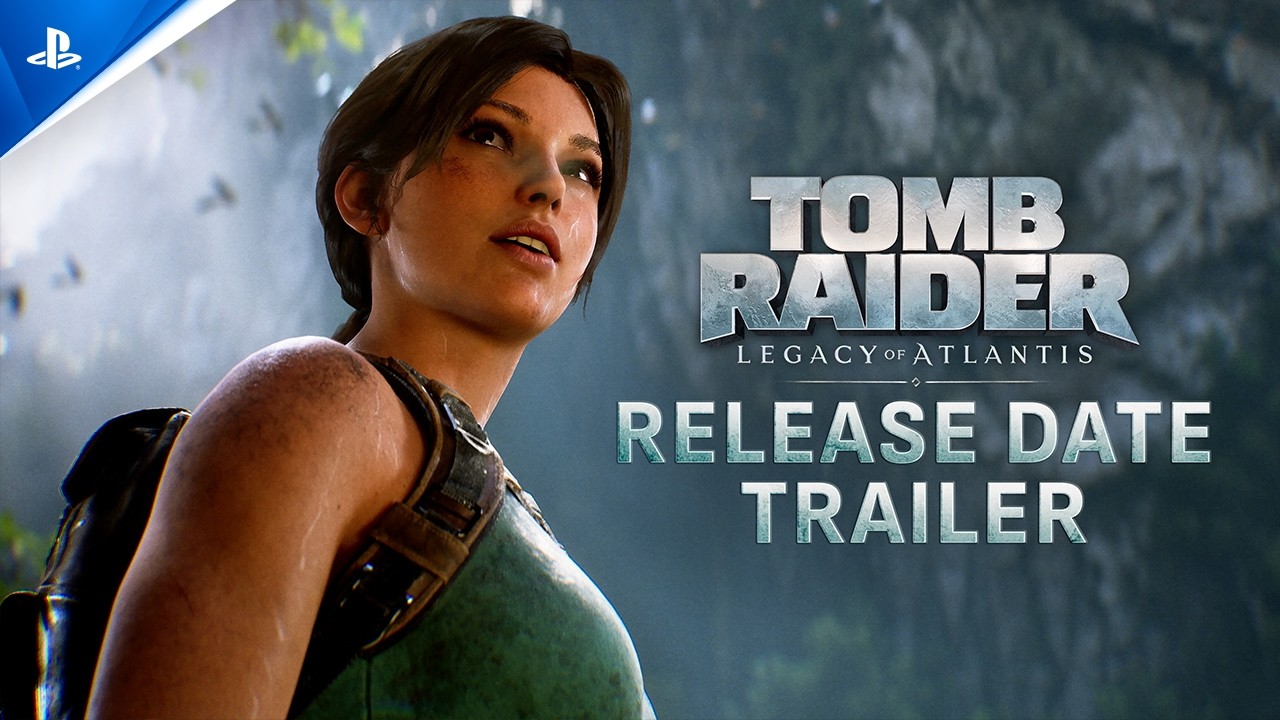
Tomb Raider: Legacy of Atlantis release date reveal — PlayStation official (643,800+ views)
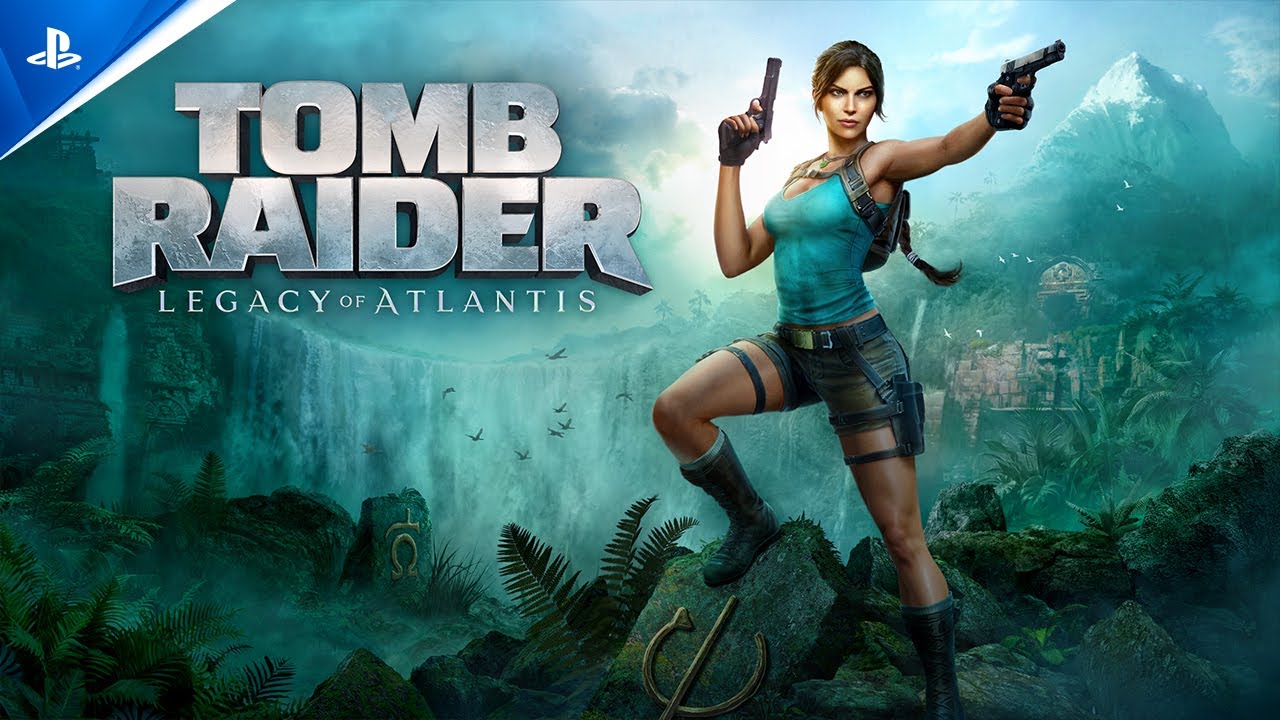
Tomb Raider: Legacy of Atlantis announcement — PlayStation official (2,500,000+ views)
Context: AI Controversies in Gaming (2025–2026)
This is not an isolated incident. The use of AI tools in game development has become a recurring flashpoint.
| Case | Summary | Outcome |
|---|---|---|
| NTE: Neverness to Everness (May 2026) | AI-generated billboard and background assets found in game; VTuber Ironmouse dropped sponsored stream after being told "no AI anywhere" | Studio promised to review and rework flagged assets |
| The Alters (2026) | AI usage allegations; scope unclear | Situation unresolved; community fatigue |
| Tomb Raider: Legacy of Atlantis (June 2026) | AI disclaimer on Steam page post-State of Play | Official statement issued; controversy ongoing |
Community Reaction
Reaction was mixed but predominantly negative toward Crystal Dynamics' handling.
Representative responses from X and Reddit:
- ▶"It's not that they used AI — it's that we can't know how much."
- ▶"At least they disclosed it. That's more than most."
- ▶"AI in early exploration just means concept artists didn't get hired."
- ▶"By 2026, honestly, which studio isn't using AI internally?"
The controversy has not appeared to impact preorder momentum significantly — the trailer itself was one of the most-watched from State of Play with 643,000+ views in two days. But the discourse around it has overshadowed what would otherwise have been a clean marketing moment.
GamePeak Summary
The core issue is not that AI was used — it's the opacity of "how much." Crystal Dynamics disclosing the use on Steam is, technically, more transparent than many studios. But the phrase "early exploration and temporary development content" is broad enough to cover anything from a single reference image to entire concept art pipelines, and that ambiguity is exactly what drives distrust.
Tomb Raider: Legacy of Atlantis is still one of the more anticipated games of early 2027 — the Unreal Engine 5 reimagining of the 1996 original has strong foundation. Whether this controversy meaningfully impacts reception at launch remains to be seen. But it has added fuel to an ongoing industry-wide conversation: what level of AI disclosure should be required, and what exactly are studios obligated to say?
Sources: Aftermath (Luke Plunkett), Eurogamer, PlayStation Blog, The Verge, GameSpot, CBR, gamingonphone