What Is a "Cyber Wrecker" and Why Does Korean Gaming Care?
In South Korea's internet culture, a Cyber Wrecker (사이버 레커) refers to content creators — typically YouTubers — who generate engagement through sensationalized, often unverified, or outright false claims. In the gaming space, so-called "game wreckers" target studios with provocative accusations designed to maximize views regardless of accuracy.
For years, Korean gaming companies have absorbed this dynamic in silence. Publicly fighting back risked the narrative of "a company at war with its own players." But as misinformation increasingly threatens new game launches and stock prices, the industry's patience has run out.
The NCSoft vs. 겜창현 Timeline
| Date | Event |
|---|---|
| December 2025 | NCSoft files criminal complaint and ₩1 billion civil damages lawsuit against YouTuber "겜창현" |
| Early 2026 | Creator begins issuing repeated apologies publicly and privately to NCSoft |
| May 11, 2026 | NCSoft files lawsuit withdrawal at Seoul Central District Court |
| May 21, 2026 | 겜창현 publishes official video apology acknowledging false statements |
| May 30, 2026 | NCSoft withdrawal publicly confirmed |
The claims that triggered the lawsuit — which NCSoft says internal data and expert analysis confirmed to be false — included:
- ▶"NCSoft only penalizes free-to-play users"
- ▶"An NCSoft official is actually the boss of the gold farming operation"
- ▶"NCSoft ignores illegal macro bots in AION 2"
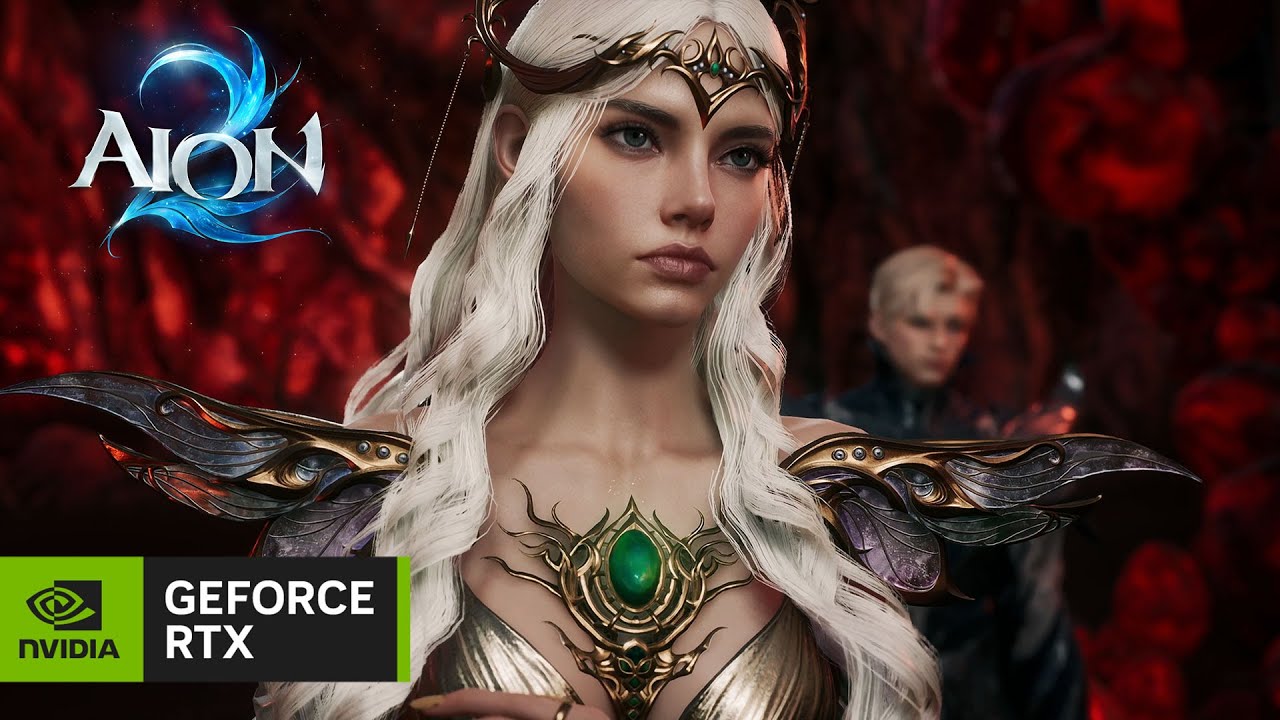
AION 2, NCSoft's flagship new MMORPG that launched in South Korea and Taiwan in November 2025, was directly damaged by the spread of these allegations during a critical post-launch window when player trust was still forming.
NCSoft's decision to drop the lawsuit is NOT a pardon — it's a calibrated warning shot. The creator publicly admitted fault, apologized, and promised no recurrence. NCSoft accepted, then reminded the industry that the same behavior will lead straight back to court for anyone else.
The 영래기 Case: Still Active
While 겜창현 was spared further legal action, NCSoft's legal team is still pursuing a separate creator. YouTuber "영래기" (approximately 292,000 subscribers) faces ongoing criminal charges for claims related to Lineage Classic, NCSoft's legacy MMORPG. The alleged claims:
- ▶"NCSoft tolerates and ignores illegal bot programs"
- ▶"The company unfairly penalizes legitimate players who report bots"
NCSoft says both claims are demonstrably false based on internal evidence. There are no plans to withdraw this case.
The Law Behind the Change: Korea's "Fake News Punishment Act"
Parallel to the NCSoft cases, South Korea's broadcasting and communications regulator has pushed through a landmark regulatory revision. The amended Enforcement Decree of the Information and Communications Network Act — widely nicknamed the "Fake News Punishment Act" — takes effect on July 1, 2026.
| Threshold | Consequence |
|---|---|
| Channel with 100,000+ subscribers OR avg. 100,000+ monthly views over 3 months | Classified as "influential information distributor" |
| Proven misinformation causing measurable harm (civil) | Up to 5× the proven damages in liability |
| Repeated distribution of false/manipulated content (administrative) | Up to ₩1 billion (approx. $730,000 USD) in administrative fines |
| Law enforcement | 4 major metropolitan/provincial police agencies establish dedicated "cyber analysis teams" |
The law distinguishes between criticism and misinformation. Creators can still critique a studio's update decisions, monetization, or communication — that's protected expression. What becomes legally dangerous is stating unverified information as fact, especially repeatedly, especially when the creator has significant reach.
For context: past penalties for cyber wrecker behavior in Korea were typically small fines (₩500,000–₩3,000,000). Courts have recently escalated to suspended prison sentences and, in at least one January 2026 case, an actual prison term of 18 months for defamation.
What Korean Gaming Creators Need to Know
The combined effect of NCSoft's legal action and the incoming law creates a new operating environment for Korean gaming YouTubers:
- 1Verification is now liability-critical — Publishing unconfirmed allegations at scale now carries real financial risk
- 2Scale matters — Creators with 100,000+ subscribers or views are held to a higher standard
- 3Legitimate criticism is still protected — Game balance complaints, bad monetization critiques, and honest reviews remain untouchable
- 4Pattern behavior is penalized harder — Repeat offenders face administrative fines on top of civil damages
How the Gaming Industry Is Responding
This moment is being read as a turning point by Korean gaming insiders.
“"The message from NCSoft is clear: we'll absorb criticism, but false statements that damage our game's launch will be met with legal action. This sets a new industry standard." — Korean gaming industry official (Maeil Business quoted)
“"NCSoft isn't just protecting itself. It's showing the entire industry that 'silence costs' are no longer acceptable. More studios will follow this playbook." — Electronic Times analysis
“"On DC Inside's gaming boards, most users are saying this was long overdue. 'Criticism and fabrication are not the same thing.'" — DC인사이드 community reaction
The Bigger Picture: Why This Matters Beyond Korea
South Korea is one of the world's largest gaming markets, and the K-game industry has outsized influence on MMO and mobile game development globally. If Korean studios establish legal norms around creator misinformation, those norms could influence how studios elsewhere approach similar creator-driven controversies.
The NCSoft lawsuit also lands in a broader context: global gaming studios — from Riot Games to Ubisoft to independent developers — have all faced coordinated misinformation campaigns that drove player churn and damaged launches. South Korea is simply the first major gaming market to respond with binding legislation.
For now, July 1 is the date to watch. That's when the legal landscape for Korean gaming content changes permanently.