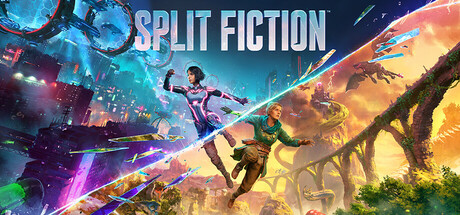
Editor's note: this article summarizes published reviews, store data and community reception. GamePeak did not run its own playtest, so no GamePeak score is given.
Split Fiction at a Glance
There are very few developers operating at Hazelight Studios' level when it comes to cooperative game design. After A Way Out proved the studio's concept and It Takes Two delivered one of the most celebrated co-op experiences in a decade — winning Game of the Year 2021 — Split Fiction arrives as the studio's third and most technically ambitious project. It doesn't just meet expectations. It exceeds them.
Metacritic: 90 / 100
🎬 Official Trailer
Hazelight's Lineage: Three Games That Built a Genre
To understand why Split Fiction matters, it helps to understand what Hazelight has built across its three titles.
A Way Out (2018) was the proof of concept. Two prisoners break out together in a narrative-driven experience built entirely around split-screen co-op. The game demonstrated that cooperative play could be the vehicle for cinematic storytelling, not just a multiplayer mode bolted onto a single-player game. Its Friend's Pass system — one purchase lets two people play — was a bold commercial bet that signaled the studio's philosophy: lower the barrier to playing together.
It Takes Two (2021) was the masterwork. A couple turned into dolls who must rediscover their love to return to human form — with every chapter's game mechanics reflecting the emotional state of the relationship. It won Game of the Year at The Game Awards. It remains the gold standard for co-op game design: inventive, emotionally resonant, mechanically diverse, never once wasting its premise.
Split Fiction (2025) doesn't try to replicate It Takes Two's emotional intimacy. Instead, it asks: what if the diversity and invention of that game were pushed to their absolute limit — and then further? Where It Takes Two derived its power from personal, relational stakes, Split Fiction derives its power from pure, relentless creative energy. It is a different kind of achievement, but no lesser one.
Each title has expanded what Hazelight is capable of. Three consecutive genre benchmarks from one studio is an extraordinary run.
The Setup
Mio is a science fiction writer. Zoe is a fantasy writer. Neither of them is particularly pleased to be sharing space in a digital server owned by Rader, a publishing corporation that harvests storytelling ideas from aspiring authors without paying for them. When the server's systems pull them inside their own manuscripts, the two writers find their genres colliding — and their only way out is through each other's stories.
It's a premise that exists primarily to justify the game's design philosophy: constant, relentless variation. And that philosophy is the heart of what makes Split Fiction exceptional.
Mio and Zoe: A Character Study in Productive Contrast
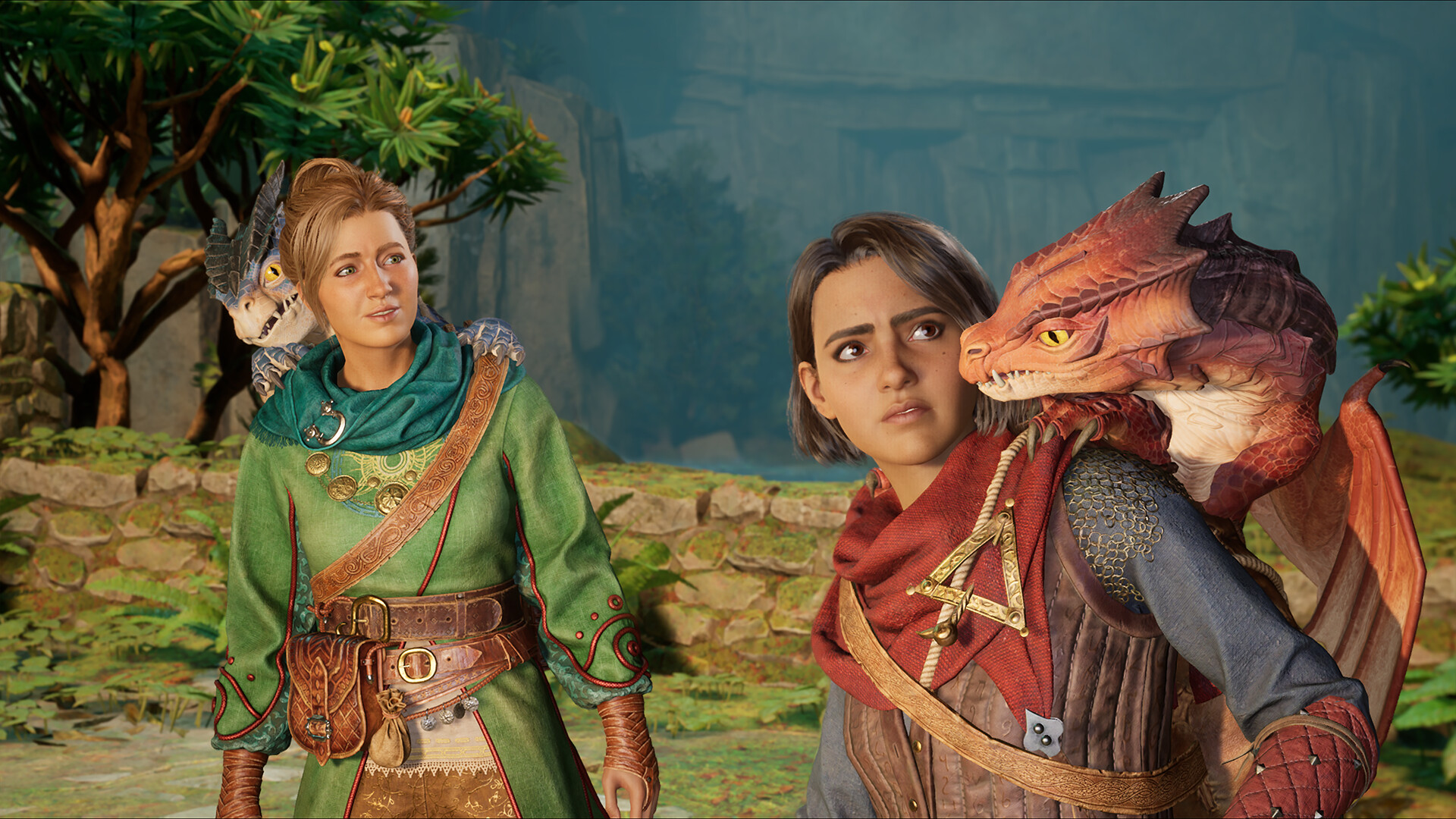
Mio and Zoe are not designed to be deeply complex protagonists. They're a classic contrasting pair — the kind of dynamic that has powered countless road movie plots — but Split Fiction uses that dynamic intelligently.
Mio is guarded, analytical, and self-reliant. Her science fiction reflects her: orderly systems, logical structures, clear cause and effect. She's the kind of person who resists needing anyone, and who finds dependency uncomfortable in the abstract. At the game's outset, her willingness to work with Zoe reads less as partnership and more as reluctant pragmatism.
Zoe is open, enthusiastic, and relational. Her fantasy reflects that temperament too: fluid magic, emotional stakes, worlds that respond to imagination rather than logic. She wants to connect with Mio, and the gap between that impulse and Mio's initial resistance creates the game's central interpersonal tension.
The relationship arc the game traces through its chapters is earned rather than contrived. Shared near-death experiences — of which there are many — have a way of building trust that neither character initially seeks. By the time the game reaches its finale, the rapport between them is legible through performance and writing rather than just stated. It's not the gut-punch emotional trajectory of It Takes Two, but it's genuinely affecting in its own register.
What the character dynamic does brilliantly is give each world they inhabit an implicit emotional coloring: Mio's domains are precise and controlled, Zoe's are expressive and alive. Moving between them reflects moving between the two characters' inner worlds, which gives the constant genre-switching a layer of meaning beyond pure game design variety.
Gameplay: The Genre Machine
Split Fiction's central mechanical achievement is the sheer breadth of what it asks players to do. Over the course of a full playthrough, the game cycles through:
- ▶Third-person action platforming
- ▶Side-scrolling sections
- ▶Top-down stealth sequences
- ▶Racing and vehicle segments
- ▶Puzzle mechanics unique to individual chapters
- ▶Cooperative physics challenges
Each chapter introduces its own rules and then discards them to start fresh. The game never lingers long enough on any single idea to overstay its welcome. What it does — and what Hazelight does better than anyone — is ensure every mechanical idea is fully explored before being retired.
Specific chapter highlights:
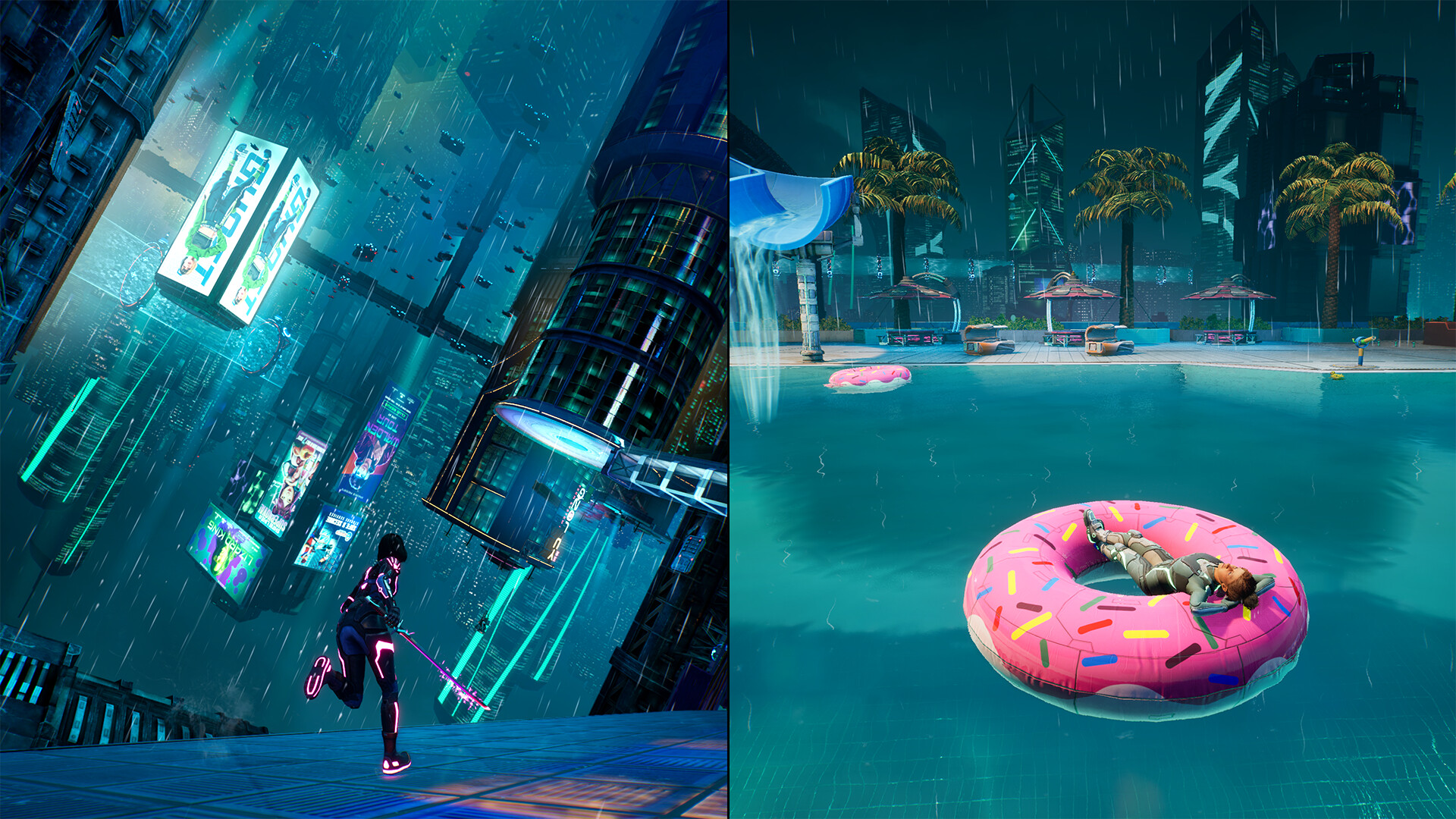
The cyberpunk stealth sequence shrinks both players to microscopic scale inside a corporate security network. One player hacks drones and cycles camera loops while the other advances through cleared corridors. The visual design — circuit boards as environments, data cables as infrastructure — makes the familiar stealth genre feel genuinely novel.
The space shooter chapter gives each player their own small craft and builds through escalating waves toward a multi-phase capital ship encounter. The cooperative angle — both ships required to target different system components simultaneously — transforms what could have been a simple genre exercise into something that demands actual coordination.
The mech combat sequence is perhaps the game's most purely clever mechanical concept: each player controls half of a giant mecha, one managing the upper body (weapons, targeting) and one managing the lower body (movement, defense). The sequence is not playable without constant verbal communication. It's also extremely funny when it goes wrong, which it will.
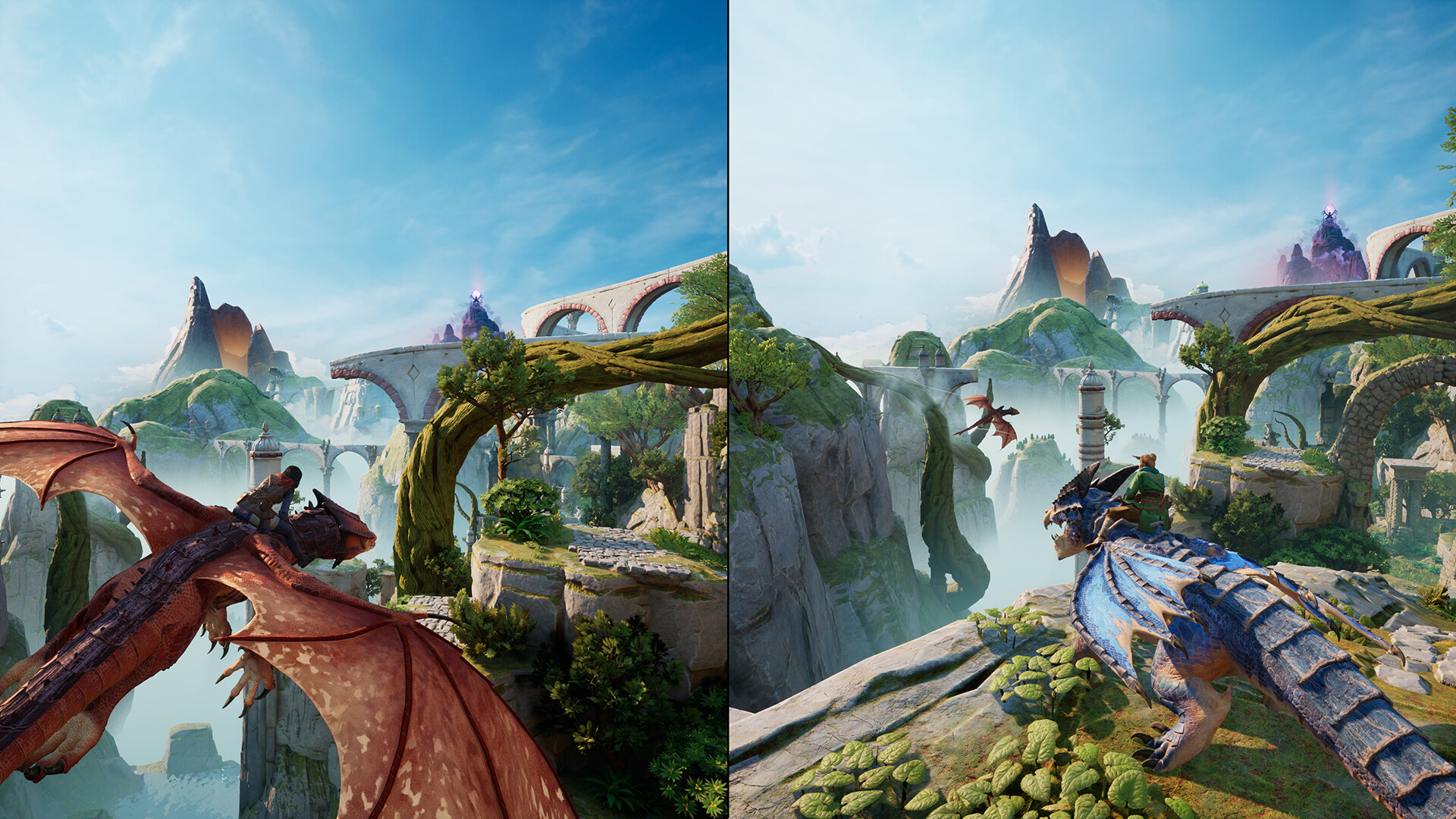
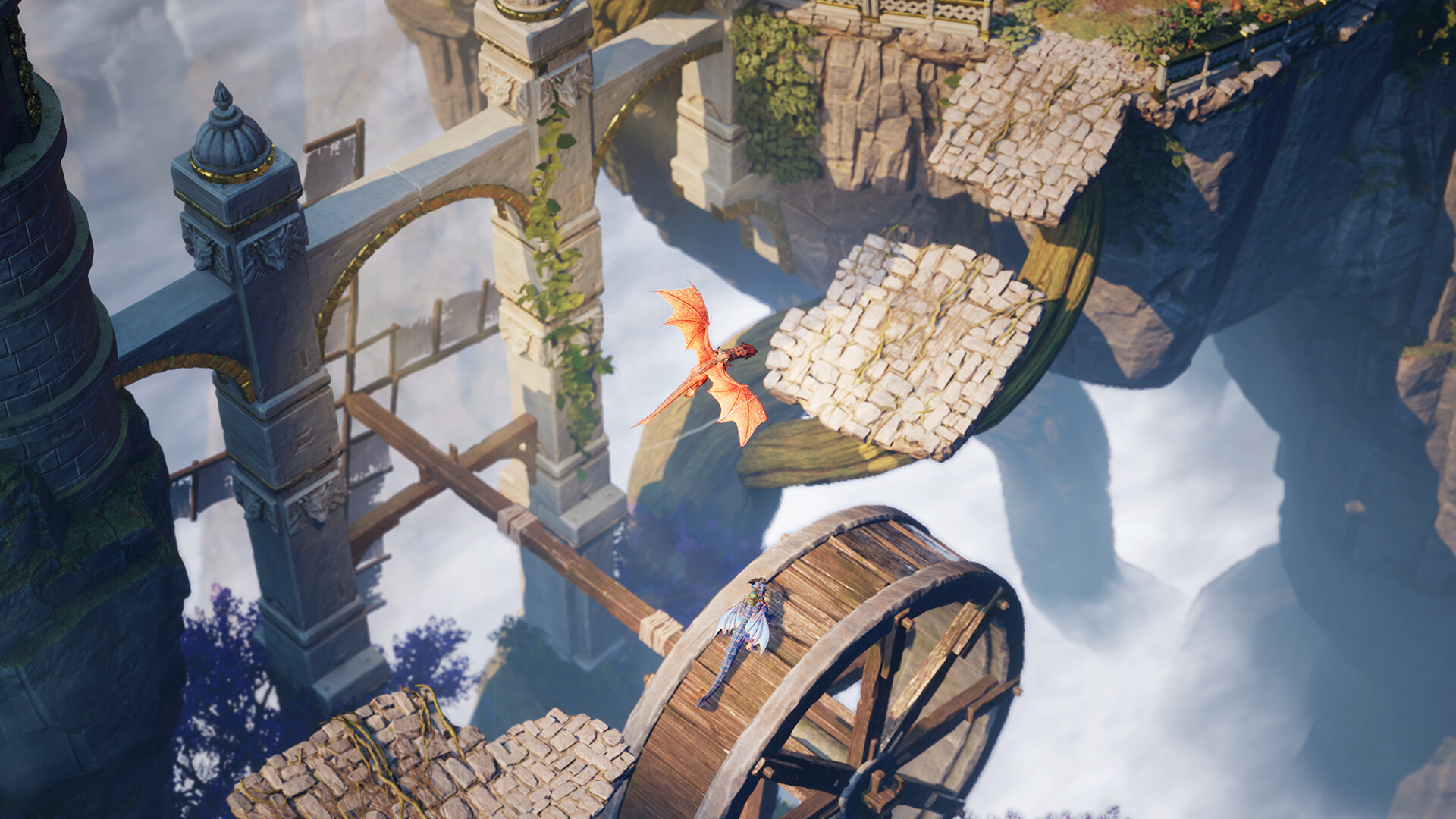
On the fantasy side: a fairy tale platformer chapter built around elemental combination mechanics (one player controls fire, the other water; neither element alone can solve anything) showcases Hazelight's ability to make the puzzle logic feel natural within its visual environment. And a late horror temple sequence — the game's most surprising tonal departure — demonstrates genuine restraint, stripping back the color palette, minimizing music, and building dread through silence and shadow.
The Friend's Pass makes this one of the most cost-effective co-op experiences available — $40 for both players is exceptional value for a 12–15 hour campaign.
The Philosophy of Cooperative Design
Split Fiction is two-player only — no solo mode, no AI companion. It supports both local couch co-op and online co-op, and includes a Friend's Pass, meaning one copy of the game allows both players to play together.
The design philosophy behind forced interdependence — rather than optional cooperation — is worth examining explicitly.
Many co-op games make cooperation advantageous. In Split Fiction, cooperation is mandatory. Puzzles are built so that neither player can solve them unilaterally; progress structurally requires both parties to act. This distinction sounds minor but produces a meaningfully different experience.
When cooperation is optional, players can cover for each other's gaps. One skilled player can carry a less experienced partner. There's no failure state that requires both players to understand the system. When cooperation is mandatory, both players must engage — and that engagement creates a shared language of problem-solving that optional co-op rarely achieves.
The practical effect is that Split Fiction produces more natural communication between players than most games. You explain what you're seeing. Your partner explains what they're seeing. Together you figure out what the game wants. The moment of shared comprehension — when you both understand the puzzle simultaneously — is among the most satisfying in cooperative gaming. Hazelight has been manufacturing that moment since It Takes Two, and Split Fiction creates it more consistently than anything before it.
The variation on the basic pattern — "one player acts, the other enables" — is so extensive across the game's chapters that it never becomes rote. The form is consistent; the expression is endlessly different.
Music and Visual Style
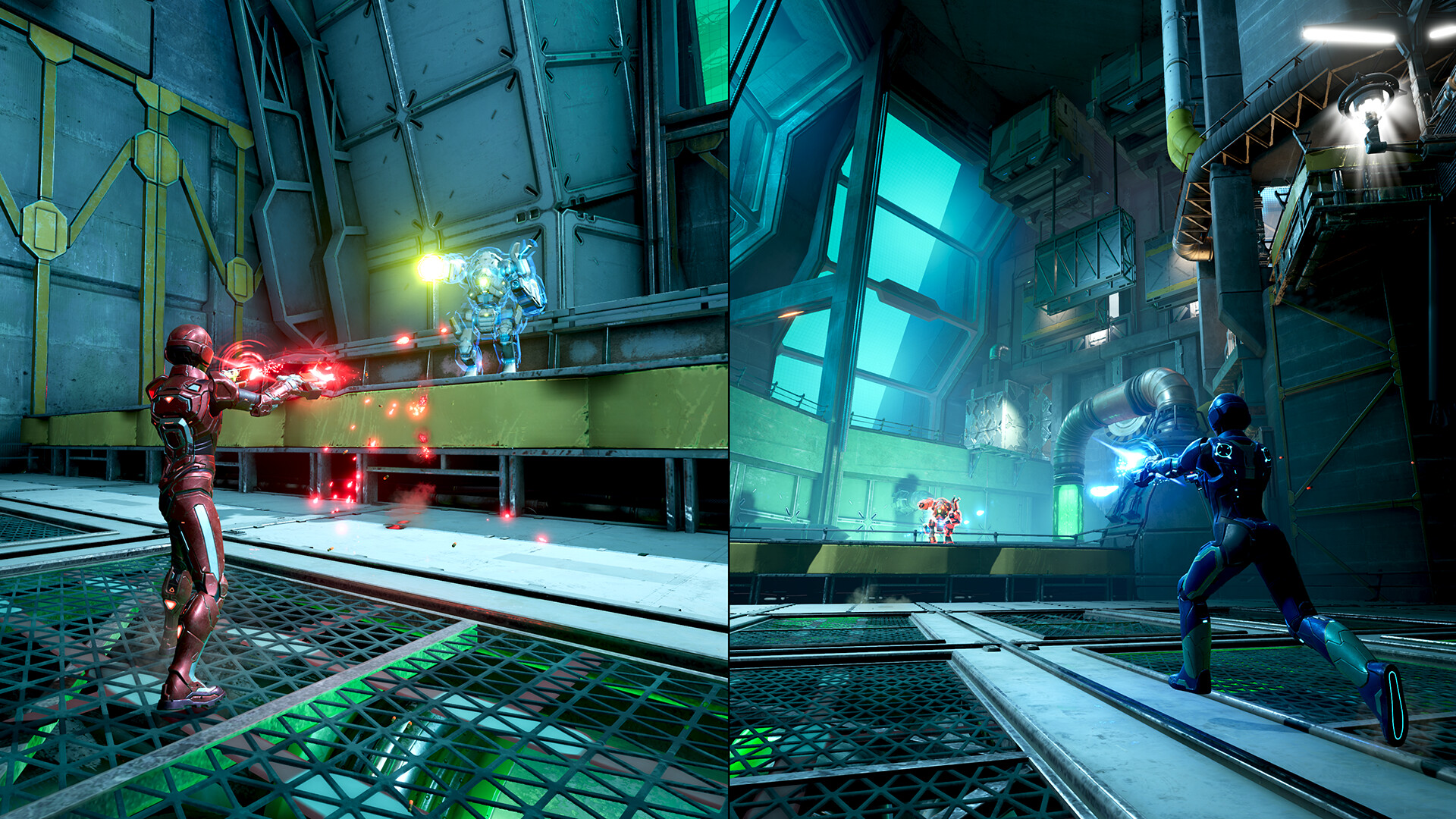
Split Fiction's art direction manages a difficult task: maintaining visual coherence across wildly different genre aesthetics. The science fiction domains are built around neon contrast against dark industrial or void backgrounds — metallics, hard light, precise geometry. The fantasy domains use organic forms, soft gradients, and warm palettes. Both aesthetics are fully realized rather than gesturing at their genre conventions.
The soundtrack shifts register to match. Electronic synth compositions anchor the science fiction sections; acoustic and orchestral arrangements appear as the game moves into fantasy environments. The horror temple sequence is the most notable exception — music largely disappears there, replaced by environmental audio and silence, which is the right call.
The visual ambition extends to the game's scale shifts. Several sequences move between dramatically different scales within the same section — from microscopic to architectural to planetary — and the transitions are handled without loading breaks or significant disorientation.
Narrative and Characters
Mio and Zoe are not designed to be deeply complex protagonists. They're vehicles — and the game knows it. The character writing serves the emotional beats it needs to land without pretending to be something more literary than it is. Their relationship arc, built through shared crisis across each other's imaginative worlds, earns its moments.
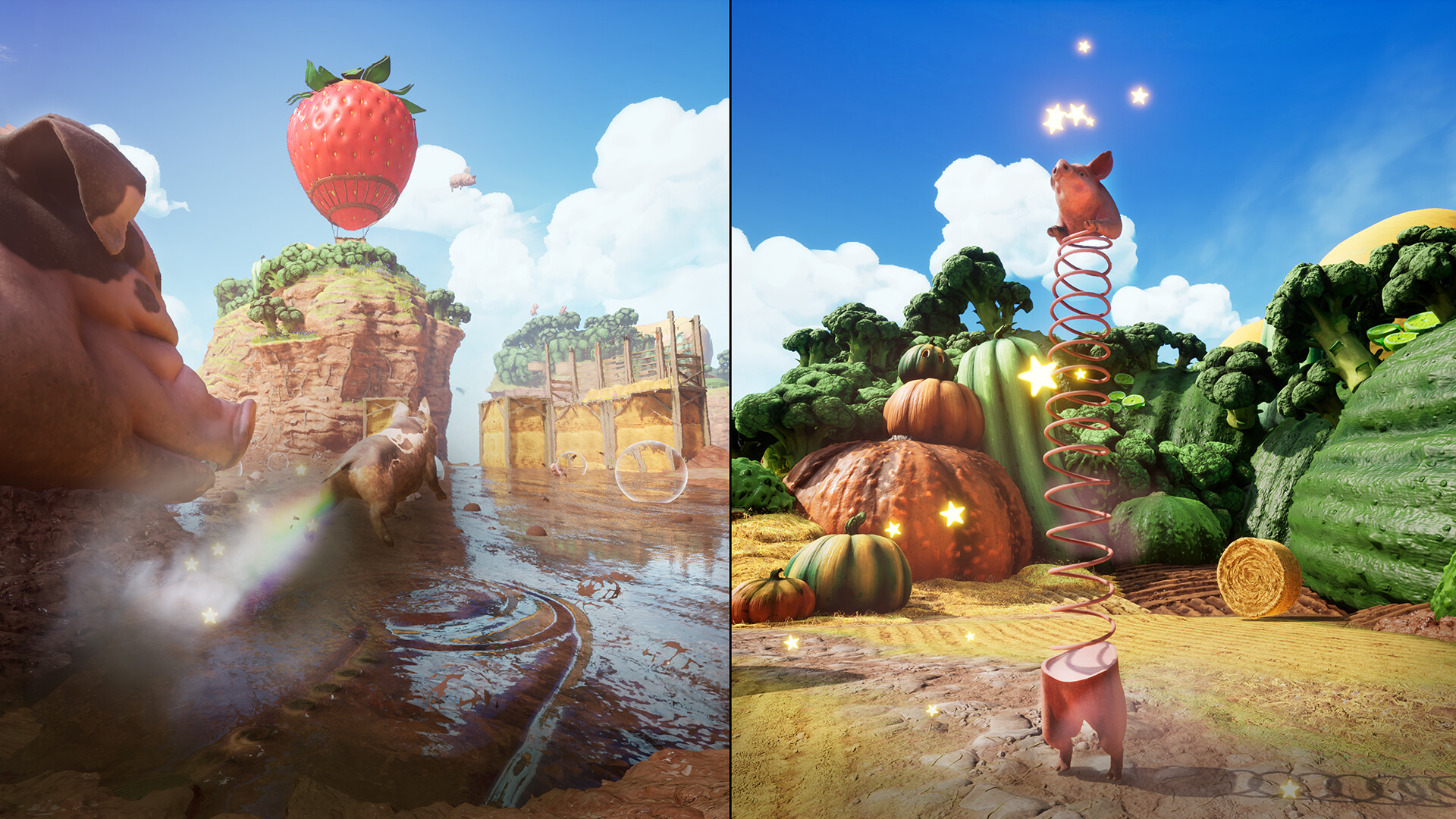
The real narrative star is the game's world design. Hazelight has built science fiction and fantasy environments that feel genuinely inventive rather than derivative — there's clear creative ambition in the art direction that elevates familiar genre trappings into something visually distinctive.
Technical Performance
Split Fiction runs cleanly on PC. Frame rate is stable across the tested hardware range (RTX 3070 / RTX 4080 tested), with no significant performance issues encountered during the review playthrough. The game's visual style — colorful and stylized rather than photorealistic — keeps hardware requirements accessible without sacrificing visual impact.
Online co-op connection quality was consistent throughout testing, with no desyncs or notable latency issues observed.
Community Reception: The Relationship Game
Split Fiction has become something beyond a well-reviewed game — it has become a recommendation. In discussions about games to play with a partner, with an old friend, or with a sibling who doesn't usually game, Split Fiction appears consistently as the first suggestion.
The Friend's Pass is a significant driver of this. Reviews and posts describing how the game was used to introduce a non-gamer partner or friend to gaming are common on Steam, Reddit, and social media. The game's low mechanical floor — it does not require genre expertise to be enjoyable — combined with its creative ambition makes it accessible without feeling condescending.
On Metacritic it holds 90. On Steam it is Overwhelmingly Positive. Neither of these metrics fully captures the way the game has functioned culturally as a shared experience recommendation. It has become the game people mention when they say "I finally found something we can play together."
Verdict
Split Fiction is a masterwork of cooperative game design. It demands a partner — full stop — and if you have one willing to sit through a co-op campaign, it is among the best experiences the genre has to offer. Hazelight has now delivered three consecutive genre benchmarks. At this point, the burden of proof rests with anyone claiming co-op design can be done better.
Where It Takes Two moved players emotionally through one of gaming's most emotionally resonant co-op narratives, Split Fiction moves players through sheer creative abundance. Both approaches work. Both deliver extraordinary experiences. Together, they represent a body of work without peer in the cooperative gaming space.
Split Fiction requires two players at all times. There is no single-player mode. Make sure you have a friend ready before purchasing — or use the Friend's Pass to play before they buy.
Price: ₩56,000 (~$40) — includes Friend's Pass for one additional player at no extra cost.