Editor's note: this article summarizes published reviews, store data and community reception. GamePeak did not run its own playtest, so no GamePeak score is given.
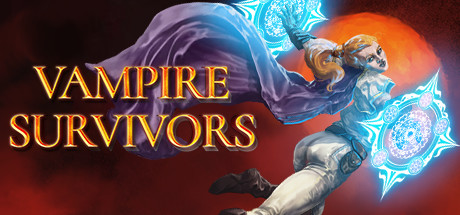
# Vampire Survivors — The $5 Game That Rewrote the Rules of Indie Gaming
A One-Person Studio. Six Million Copies. An Entire Genre Invented.
There are games that sell well. There are games that are critically admired. And then, very rarely, there is a game that does both so decisively — at such an implausible price point, from such an unlikely source — that it rewrites what people believe a small game can accomplish. Vampire Survivors is that game.
Built by Luca Galante working almost entirely alone under the studio name poncle, Vampire Survivors launched in Steam Early Access in December 2021 for $2.99. By the time it hit full release in October 2022, it had already sold millions of copies and sparked a wave of imitators so large that the term "bullet heaven" — a genre it effectively invented — had entered the gaming lexicon. Six million copies later, it remains one of the highest-rated games on Steam, and it costs $4.99.
The question that follows every recommendation of this game is always the same: how? How does a game that looks like it was made in the 1980s, with mechanics you can explain in thirty seconds, generate hundreds of hours of play and near-universal love? The answer is what this article is about.
The Origin Story: From Castlevania Fan to Genre Definer
Luca Galante has been transparent about what Vampire Survivors started as: a browser game prototype inspired by Magic Survival, built for his own amusement during the pandemic, with music and visual aesthetics borrowed heavily from the Castlevania series he loved. The vampires, the gothic atmosphere, the character names and abilities — all of it nods to Konami's classic franchise with the earnestness of genuine admiration rather than cynical pastiche.
The original prototype asked one question: what if a horde shooter didn't require you to aim? What if your weapons fired automatically, and the entire game was about what weapons you chose and how you positioned yourself? Galante put this prototype on itch.io. People played it. They left comments. He kept working on it.
When he eventually put the game on Steam Early Access, priced low enough that buying it felt like almost no risk at all, the word-of-mouth spread was extraordinary. Players discovered that the simple premise masked surprising depth — that the weapon combinations created genuinely powerful synergies, that each run developed its own momentum, and that the "just one more run" compulsion was as strong as anything the roguelike genre had produced.
The gaming press caught on. Then the YouTube algorithm did. Then it crossed over.
How It Plays: Simple to Start, Impossible to Put Down
The Core Loop
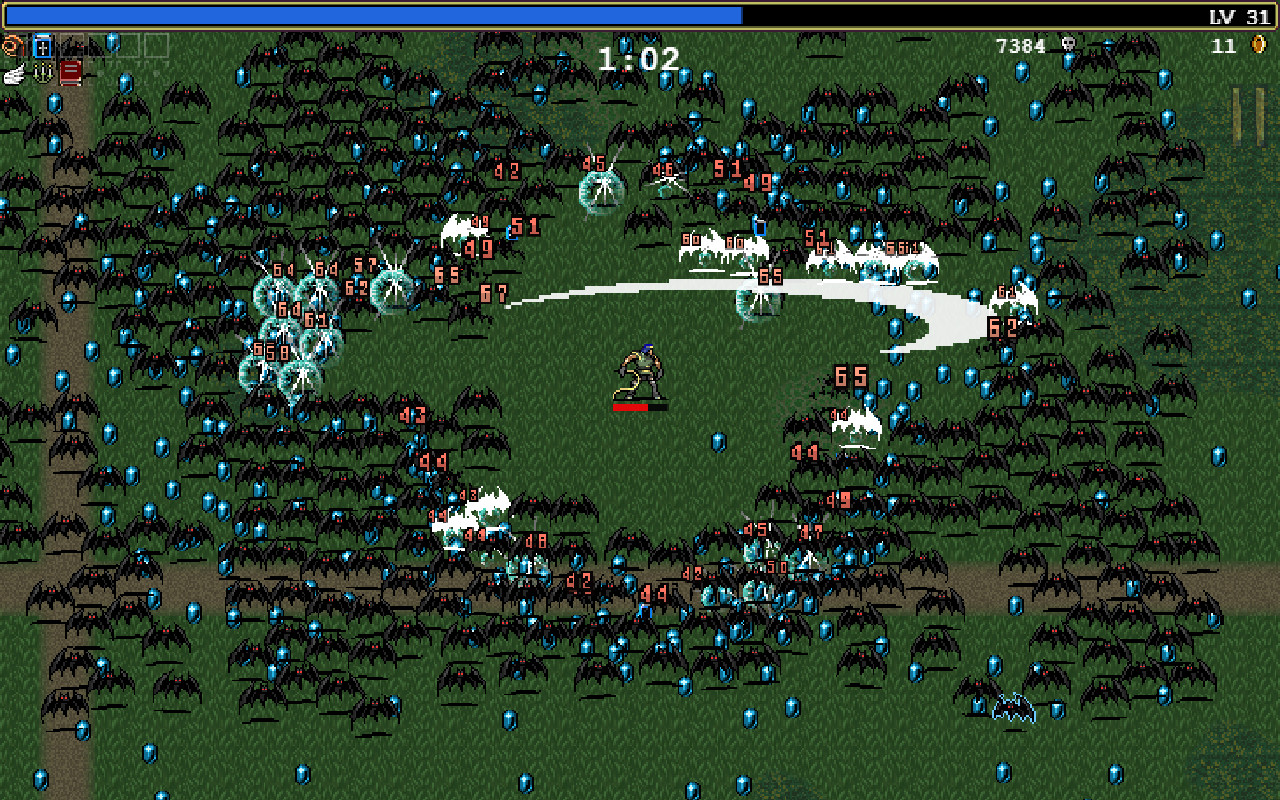
You pick a character. You enter a stage. Enemies come at you — at first a trickle, then waves, then eventually hundreds, then thousands. Your character fires their starting weapon automatically. You do not aim. You run.
Every few seconds you level up and choose one of three upgrades: a new weapon, an upgrade to an existing weapon, or a passive item that boosts your stats. The session lasts thirty minutes. If you survive, you win. You will die many times before you win.
That is the entire game. And it is, somehow, riveting.
Weapons and Evolution
Vampire Survivors ships with dozens of weapons, and each can be evolved into a more powerful form when combined with the right passive accessory at max level. A basic whip becomes a Bloody Tear. Magic wand evolves into Holy Wand. A simple garlic aura — your primary early-game defense tool — becomes the extraordinary Soul Eater.
The evolution system is the game's deepest design layer. Knowing which passives pair with which weapons, and planning your upgrade choices to maximize the chance of getting both, is the core strategic puzzle. A run where you assemble a powerful evolved build feels dramatically different from a run where your picks don't cohere — and both outcomes teach you something for the next attempt.
Passive Items and Build Synergies
Beyond weapons, Vampire Survivors includes a full suite of passive accessories that modify your character's base stats: speed, might, area of effect, duration, cooldown, projectile count, and more. These aren't cosmetic tweaks. An item that increases your projectile count by one dramatically changes the behavior of weapons that fire spreads or spirals. An area increase transforms your garlic aura from a melee tool into a zone-control weapon.
The interaction between these systems creates a build space large enough to stay interesting across dozens of hours. Experienced players plan builds from the first few level-up choices. New players discover them by accident, realize what they've stumbled onto, and immediately want to reproduce it on the next run.
Character Variety
Each playable character starts with a different weapon and has unique passive modifiers that define their playstyle. Antonio leans into melee. Gennaro throws knives at high speed. Mortaccio fires bones in bursts. Characters added through updates and DLC have expanded this roster substantially, and unlocking new ones — which typically requires completing specific achievements mid-run — is its own loop of short-term progression goals.
Stage Design and Secrets
The stages in Vampire Survivors aren't just arenas. Each has its own layout, its own enemy roster, and hidden mechanics that reward exploration. The Mad Forest has coffins containing locked characters. The Dairy Plant has areas dense with specific enemy types that make particular builds viable. Finding the stage's Rosary item, which clears the screen of all enemies, feels like a genuine power move when the horde is overwhelming you.
The Visual and Audio Identity
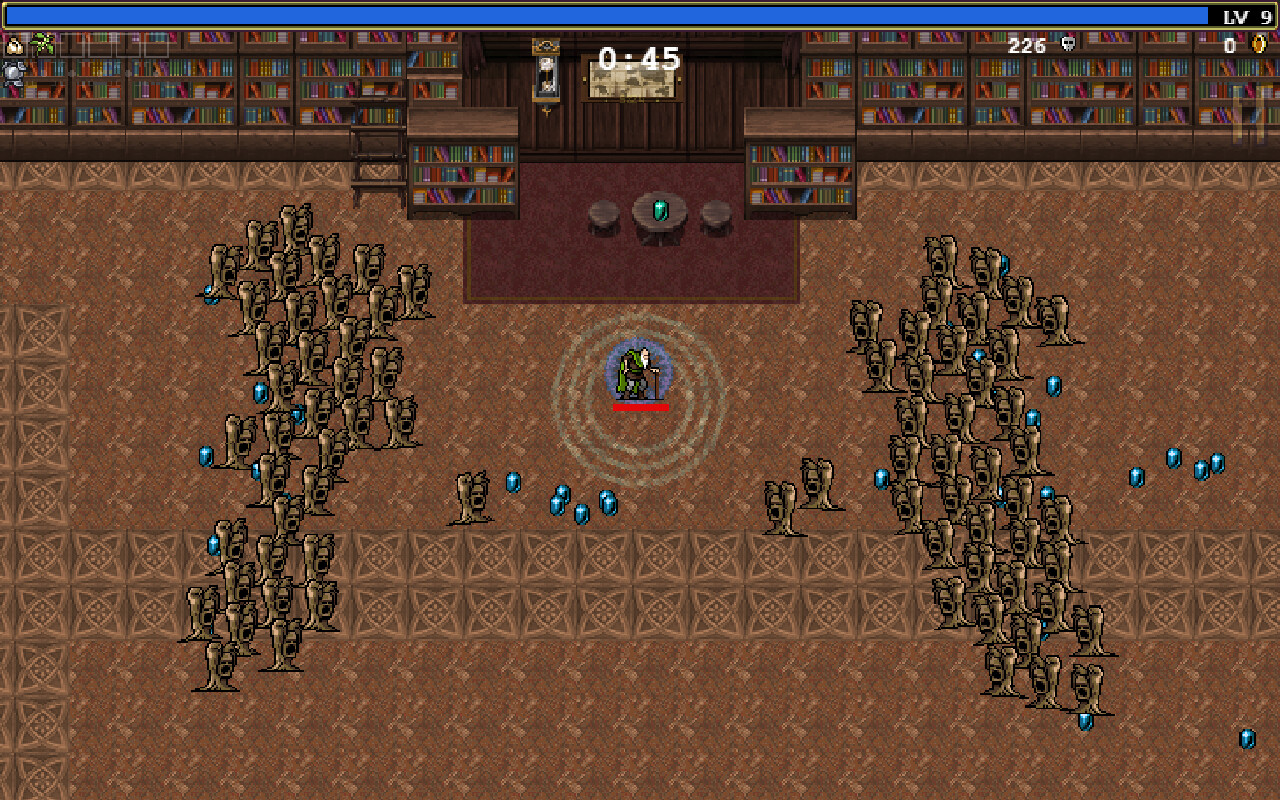
Vampire Survivors makes no apology for its visual limitations. The sprites are chunky pixel art with limited animation frames. The backgrounds are flat and spare. The UI is serviceable rather than elegant. This is not a failing — it is, in retrospect, a design choice that serves the game precisely.
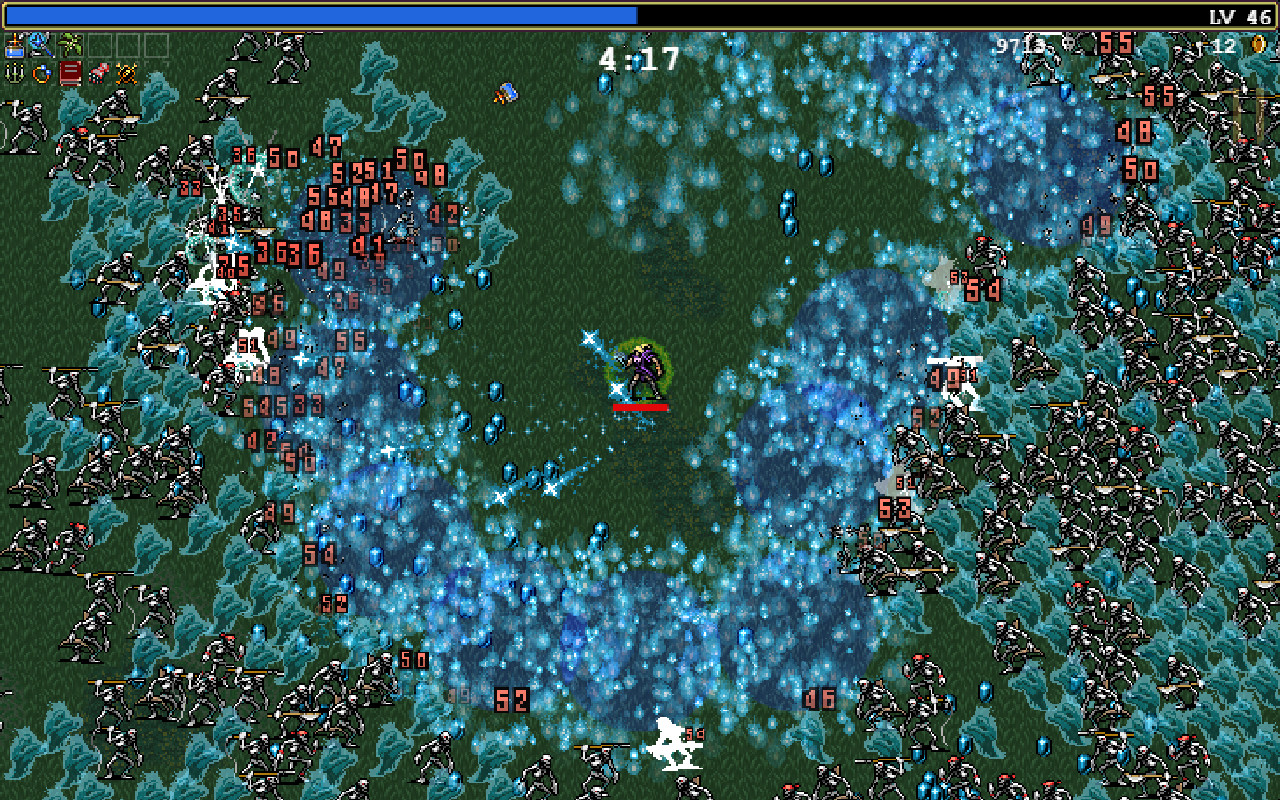
When your screen is filled with ten thousand enemies, two dozen active weapons, explosions, projectile trails, and evolving visual effects simultaneously, clarity matters more than beauty. The game's visual language is designed to let you read the chaos — to see where the gaps in the horde are, to track your evolving weapon coverage, to understand at a glance whether your current run is ahead of or behind the escalating enemy curve.
The soundtrack, drawing heavily on gothic and orchestral motifs reminiscent of Castlevania, is better than the game's budget has any right to produce. "Moongolow," "Disco of Gold," and the base game's main theme are the kind of music that gets into your head between sessions and brings you back.
The Late Game: Relics, Unlocks, and the Arcane Machine
A run that reaches thirty minutes triggers the Arcane Machine — also known as "Death comes calling." A reaper-type enemy appears with thousands of hit points, and surviving or defeating it is a test of how complete your build truly is. Late-game builds can destroy the Reaper. Early ones can't. The gap between a mediocre run and a perfect one is felt most acutely in this final stretch.
Beyond the base thirty-minute sessions, unlocking specific characters and weapons opens up extended challenges and timed challenges that push the game's systems to their limits. The Endless Mode, once unlocked, removes the timer entirely and asks: how long can you actually survive? The answer, in well-assembled builds, is uncomfortably long.
Community Reception: A Genre Is Born
Vampire Survivors currently holds Overwhelmingly Positive status on Steam with a 97% positive review rate across hundreds of thousands of reviews — one of the highest ratios on the entire platform. On Metacritic it scores 86, with the player score substantially higher.
The Steam reviews read as a collective marvel at what Galante built:
- ▶"I bought this on a whim for $3. It has 400 hours played. Nothing makes sense anymore."
- ▶"The most addictive game I've ever owned. I resent it and I love it."
- ▶"It looks like a Flash game from 2006 and plays better than most $60 releases."
The YouTube and streaming response was enormous. Content creators discovered that Vampire Survivors was extraordinarily watchable — the late-game visuals, with weapons covering the entire screen, create an almost psychedelic spectacle. Clips spread virally. The phrase "just one more run" became associated specifically with this game in community shorthand.
More significantly, the game spawned an entire genre. 20 Minutes Till Dawn, Halls of Torment, Brotato, Soulstone Survivors — dozens of "bullet heaven" games appeared in the eighteen months following Vampire Survivors' success. None has matched its review score, and its $4.99 price point remains unmatched for what it delivers.
The DLC expansions — Legacy of the Moonspell, Tides of the Foscari, Emergency Meeting, Whiteout — have all been priced at $1.99 each and universally praised as substantive additions rather than content drip.
Tips for New Survivors
Starting Vampire Survivors is disorienting because the game deliberately withholds information. A few principles that accelerate the learning curve:
- 1Move constantly. Standing still is how you die. Keep circling, keep creating distance. The positioning skill you build in the early game pays dividends in the late game.
- 1Prioritize survivability first. It is tempting to pick the most visually impressive weapons. But armor, health recovery, and speed upgrades often extend your run more reliably than another offensive weapon in the early levels.
- 1Learn one evolution path completely. Pick one weapon-plus-passive combination and build every run around completing it. Once you understand how one evolution works, the system clicks, and others follow naturally.
- 1Don't chase the light. Gemstones and pickups on the floor are collected by walking over them. It is not always correct to chase every gem — sometimes the risk of moving into the horde outweighs the XP reward.
- 1The treasure chest can wait. When a treasure chest drops, it often appears in a dangerous area. Secure your survival first, then collect it.
- 1Try every character at least once. The starting weapon fundamentally changes the playstyle. A character you dismissed as weak often reveals itself as excellent once your overall knowledge of the build space improves.
Why This Is a GamePeak Pick
GamePeak Picks exists to identify games where the gap between price, quality, and cultural impact is too large to ignore — games that have earned a place in the conversation regardless of when you're having it.
Vampire Survivors is the most extreme example of that gap we've featured. At $4.99, it is priced below a coffee in most cities. What it delivers is hundreds of hours of a precisely tuned, perpetually surprising gameplay loop, built by a person working largely alone, that spawned an entire genre and moved six million copies against every expectation the industry holds about what small games can accomplish.
It is also genuinely important. The indie game market is full of games that deserve attention and don't get it. Vampire Survivors received attention in proportion to what it deserved — not because of marketing budget, not because of a publisher push, but because the game is that good. That outcome is worth celebrating.
Final Verdict
“Vampire Survivors is the single best argument that a game's value has nothing to do with its production budget. It is compulsive, deep, surprising, and cheap beyond all reason. Every library should have it. An unconditional GamePeak Pick.