Editor's note: this article summarizes published reviews, store data and community reception. GamePeak did not run its own playtest, so no GamePeak score is given.
# Undertale — The RPG That Asked If You Had to Kill Anyone
Developer: Toby Fox | Release Date: September 15, 2015 | Genre: Indie RPG
Steam Rating: Overwhelmingly Positive (107,000+ reviews) | Metacritic: 92/100
Buy on Steam: View on Steam | Price: $9.99
“Undertale is one of the longest-running highly-rated indie games on Steam, and its review stream shows no sign of slowing. New players consistently describe it as "the best ten dollars I've ever spent on a game," express that the experience of playing it blind for the first time is irreplaceable, and note that the soundtrack alone would justify a purchase. Many reviewers describe completing the Pacifist route and then going back to spare everyone they'd harmed in earlier attempts. A decade after release, thousands of new reviews arrive each month — a rarity that speaks to how steadily word of mouth keeps delivering new players to its door.
Underground — The Setup That Hides Everything It Plans to Do to You
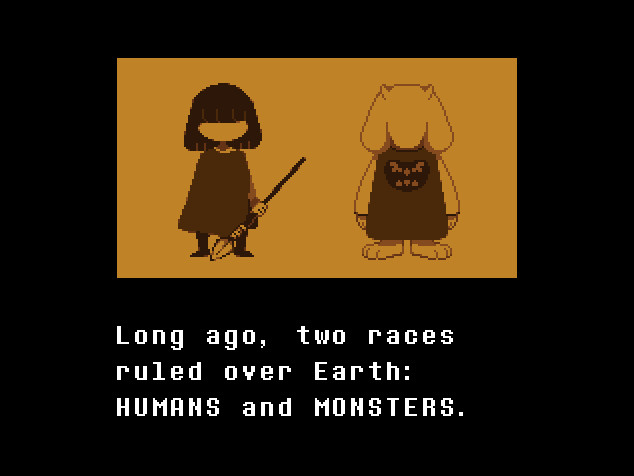
Long ago, war was fought between humans and monsters. The monsters lost, and were sealed beneath the earth by a powerful barrier. Occasionally, a human child falls into the underground. They do not usually come back.
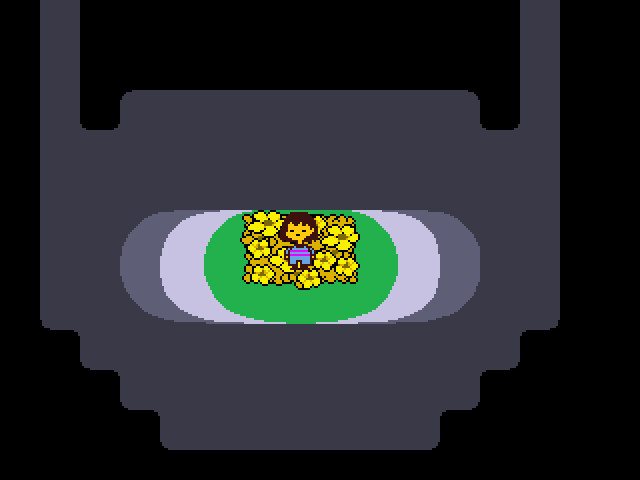
You are one of those children. You have fallen through a hole in a mountain into the monster kingdom below. You need to get home. That is Undertale's premise — and everything about it is a calculated misdirection, because what you are actually being handed is a story about mercy, identity, memory, and what it means to be good to someone you were given every reason to hurt.
The flower who greets you seems friendly. The scientist who gives you candy seems harmless. The skeleton who wants to capture you seems like an obstacle. None of these first impressions are entirely correct, and the game takes careful pleasure in revealing what lies beneath each of them over the course of its six-to-ten-hour runtime.
Character Spotlights — A Cast That Earns Every Moment
Undertale's characters look simple on the surface — a talking flower, a skeleton who makes puns, a fish warrior in armor. What the game does with each of them is anything but simple.
Flowey
The first creature you meet underground. He introduces himself warmly and then immediately attempts to kill you. Flowey is presented as a villain, and he is — but the backstory that explains what he is and how he came to be is one of the most quietly devastating revelations in the game. He understands save files and resets. He has already tried everything. His relationship with the player — with you specifically — is not metaphorical. It is the core of what Undertale is actually saying about games and the people who play them.
Toriel
The first major character you encounter after Flowey — a motherly goat monster who lives in the Ruins and wants to protect you from the world beyond. She bakes you pie. She tests you on puzzles with maternal pride. She is also the game's first boss, which creates an immediate moral problem: she is fighting you to protect you, and she is someone you have come to like in the hour before the fight begins. How you handle that fight is Undertale's opening statement about what kind of game it is.
Sans
The elder of two skeleton brothers, he introduces himself making bad puns in a snowy forest. He seems lazy, indifferent, and only intermittently engaged with events around him. He is also the most important character in the game, carrying secrets that become apparent only after multiple playthroughs and routes. In the Genocide route, he is the final obstacle — the hardest boss fight in the game by a significant margin, one that many players fail dozens of times before succeeding, and one that is deliberately designed to make you feel the weight of every choice you made to get there.
Papyrus
Sans's younger brother and the game's great comic heart. He is completely convinced of his own greatness, desperate to be a member of the Royal Guard, and endearingly, genuinely kind beneath the bluster. His puzzle designs are elaborate and almost entirely harmless. The optional date sequence with Papyrus — if you choose it — is one of the game's warmest and funniest sequences, and it makes the prospect of his death in the Genocide route something no reasonable player wants to experience.
Undyne
Captain of the Royal Guard. Aggressive, passionate, relentless in her pursuit of the human child. She throws magic spears with focused fury. She is also, once you get past the armor and the hostility, someone who loves cooking, anime, and her friends with enormous wholehearted intensity. Her friendship arc, hidden behind a cooking lesson sequence that ends in disaster, is one of the most joyful things in the game.
Alphys
The royal scientist, an anxious lizard who watches anime, writes fan fiction, and deeply dislikes herself. She is also responsible for several of the game's darkest events, the consequences of experiments she conducted and has been afraid to admit for a very long time. Alphys carries the most complicated guilt in Undertale, and her arc — the slow revelation of what she did and what it cost — gives the game some of its most emotionally complex moments.
Mettaton
A robot celebrity built by Alphys, who appears first as a deadly obstacle and becomes progressively more theatrical as the game continues. His boss fights are the most inventively designed encounters in Undertale — game show formats, talk show segments, musical performances. The revelation of what Mettaton actually wants, beneath the performance, lands quietly and is better for it.
Asgore
King of the monsters. You hear about him for most of the game as a fearsome figure who has doomed the human children who fell before you. Meeting him is nothing like what you expect. He is soft-spoken, unsure of himself, and deeply unhappy about the situation he has created. Asgore is the game's most precise statement about the relationship between the actions people take and the people they actually are.
The Question at the Heart of Every RPG — Answered Differently
Every traditional RPG comes with an assumption baked into its design: enemies exist to be defeated. Experience points and levels are the mechanism of progress, and enemies are the raw material from which those things are extracted. Undertale looks directly at this assumption and asks: what if you didn't have to?
In the Pacifist route, every encounter can be resolved without violence. Each enemy type has a different approach — one must be danced with, another needs to be reassured, a third has to be made to laugh. The bullet-dodging that constitutes combat is not a mechanism for killing; it is a mechanism for surviving long enough to understand what the creature in front of you actually needs.
The game maintains a Genocide route as well — you can methodically hunt down and kill every monster in every area. This is not presented as an acceptable alternative interpretation. The game remembers what you did. It responds to it. It reflects your choices back at you in ways that are deliberate, uncomfortable, and by the third act of that route, genuinely unsettling. Undertale asks the most pointed question the RPG genre has ever had directed at it: why did you do that?
Three Routes Explained — The Same Game, Three Different Experiences
Undertale's depth comes from the fact that its three routes do not feel like the same game played differently. They feel like entirely different games that happen to share a world.
Pacifist Route
Spare every monster. This means more than simply not attacking — it means actively pursuing connection with each character. You need to befriend Undyne, cook with Alphys, go on a date with Papyrus. The True Pacifist ending, unlocked only after completing the route with all friendship conditions met, is the emotional climax the game has been building toward from the first minute. Reviewers consistently describe watching the ending and being unable to start another game immediately afterward. It earns the feelings it creates.
Genocide Route
Kill every monster in every region — not just in fights, but by actively hunting remaining encounters until the area's kill counter reaches zero. The game's tone shifts as you progress: characters react differently, music changes, the underground feels emptier in ways that are not incidental. Sans's final boss fight is mechanically demanding in ways that few games attempt, requiring precise execution through an encounter specifically designed to feel unfair. The ending is the darkest the game offers, and it leaves a permanent mark on your save file that persists into future playthroughs.
Neutral Route
Any playthrough where you kill some monsters and spare others produces a Neutral ending. There are many variations depending on which bosses you defeated, delivered via phone call after the credits. The Neutral route is intentionally incomplete — it offers neither the warmth of Pacifist nor the consequence of Genocide, and the game uses that incompleteness to point you toward the fuller experiences on either side.
The Memory of the Save File
Crucial to all of this: Undertale remembers. Completing the Genocide route and then starting a new game does not reset the slate. The game keeps a record of what happened, and certain characters respond to that knowledge in ways that arrive without warning. Deleting save data does not always erase everything. This is not a bug or a curiosity — it is the mechanism through which the game makes its central argument about the relationship between players and the worlds they pass through.
The Bullet Dodge System — Combat as Conversation
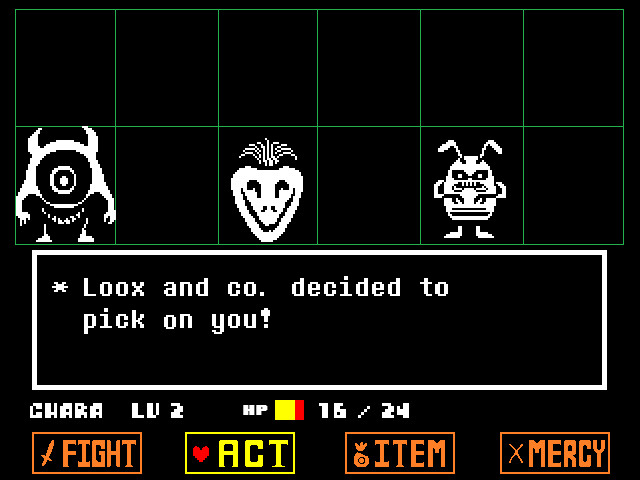
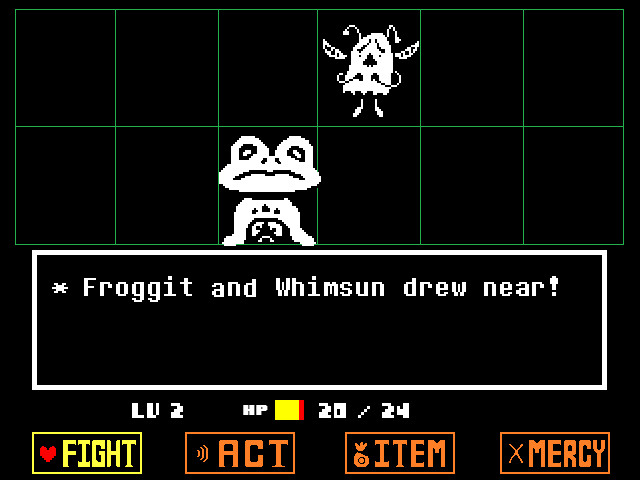
Undertale's battle interface is built around two choices: FIGHT and ACT. FIGHT works the way RPG combat always has. ACT opens a menu specific to each monster, offering options that range from complimenting, threatening, and humming at them, to specific actions that only work for that particular enemy type.
Finding the right ACT option is the puzzle each encounter presents. The options are written with the same wit and characterization as the rest of the game — interacting with a monster through the ACT menu reveals personality details that combat alone never would. Some monsters are lonely. Some are anxious. Some just want someone to listen.
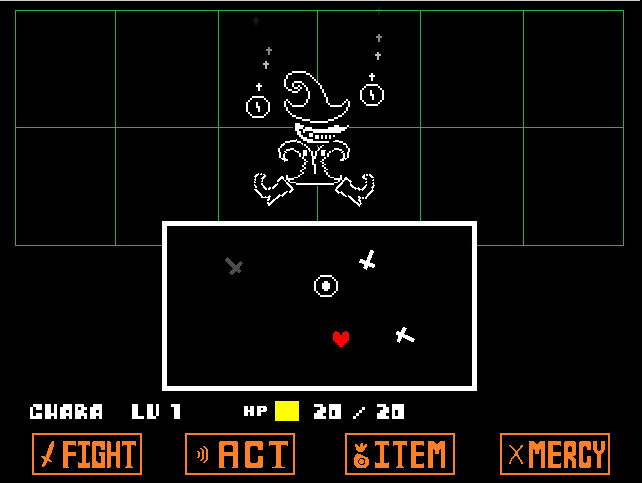
The bullet-dodge sequences are equally inventive. Each enemy has a distinct pattern — some projectiles move to music, some require the player to stop moving rather than dodge, some transform the encounter into a brief rhythm game or reflex puzzle. Boss fights take this further, building elaborate sequences around the character's personality and emotional state. The music and mechanics are inseparable during these moments; removing either one would break the effect.
A Game That Knows It Is a Game — Used Against You With Care
Undertale engages with the conventions of video games as a medium in ways that become structurally important to its story. The game tracks your save file data in ways that persist across new playthroughs. Actions taken in one run can leave traces in subsequent ones. Characters can appear to have awareness of things they should not know.
Flowey's relationship with the player is the clearest expression of this. He has access to save and load functions, which means he has already tried every possible version of events. He has been friendly. He has been violent. He has experimented with every permutation available to him. When he tells you that you are just like him, he is making a specific observation about what players do in games — and asking whether the ability to restart an experience and try it differently changes the moral weight of the choices made in earlier attempts.
The game's willingness to treat save data as narrative material — to have characters reference runs you thought you had erased, to leave evidence of choices made in sessions you believed were separate — is not gimmickry. These elements are the substance of what the game is saying about memory, identity, and the nature of player agency.
After the credits roll, the question "what was I in this story?" is not rhetorical. It has a real and somewhat uncomfortable answer, and the game earned the right to ask it.
One Person's Orchestra — The Soundtrack as Emotional Architecture
Toby Fox composed every piece of music in Undertale, and the result is one of the most cohesive soundtracks in games. Thematic relationships between tracks — leitmotifs appearing in new contexts as characters develop, melodies transforming to reflect the emotional charge of a moment — are the work of a genuine musician who understood that sound and story are the same substance.
Megalovania
The track that plays during Sans's boss fight in the Genocide route. It is fast, aggressive, and dissonant in ways that match the mechanical and emotional brutality of the encounter. It has since become a ubiquitous cultural shorthand for "final boss energy," covered thousands of times across every genre imaginable, included in Super Smash Bros., and referenced endlessly in internet spaces that have no particular connection to the game itself.
Hopes and Dreams / SAVE the World
The music for the True Pacifist final boss fight. It builds from fragments of themes you have heard throughout the game — each one associated with a character and a relationship built over the previous hours — and combines them into something that functions as a musical summary of everything the Pacifist route has been. Many players report that they could not see clearly during this sequence. The game earned those feelings.
Undertale (Main Theme)
The core melodic statement of the game, short and seemingly simple, that accrues meaning each time it appears. Understanding when and why this theme surfaces, and what emotional context surrounds each occurrence, is one of the rewards of a careful playthrough. Its final appearance carries more weight than any preceding instance.
Bonetrousle
Papyrus's battle theme — pompous, triumphant, and slightly ridiculous in the best possible way. It is a perfect sonic portrait of a character who is completely sincere about his own grandeur while being entirely harmless.
Spider Dance
The music for Muffet's encounter. Jazz-inflected, rhythmically playful, impossible to get out of your head, and perfectly synchronized with the spider-themed bullet patterns of the fight.
Ruins
The music of the game's opening hours. Lonely, quiet, with an undercurrent of warmth — it establishes the underground as a melancholy place where people have been waiting a very long time for something to change.
Boss fight soundtracks in particular are perfectly synchronized with their mechanical contexts, so that the music and the combat feel like a single designed object rather than two separate elements occupying the same space.
Before You Start: What You Need to Know
- ▶Go in blind: Undertale is structured to deliver maximum impact to a player who does not know what is coming. Do not look up guides, watch playthroughs, or read plot summaries. This is one of the rare games where the first experience is something you can only have once, and it is worth protecting.
- ▶Save at every opportunity: Save points matter more in this game than the mechanics suggest. The act of saving has meaning.
- ▶Play Pacifist first: If you are curious about the Genocide route, pursue it only after completing Pacifist. The emotional context that Pacifist provides makes the Genocide route much more significant.
- ▶Do not delete your save file: Before starting a new game or clearing your data after a completed run, think carefully. The game has opinions about data deletion.
- ▶Read every NPC: The underground is a world with history and texture. Side conversations are not filler.
Legacy After Ten Years — A Game That Became Culture
Undertale released in 2015. In 2026, thousands of new reviews arrive on Steam each month. This is not normal. Games spike at launch and taper off. Undertale's review curve barely curves — it sustains, powered by a decade of recommendations passed from players who couldn't stop talking about it to people who eventually gave in and downloaded it.
Megalovania is now a cultural artifact independent of the game that produced it. It appears in contexts where Undertale is never mentioned. It has become the sound of a certain kind of dramatic confrontation across internet culture more broadly, a development that would be baffling if the track itself weren't genuinely excellent.
The fan creativity the game inspired has been equally sustained. Orchestra arrangements, jazz covers, metal versions, lofi remixes, piano transcriptions — the music continues to be reinterpreted constantly, which speaks to how deeply it registered with the people who heard it. The game's characters have generated fan art volumes comparable to properties with ten times its commercial scale.
The connection to Deltarune
Toby Fox has been developing Deltarune — a related work set in a world with familiar names and unfamiliar contexts — in the years since Undertale's release. Chapters 1 and 2 are available free. Players who come to Deltarune after Undertale will find something that rewards careful attention, and that casts some of what Undertale established in new light. The relationship between the two projects is deliberately ambiguous, which is very much in keeping with how both games handle questions about knowledge, memory, and the nature of continuing stories.
Community Reception — What Reviewers Keep Saying
Steam's Undertale reviews show patterns that are distinct from most games. These are not reviews that describe features and rate execution. They are accounts of experiences.
"The first playthrough is something you can never get back" is the most common sentiment — stated not as a complaint but as a warning to new players to protect that experience by avoiding spoilers. There is a consistent awareness, among people reviewing the game, that they are trying to communicate something that cannot be adequately communicated, and that the only real way to understand what they mean is to play it without prior knowledge.
"I couldn't play anything else for days after the ending" appears repeatedly among Pacifist route completers. The emotional weight of the True Pacifist ending leaves players in a state where returning to normal games feels abrupt and wrong for a period of time. This is reported as a feature rather than a problem.
"I held off on resetting for a long time" addresses something specific to Undertale's relationship with its own mechanics. Because the game frames the reset — starting a new game — as an action with consequences for characters who exist within it, many players find themselves reluctant to do it in ways that have no equivalent in other games. The attachment to the save file's specific history becomes surprisingly strong.
"Ten dollars" appears constantly, always in the context of disbelief that an experience of this quality carries a price that eliminates every economic reason not to try it.
Final Verdict — Ten Dollars, a Lifetime of Reference
Undertale is the clearest available demonstration that a game's budget, team size, and graphical fidelity are irrelevant to its ability to create a meaningful experience. One developer. Pixel graphics. A runtime shorter than most modern TV seasons. And yet the experience it creates, and the questions it asks, stand alongside works that cost ten thousand times as much to make.
It changed what people expected from the RPG format. It established that the assumption "enemies exist to be fought" was a design choice rather than a law. It showed that meta-textual engagement with games-as-a-medium could be emotionally resonant rather than merely clever. It produced a soundtrack that became cultural vocabulary without any marketing behind it.
At $9.99, recommending it is almost redundant — the price removes every possible barrier to entry. But beyond the price: if you want to understand what the last decade of conversations about games as art has been about, Undertale is required reading.