# Stardew Valley — How One Developer Built the Greatest Farming Sim Ever Made
One person. Four years. Every line of code, every pixel of art, every note of music — all of it. When Eric Barone, known online as ConcernedApe, released Stardew Valley in February 2016, it didn't just deliver a great farming sim. It rewrote the entire conversation around what a solo developer could achieve. As of 2024 the game has sold over 30 million copies, and it sits at the top of an entire genre it effectively redefined. That's not an exaggeration — it's just what happened.
Steam Rating: Overwhelmingly Positive (98%) | Metacritic: 89 | Sales: 30 million+ copies
“Community Reception: The Steam reviews tell a consistent story: "Bought it for stress relief, 400 hours later here I am." Reviews from people going through burnout or difficult periods frequently cite Stardew as genuinely therapeutic. The multiplayer update opened a new wave of "best co-op relaxation game ever" takes. It's the rare game where "I still play this weekly after 5 years" is a common review type.
The Core Loop: Why It Never Gets Old
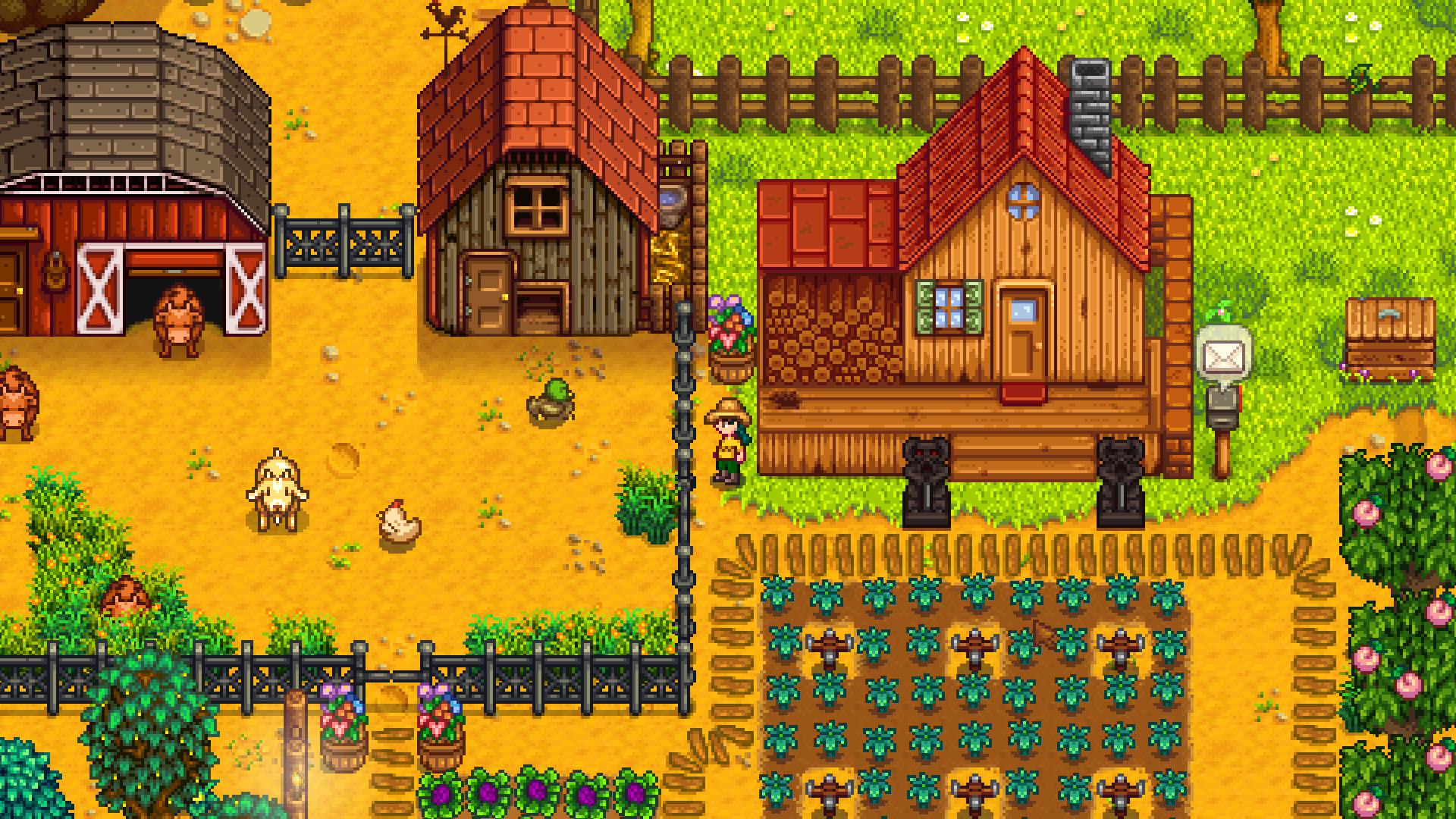
A day in Stardew Valley looks simple on paper. Wake up, water your crops, feed your animals, chat with the locals, head into the mines, cast a fishing line, and collapse into bed before midnight. Repeat.
That sounds like a grind. Before you've actually played it, it reads like homework. But the magic lives in the choices stacked inside every single day. Do you expand your blueberry field today, push deeper into the mines for iron ore, or finally get that parsnip soup recipe from the general store? Your in-game clock runs out faster than your real one, and the moment you realize you've been playing for three hours because you "just needed to finish one more day" — that's when Stardew Valley has you.
The feedback loops are tight and satisfying. Crops grow, earn gold, fund upgrades, unlock new crops. Skills level up, open new recipes and abilities, make everything more efficient. Nothing is wasted; every action compounds into something else.
Pelican Town and the People Who Live There
Stardew Valley is a farming game and a small-town social sim at the same time. There are over 30 residents in Pelican Town, each with their own daily schedule, preferences, and backstory. Twelve of them are romanceable.
These aren't cardboard NPCs with a single line of dialogue. Each character has a sequence of heart events — cutscenes that unlock as your friendship deepens — that reveal real stories. Personal struggles, family tension, creative doubt, social anxiety. The writing punches well above the game's pixel-art presentation.
- ▶Abigail — a girl obsessed with weapons and fighting, harboring a real secret about her lineage.
- ▶Sebastian — a programmer hermit in his basement, chronically misunderstood by his family.
- ▶Harvey — the town's only doctor, quietly obsessed with vintage aircraft.
- ▶Leah — a sculptor living alone in the forest, caught between her art and the need to survive.
You'll find yourself planning your morning route around who you want to talk to. That's not an accident. It's design.
The Mines: Why Combat Belongs in a Farming Game
The mines are the part of Stardew Valley that first-time players often overlook — and then can't stop running. The premise seems incongruous: why does a cozy farming sim need a dungeon system?
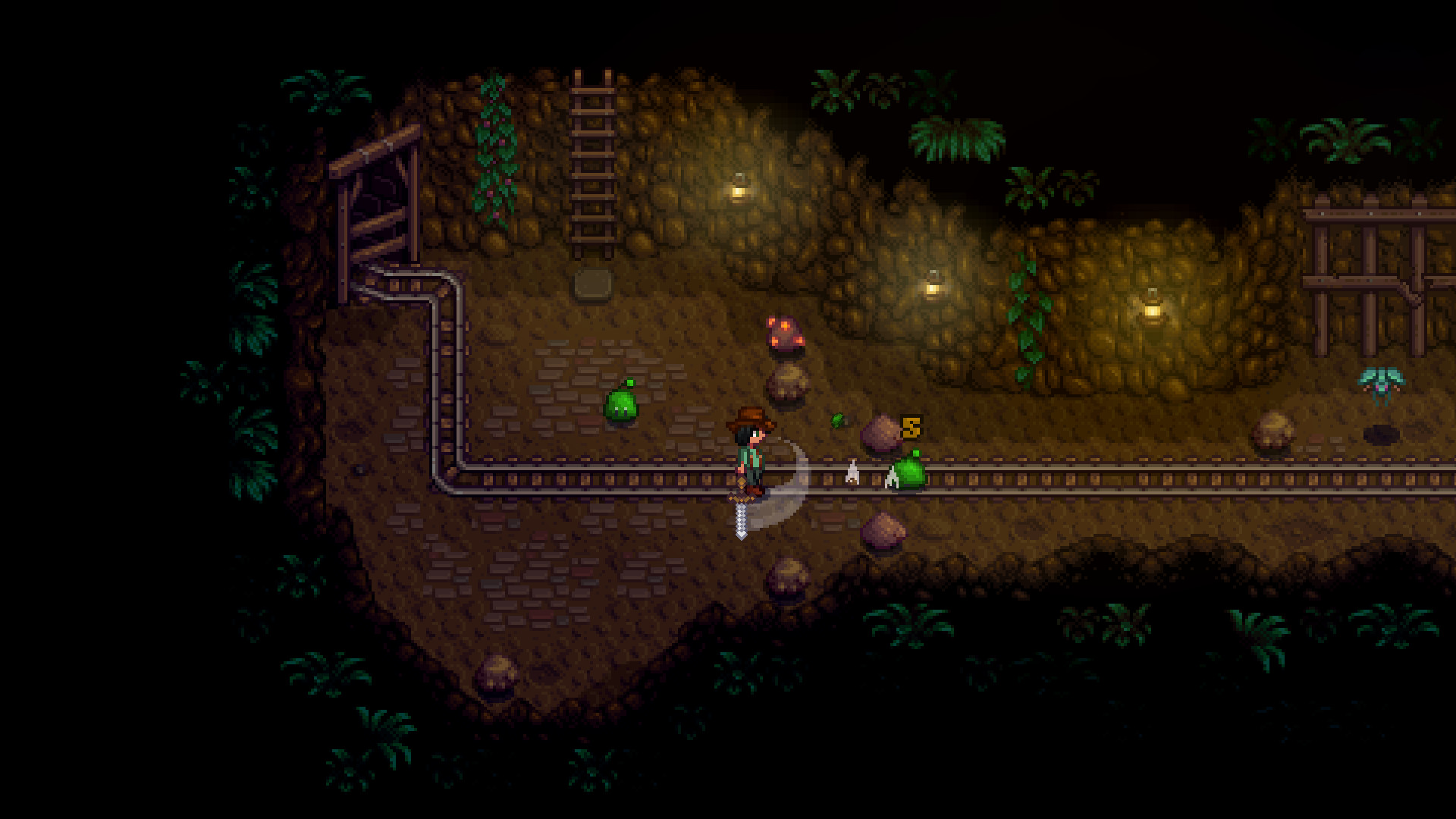
The mines run 120 floors deep. Early on you're scraping copper and iron to upgrade your tools. By mid-game you're hunting gold and iridium. Late-game, the Skull Cavern opens — a procedurally generated cave with no defined bottom floor, crawling with progressively tougher enemies.
The combat is deliberately approachable: top-down 2D action with light hit-and-dodge mechanics. But the depth hides in the preparation: food buffs, ring combinations, bomb timing, knowing when to descend and when to run. And the mines are structurally linked to everything else — iridium tools are so much more efficient that ignoring the mines actively hurts your farm progression. The two systems pull each other forward, and that tension is one of the reasons the game holds attention across dozens of hours.
The Seasons System: Strategy Disguised as a Calendar
The game operates on a four-season year: spring, summer, fall, winter — each 28 days long. Crops only grow in their native season. Plant strawberries in spring, and they'll wither the moment summer arrives.
- ▶Spring: Parsnips, potatoes, cauliflower — a forgiving opening act, but the egg festival and the temptation to overspend will catch you out.
- ▶Summer: Melons, tomatoes, blueberries — higher revenue crops, the right moment to pour effort into the mines.
- ▶Fall: Grapes, cranberries, pumpkins — the most profitable season. Save hard for winter.
- ▶Winter: Nothing grows. Instead, the season pushes you toward fishing, mining, cooking, and deepening your relationships with townspeople. It's the only time the game lets you breathe, and it earns that pace by contrast.
Every season transition is a small soft reset that forces you to revisit your priorities. What am I planting? What am I building toward? The answer is never the same twice, which is why Stardew Valley veterans rack up hundreds of hours across multiple save files without any repetition feeling stale.
Multiplayer: Building the Farm Together
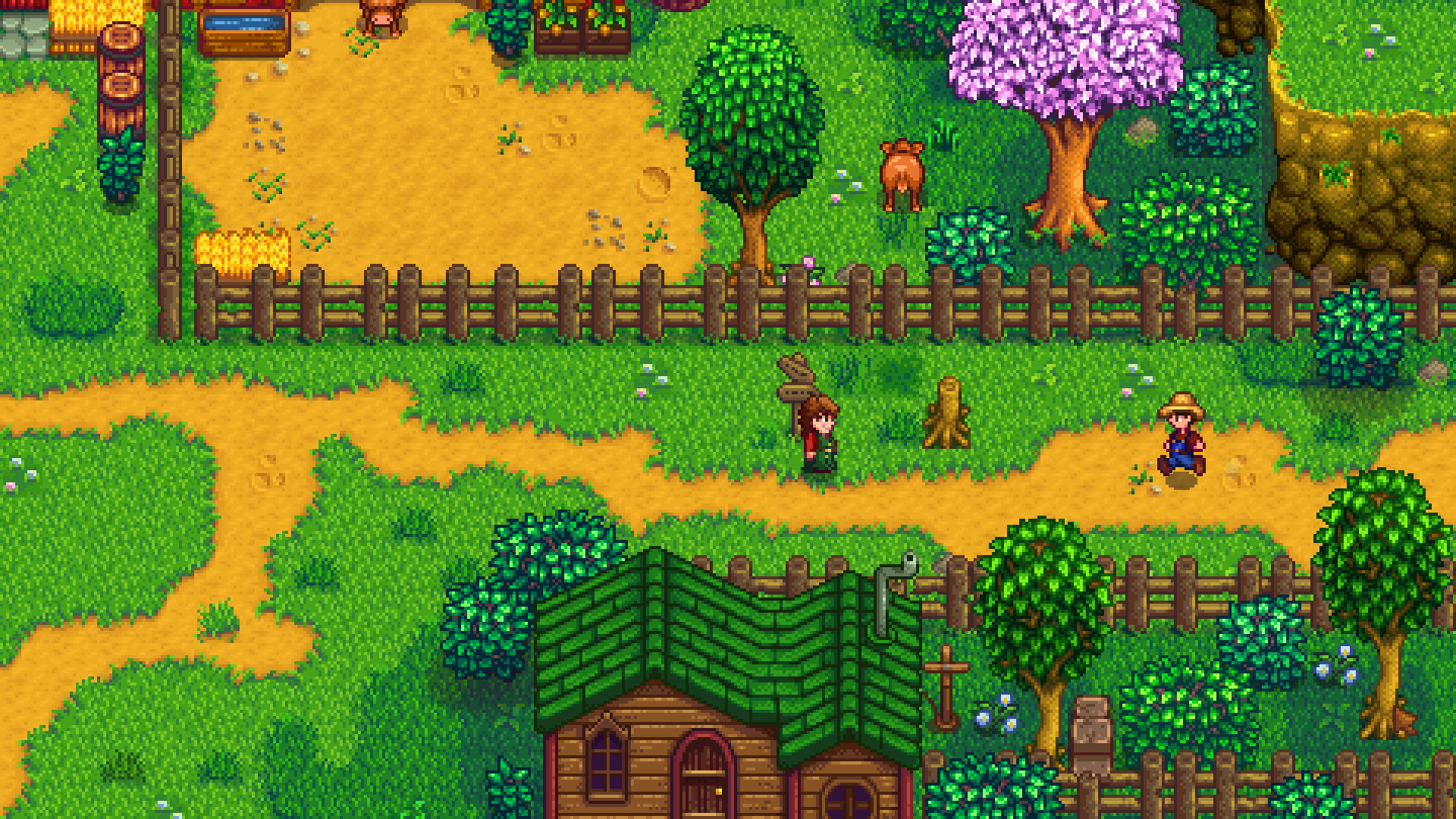
Stardew Valley supports up to 4-player co-op. Each player gets their own cabin on the shared farm and maintains separate inventories and skill trees. The farming, mining, fishing, and socializing all function together — one player might specialize in crops while another dives the mines and a third dedicates themselves to the fishing guild.
Player-to-player marriage is an option. Seasonal events play out together. The pace of a shared farm runs faster than a solo run, but the experience is genuinely different rather than just accelerated. If you've already put 100 hours into Stardew Valley alone, a co-op run with a friend feels like a new game built on familiar bones.
The 1.6 Update: Major New Content, Entirely Free
In 2024 ConcernedApe dropped the 1.6 update — a substantial content patch, completely free, released eight years after the game first launched. Key additions:
- ▶Meadowlands Farm — a brand-new farm type set on pastoral grassland, starting players with two chickens and optimized for animal husbandry playthroughs.
- ▶New seasonal events and expanded NPC dialogue — dozens of new interactions and cutscenes throughout the year.
- ▶New items — fresh food items, cooking recipes, decorative objects, and craftables.
- ▶Multiplayer quality-of-life improvements — stronger split-screen support, bug fixes, and improved synchronization.
- ▶Late-game challenge content — new enemy variants in Skull Cavern and expanded difficulty options for veteran players.
No AAA studio would ship this much content for free this long after release. It says something about both the developer and the game.
The Community: Gaming's Most Wholesome Fanbase
The Stardew Valley community has a reputation that's almost unfair to the rest of gaming. Toxic behavior is genuinely rare. The r/StardewValley subreddit — millions of members strong — is a steady stream of farm layout showcases, beginner questions answered with patience, fan art, and earnest milestone posts ("I finally got to the bottom of the mines today!") that collect thousands of supportive replies.
The community reflects the game. Stardew Valley has no competitive mode, no leaderboard, no mechanic that asks you to outperform another player. There's nothing to gatekeep. You're just tending your farm, and so is everyone else, and the collective energy around that is genuinely warm in a way that feels increasingly rare.
Better Than Harvest Moon? The Honest Comparison
Stardew Valley was built as a love letter to Harvest Moon — specifically the classic Harvest Moon 64 and Back to Nature. Eric Barone has said this openly. The game wears its inspiration clearly.
And then it surpassed it. Here's why:
- 1Quality of life — Stardew incorporates decades of design lessons that Harvest Moon games took longer to adopt. The day-to-day flow is smoother and more forgiving.
- 2Depth — character writing, combat progression, fishing mini-game, cooking system — each system is more fully realized than its Harvest Moon equivalent.
- 3Freedom — Stardew accommodates wildly different playstyles with equal validity. You can ignore farming almost entirely and focus on the mines or social sim elements.
- 4Post-launch support — Story of Seasons requires buying a new title for major new content. Stardew has received multiple large free updates since 2016.
Harvest Moon created the genre. Stardew Valley defined it.
Tips for New Farmers
The most common first-timer mistakes and how to avoid them:
1. Don't neglect the mines early
Go on day one if you can. Copper tools dramatically improve energy efficiency on the farm. Postponing the mines means postponing every upgrade that depends on ore.
2. Talk to everyone every day
A single daily conversation builds friendship points. Add a liked gift and the progress accelerates. Check the calendar in Pierre's shop for birthdays — a birthday gift gives a major friendship boost.
3. Plan your farm layout before you sprawl
Reorganizing crops, sprinklers, and buildings later is tedious. Sketch a rough zone plan early — one area for crops, one for animals, one for processing buildings — and expanding into that plan feels natural.
4. Manage your energy
When your energy hits zero, your day is functionally over. Keep food in your bag. Don't push too deep into the mines if your health is low; passing out after midnight costs you gold and items.
5. Don't try to perfect year one
Stardew Valley rewards patience across multiple in-game years. Treating year one as a race to max everything is a recipe for burnout. Follow what you find interesting first. The rest will open up.
Why It's a GamePeak Pick
Stardew Valley earns its spot in GamePeak Picks for one reason above all: it never actually ends. There's always one more season to plan, one more heart event to unlock, one more floor to clear. The game doesn't overstay its welcome because it never forces you to do anything — it just puts possibilities in front of you and trusts you to find what pulls you forward.
A solo developer spent four years on this. Eight years after release, he's still adding to it. The game has sold 30 million copies and still gets recommended to new players every day without any hesitation, because it holds up completely.
If you haven't played Stardew Valley yet, there is no better time than right now. The 1.6 update means you're starting the most complete version the game has ever been. And once you do start, you'll understand why people keep coming back.
“Developer: ConcernedApe (Eric Barone)
Released: February 26, 2016
Platforms: PC, Nintendo Switch, PS4, Xbox One, Mobile
Pricing: Paid (~$14.99 on Steam)
Steam page: store.steampowered.com/app/413150