Editor's note: this article summarizes published reviews, store data and community reception. GamePeak did not run its own playtest, so no GamePeak score is given.
# Slay the Spire — The Card Game That Rewired a Genre
The Game That Created the Deckbuilder Roguelike
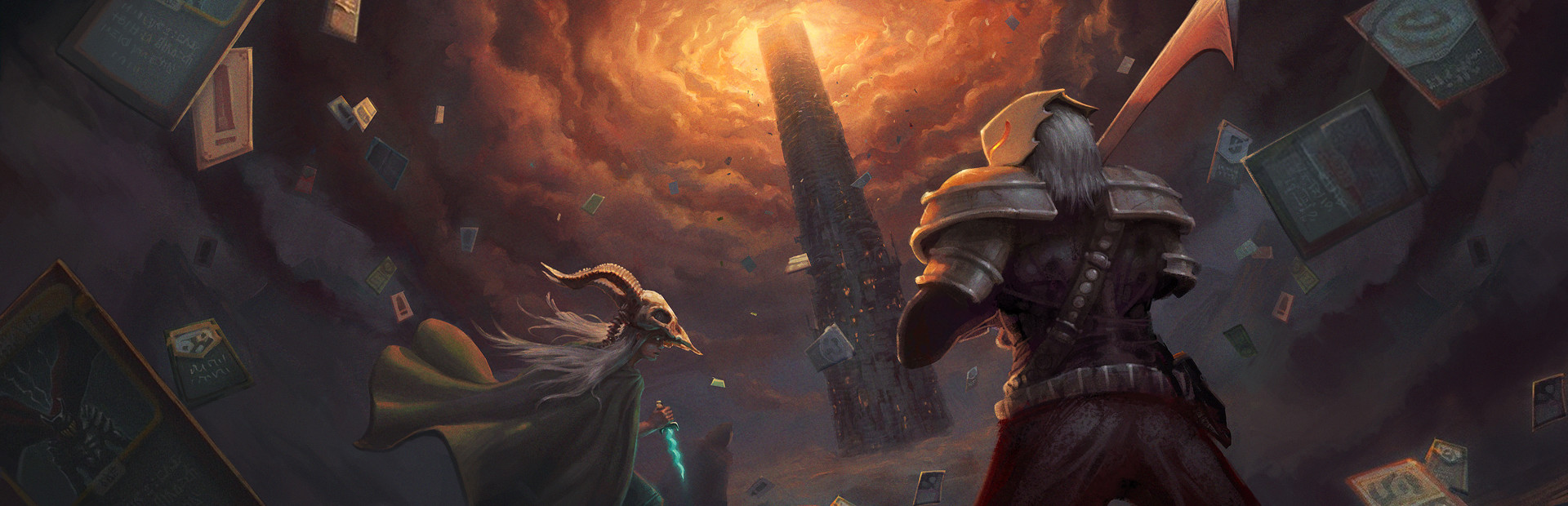
Before Slay the Spire, the roguelike deckbuilder genre did not exist as a meaningful category. After it, the genre produced dozens of entries — Monster Train, Inscryption, Balatro, Cobalt Core — all of which owe their existence to what MegaCrit built starting in 2017. Some of those successors are brilliant in their own right. None of them has yet displaced the original.
Slay the Spire is a game about building a deck of cards and climbing a procedurally generated tower. That description is technically accurate and completely misses what makes it special. The truth is that it's a game about hundreds of interlocking decisions, all of which combine to form something that is either barely working or elegantly transcendent — and the difference between those two states is the clearest possible expression of strategic skill in modern game design.
The Story of MegaCrit
Slay the Spire was made by Casey Yano and Anthony Giovannetti — two developers who met in Seattle and set out to make the game they wished existed. They entered Early Access in November 2017 with three of the eventual four characters, a functional but unpolished card pool, and a development approach that treated community feedback as core design input.
What followed was one of Early Access's most positive development stories. MegaCrit communicated changes transparently, responded to balance concerns quickly, and shipped a full release in January 2019 — eighteen months after entering Early Access — with the final character, the Watcher, added and every system polished to a degree unusual for a two-person studio.
The game then proceeded to spread through every gaming community that values strategic depth. Speedrunners, casual players, content creators, and competitive players all found what they were looking for in its systems. The fourth character, the Watcher, became notorious enough that community discussions about her power level are still ongoing years later.
How Slay the Spire Works: The Foundation
The Climb
Each run of Slay the Spire takes you from the bottom of the Spire to its Apex, through three Acts and a final Act IV boss. The map presents branching paths between nodes — each node a possible combat, elite fight, event, merchant, campfire, or treasure room. You choose which node to visit and therefore what kind of run you're building toward.
Every choice matters because resources are scarce and permanent. Gold you spend at a merchant is gone. Relics you acquire stay for the run and stack their effects with everything else. Cards you add to your deck stay in it, and a bloated deck is nearly as dangerous as a weak one because it reduces the consistency of drawing what you need when you need it.
The run ends when you die or when you beat the Act III boss (and optionally pursue the Act IV secret boss). If you die, everything resets. If you win, you can pursue increasingly difficult Ascension levels that add permanent handicaps to each run.
The Card System
Each of the four playable characters has their own card pool built around a distinct mechanical identity:
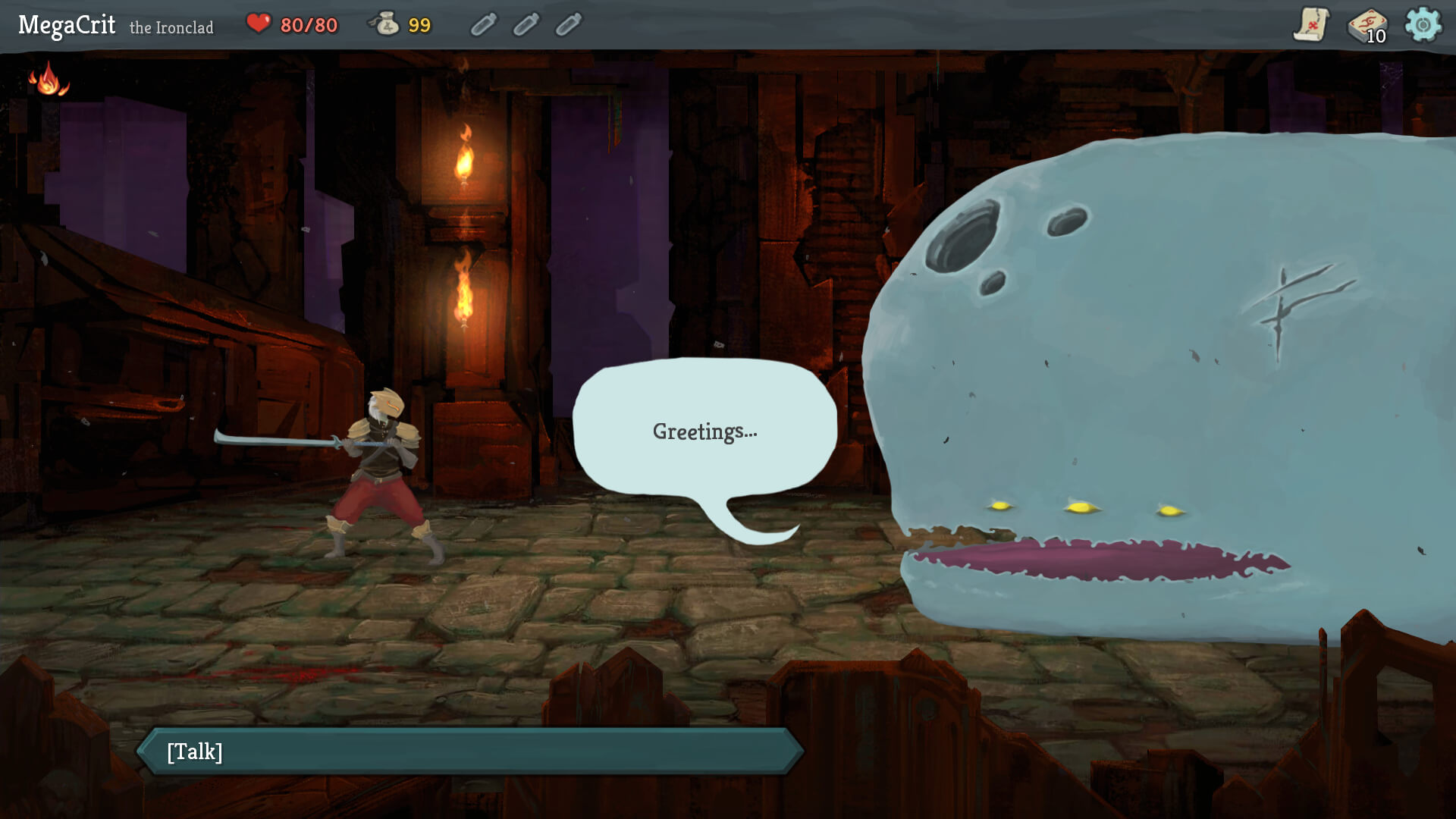
- ▶The Ironclad plays a warrior archetype — blocking with cards, spending Strength for damage, using an Exhaust mechanic that removes certain cards from the current combat entirely. Key builds include Barricade (Block carries between turns), Demon Form (Strength increases each turn), and Reaper (heal by dealing damage).
- ▶The Silent is a poison and shiv assassin. She builds around applying Poison (damage per turn, stacking), generating disposable Shiv cards with no cost, and maintaining card flow through draw mechanics. A Silent run can win fights by dealing zero direct damage.
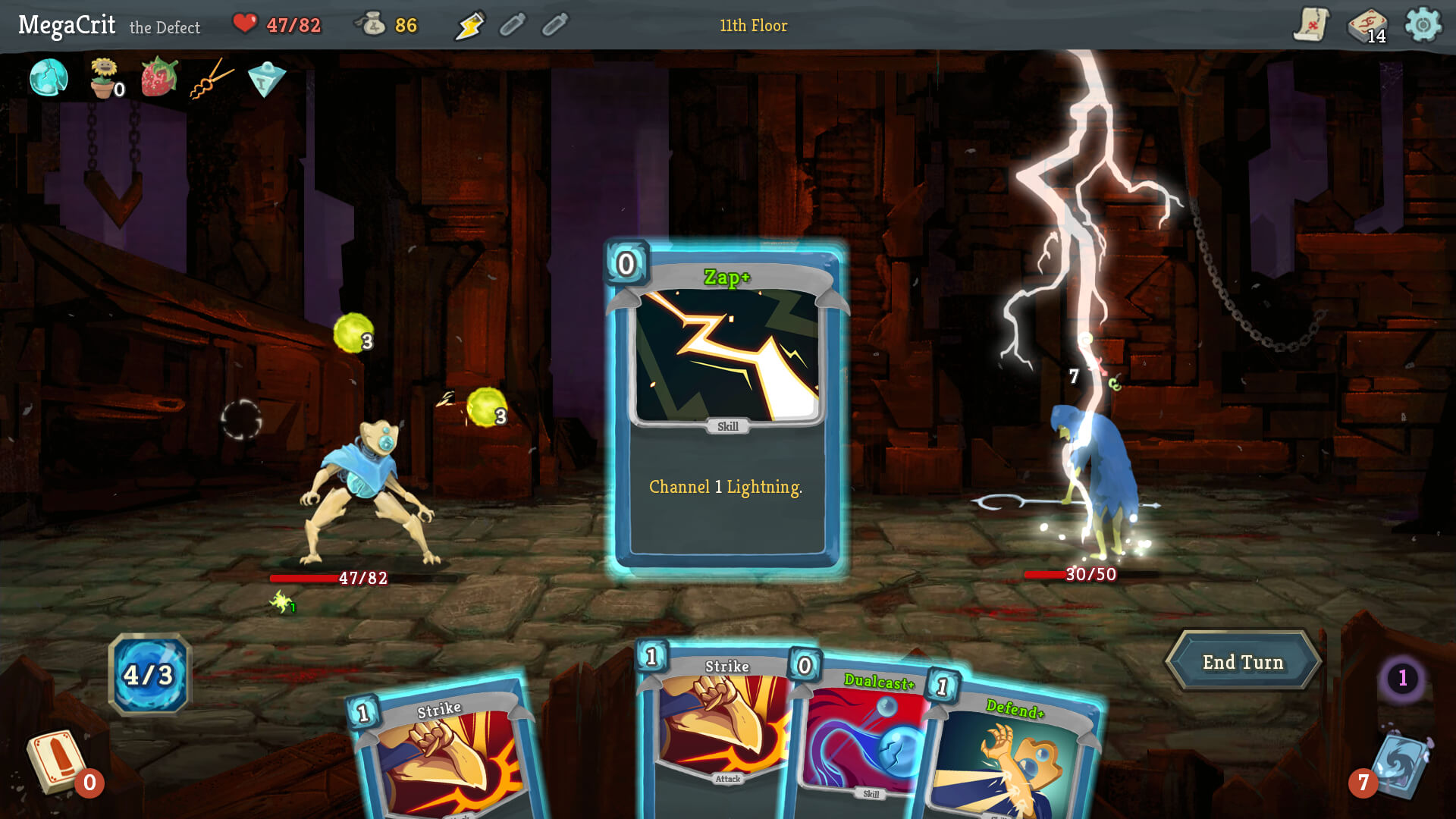
- ▶The Defect is a spellcaster who uses Orbs — slotted constructs that trigger automatic effects each turn based on their type (Lightning deals damage, Frost generates Block, Dark accumulates and releases, Plasma grants extra energy). Managing which Orbs are in which slots and when to "Evoke" them (trigger immediately and remove) is a layer of strategy unique to this character.
- ▶The Watcher is the most complex and controversial character. She switches between Calm and Wrath stances — Calm generating energy, Wrath doubling all damage dealt and received. Expert players exploit Stance transitions to generate enormous damage spikes. She is widely considered the strongest character at high skill levels and the most punishing for new players.
The Relic System: Everything Changes
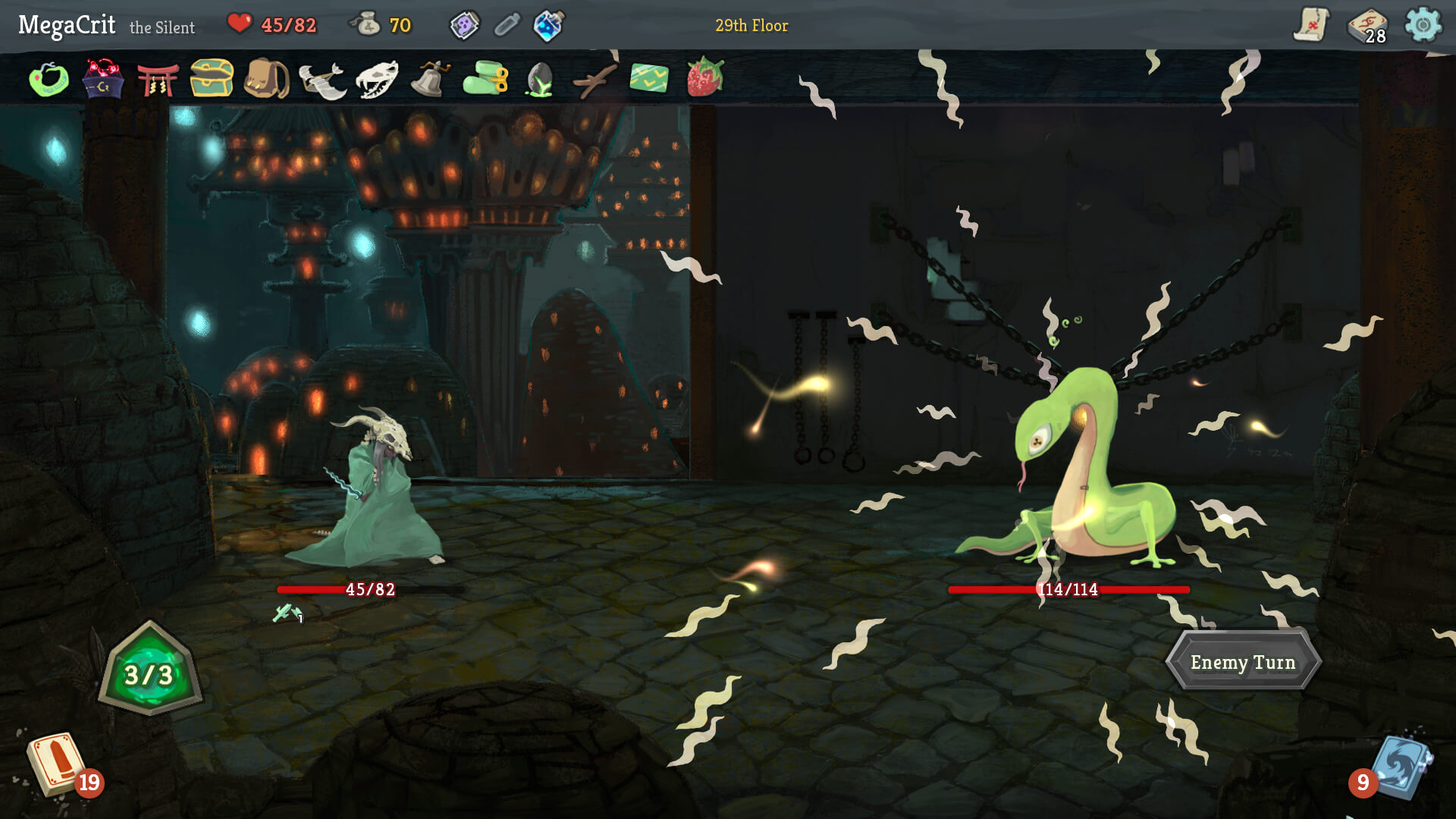
Relics are passive items acquired through boss rewards, elite combat drops, events, and merchants. Each relic modifies the rules of the game in some way — and the skill expression in Slay the Spire lives primarily in understanding how relics interact with each other and with your card choices.
A starting relic like Burning Blood (the Ironclad's default, healing 6 HP after combat) defines the run's early sustainability. Snecko Eye randomizes the cost of every card you draw, which is a handicap unless you fill your deck with expensive cards — at which point it becomes the most powerful draw engine in the game. Runic Pyramid prevents your hand from discarding between turns, meaning you hold every card you draw indefinitely — an immense advantage if your cards don't conflict with each other.
The relic interactions create emergent build possibilities that the developers could not have individually designed. A run where you have Nunchaku (drawing five cards grants an extra energy), Battle Trance (draw three extra cards but can't draw more that turn), and a deck full of zero-cost Shivs is a specific configuration that generates sequences of plays no single mechanic was designed to produce. Recognizing when these configurations are available — and steering your card picks and shop purchases toward completing them — is what separates median play from excellent play.
The Three Acts: Escalating Challenge
Act I: The Exordium
The opening act is the tutorial in disguise. Slime Boss and the Hexaghost (or Guardian, depending on run) are designed to teach specific lessons: manage your block, understand your character's core mechanic, don't over-commit to any single strategy before you know what you have. Act I deaths are usually deck construction errors — too many cards added, wrong cards added, a lack of damage or block that compounds over three floors.
Act II: The City
Act II is where runs either crystallize or collapse. The enemies are significantly more aggressive. Elites can apply stacking debuffs that shut down entire playstyles. The Act II boss — Collector, Champ, or Automaton — each demand specific adaptations. A run that has coasted through Act I on improvised strategy usually faces judgment here.
The merchant in Act II also offers the game's card removal service, and this is the most underused mechanic among new players. Removing a starting Strike or Defend from your deck is expensive but almost always correct — a slimmer deck is a more consistent deck, and consistency is how you win.
Act III: The Beyond
Act III enemies apply True Damage, bypass Block entirely, or run clock mechanics that punish slow kills. The Act III boss — Time Eater, Donu and Deca, or Awakened One — is a genuine test of whether the run's engine works under pressure. A build that has been deleting encounters through the first two acts will sometimes discover in Act III that it has a ceiling it can't break through. A build that has been careful and consistent often surprises itself.
Memorable Moments and Build Highlights
The Infinite Turn: A rare and satisfying build state where your deck cycles through itself every turn, generating effectively unlimited card plays. The Silent can reach this with zero-cost Shivs and draw effects. The Defect can achieve something similar with specific Orb manipulation. Stumbling into an Infinite setup mid-run and realizing what you have — and then watching it execute flawlessly against the Act III boss — is one of gaming's purest "I built this" moments.
The Snecko Run: Taking Snecko Eye as a relic and immediately pivoting your entire card strategy toward high-cost cards is a complete mental reframe. Suddenly a five-cost card is exciting because Snecko randomizes costs and it might cost zero. Players who understand Snecko's math thrive. Players who ignore it and take low-cost cards waste one of the game's most powerful relics.
Heart Attempts: The Act IV boss — The Heart — is a wall designed to test complete mastery. Most players spend their first fifty hours reaching the Ascension ladder. The Heart is what lies at the top of it, and it is specifically designed to punish every common strategy. First Heart kills are community-celebrated achievements.
Watcher's Double Wrath Combo: The Watcher can enter Wrath stance and play cards that deal damage doubled, then transition to Calm before Wrath's incoming-damage penalty activates. Expert Watcher players chain these transitions for damage outputs that seem impossible given the cost of the cards involved. Watching a skilled Watcher run is genuinely impressive.
Additional Screenshots
Community Reception
Slay the Spire holds an Overwhelmingly Positive (97%) rating on Steam across more than 200,000 reviews — one of the highest review scores on the platform at that volume. Positive reviews consistently cite the depth, the replayability, and the feeling that every run teaches something. Negative reviews typically fall into two categories: players who found the luck element frustrating, and players who found it too addictive (often framed as a compliment in disguise).
Metacritic scores the PC version at 89, with critics praising the strategic depth and the perfect adaptation across all platforms — particularly the Nintendo Switch version, which is widely considered the ideal way to play in portable sessions.
The game's community has produced an enormous volume of analysis content. Run theory — the practice of evaluating deck composition, relic synergies, and floor-by-floor decision trees — is a genre unto itself on YouTube and Reddit's r/slaythespire (470,000+ members). Streamers have spent thousands of hours on Ascension 20 attempts and Heart runs. The game's daily challenge mode generates a shared community experience around the same procedurally generated run.
The modding community added a fifth character, Hermit, through the widely played Hermit mod, and the Steam Workshop is rich with content. MegaCrit's announcement of Slay the Spire 2 (currently in development) generated the kind of community excitement usually reserved for AAA sequels — validation of just how deep the original's goodwill runs.
Tips for New Players
Slay the Spire has a steep learning curve that rewards the players who stick with it. Essential principles:
- 1Remove cards from your deck. The Merchant's card removal service costs gold but makes your deck more consistent. Removing starting Strikes and Defends is almost always correct. A 15-card deck beats a 30-card deck at the same average card quality.
- 1Block is not optional. The instinct for new players is to prioritize damage. The game teaches quickly that fights you can't survive are fights you lose regardless of offensive power. Learn your character's primary block mechanic early.
- 1Understand energy first. Every card has an energy cost. You start each turn with 3 energy. Building toward an engine that generates extra energy — through relics like Sozu (no potions but start with 1 extra energy) or cards like Concentrate — is often the difference between a functional and a transcendent run.
- 1Elite fights are optional and worth taking. Elite enemies are significantly harder than standard enemies but drop relics on death. Skipping all elites produces a run without relic variety. Taking all elites on a weak run produces early deaths. Learning when you're strong enough to engage is a core skill.
- 1The map is a decision, not a route. Before choosing your next node, look two or three steps ahead. A campfire you can reach in two floors might be the right choice over a treasure room if your HP is critical. A Merchant node becomes more valuable if you have gold and a plan to spend it.
- 1Ascension 0 is designed to be beaten. If you're struggling to finish Act III, focus on block consistency and card removal. The game's baseline difficulty is intended to be clearable with moderate understanding of the systems. If you're dying in Act I repeatedly, the most likely cause is an oversized deck.
- 1Each character plays fundamentally differently. Don't generalize lessons from Ironclad to Silent to Defect. The strategic instincts for each character are related but distinct. Give each character 10-15 runs before drawing conclusions about difficulty.
Why This is a GamePeak Pick
GamePeak Picks selects games where the question "have you played this?" carries real weight — titles that define a genre, influence what comes after, and hold up years later as genuinely excellent rather than merely historically significant.
Slay the Spire is the foundational document of the deckbuilder roguelike. Every game in the genre released after it is in conversation with its design. Playing it in 2026 is not revisiting something dated — the systems are as clean and deep as they were at launch, the balance has been refined through years of patches, and the game runs on essentially any hardware. A Nintendo Switch, a five-year-old PC, a phone — all are valid ways to play one of the most strategically rich games ever made by a two-person team.
The replayability is not theoretical. Players with 500+ hours still find novel card interactions. The Ascension system creates a structured difficulty ladder that ensures skilled players always have a new ceiling to pursue. The daily challenge mode provides fresh context every day. And the ongoing development of Slay the Spire 2 means the creative vision that produced this game is still active.
Final Verdict
“Slay the Spire is the game that defined what deckbuilding and roguelike design could be in combination — and then proceeded to be bettered only by its own successors and the sequel still in development. It is endlessly replayable, strategically inexhaustible, and one of the best reasons to have a gaming device of any kind. A definitive GamePeak Pick.