Editor's note: this article summarizes published reviews, store data and community reception. GamePeak did not run its own playtest, so no GamePeak score is given.
# Sekiro: Shadows Die Twice — The Most Unique Combat in Soulslike History
Steam Rating: Overwhelmingly Positive (93%) | Metacritic: 91 | The Game Awards GOTY 2019
Sekiro Is Not Dark Souls
Most players who boot up Sekiro: Shadows Die Twice for the first time make the same mistake. They play it like a Souls game. They roll. They wait for openings, punish, retreat, heal. They assume that, eventually, stats will save them. Then they die. Repeatedly. Sometimes against the very first real boss — Genichiro Ashina — in numbers that feel embarrassing in retrospect.
This isn't a matter of the game being difficult. It's a matter of the game speaking a completely different language.
Sekiro is FromSoftware dismantling the grammar they invented — the precise, cautious, stamina-managed rhythm of the Souls series — and rebuilding it from first principles. There are no stat builds. There is no leveling that makes enemies more manageable. There is no magic school or bleed build or lightning stagger that turns a hard fight easy. In this game, there is exactly one variable the player can improve: their own skill.
Metacritic 91. Game of the Year 2019. The numbers are easy to cite. Understanding why is worth more than the citation.
The Posture System: Why Every Fight Feels Like a Duel
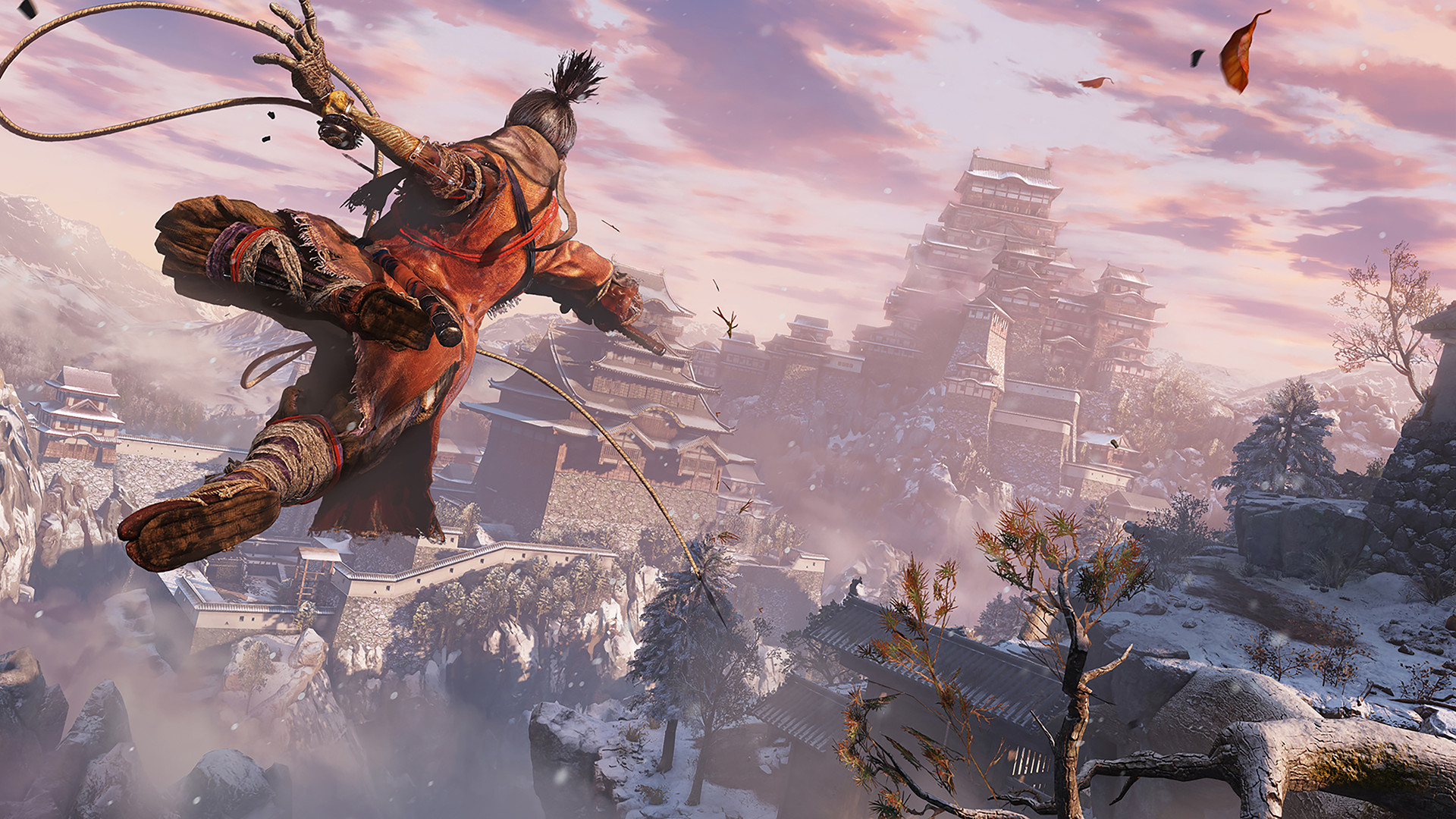
The mechanical core of Sekiro is the Posture Gauge. Every enemy and boss has a posture bar running above their health. When it fills completely, their stance breaks — leaving them open for a Deathblow that removes an entire health segment in a single strike.
This system restructures what a boss fight is, fundamentally.
In Dark Souls and Elden Ring, boss encounters are essentially wars of attrition. You dodge attacks, find a window, deal damage, back off, recover stamina, repeat until the health bar hits zero. The rhythm is deliberate, controlled, and sometimes plodding. Patience is a virtue. Aggression is usually a mistake.
Sekiro punishes that approach. Back away from a boss and their posture gauge regenerates. Refuse to engage and you've handed the momentum back to them. But maintain pressure — deflecting their attacks, countering, closing distance — and the posture bar climbs. The fight tips in your favor not through damage dealt but through psychological and positional dominance.
Every boss fight in Sekiro is designed to be a duel. Not a siege. You are not meant to wait the enemy out. You are meant to face them, read them, and break them. That is the game's central demand — and its central thrill.
Deflect vs Dodge: How Sekiro Demands You Face Enemies Head-On
In every FromSoftware game before Sekiro, rolling was sacred. The invincibility frames on a well-timed dodge roll were a primary survival mechanic from Demon's Souls onward. Roll through the attack, reposition, punish the recovery — this was the rhythm of a thousand hours of play across Dark Souls, Bloodborne, and Elden Ring.
Sekiro revokes that grammar.
The protagonist, Wolf — a shinobi bodyguard — fights primarily with a single katana. And his most important defensive tool is not a dodge but a Deflect. Press the block button at the precise moment an enemy attack connects, and Wolf doesn't absorb the blow — he redirects it, canceling the attack and dealing posture damage to the attacker. It's not passive defense. It's an aggressive counter-move.
Rolling exists in Sekiro, but it's far less reliable than in Souls games. Enemies are faster and better at tracking. Retreating invites a rain of follow-up attacks. The game is architecturally biased toward standing your ground and answering every strike with a deflection.
This design sends a clear message: stop retreating. The game will not reward you for running. It will reward you for meeting every attack with the correct response — staying in the fight, reading the tempo, and refusing to yield the center of the room.
Prosthetic Tools: Support That Opens Attack Windows
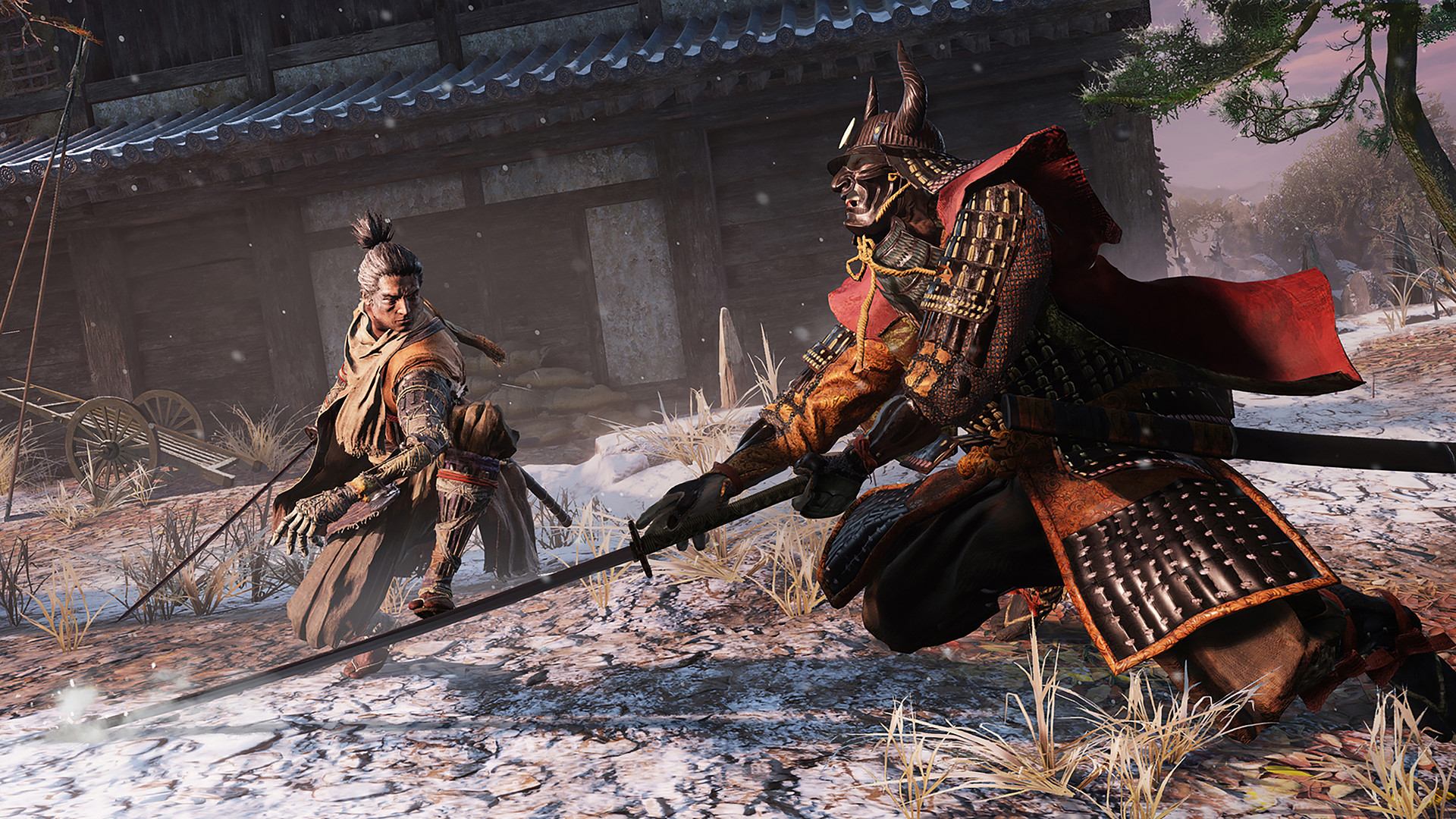
Wolf's left arm is a mechanical prosthetic. And this prosthetic is where Sekiro's strategic depth expands dramatically beyond the sword.
Shinobi Prosthetic Tools let you equip attachments that enable specialized combat options. A few key examples:
- ▶Flame Vent: A bellows that breathes fire, inducing the Terror status on many enemies. Particularly effective against serpent-type bosses and certain undying enemies. A well-placed burst creates a window that would otherwise take several exchanges of deflection to manufacture.
- ▶Loaded Shuriken: A ranged throwing tool that chips posture damage and interrupts enemy attacks. Crucial for tracking bosses who retreat, and for dealing with aerial threats that can't be reached with the sword.
- ▶Loaded Umbrella: A folding iron shield that blocks both melee and projectile attacks in a wide arc. Some of the game's most powerful boss attacks can be absorbed by the Umbrella, turning a potentially lethal moment into an opportunity to counter.
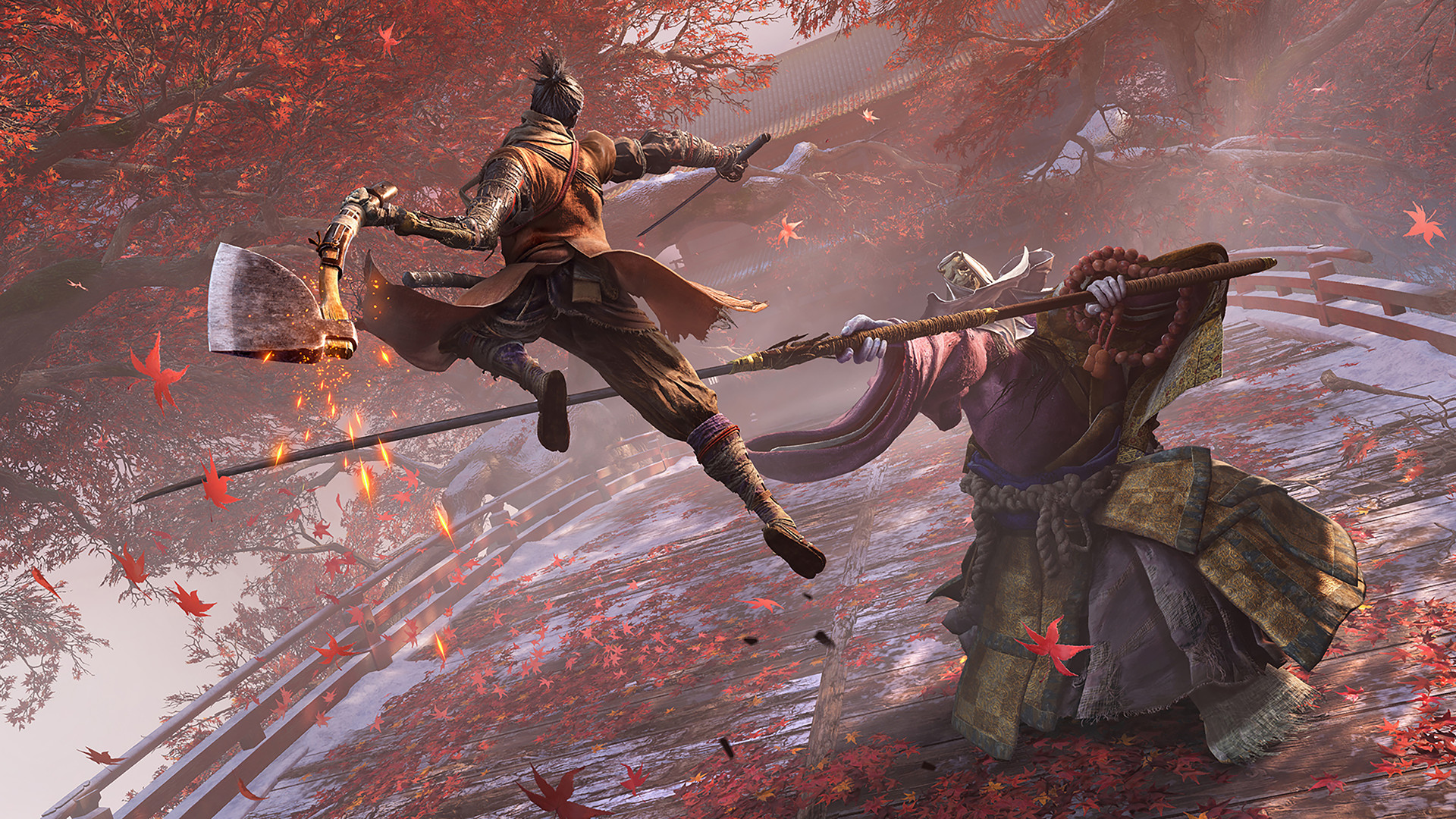
- ▶Loaded Axe: A heavy cleaving attachment designed to break the guard of shield-bearing enemies in a single blow — a problem that the katana alone handles poorly.
The critical design principle here is that these tools do not make fights easier. They create attack windows in specific situations. A Flame Vent against an enemy with no fire weakness is just a slow, spendthrift move. The same tool against the right target shifts the entire fight. Knowing when and why to use each tool is itself a measure of game literacy. Prosthetics are not a crutch — they are a vocabulary.
Shinobi Execution: Deathblow Mechanics and the Satisfaction of Landing Them
Sekiro's most emotionally resonant moment is the Deathblow.
When a boss's posture bar is full — or when a regular enemy's health drops sufficiently low — a red circle appears above their head. Press the attack button in that moment and Wolf executes a kill strike: a single, lethal motion that removes an entire health bar segment. Against a two-phase boss, the first Deathblow ends phase one. Against a regular enemy, it ends the fight entirely.
The feeling of landing a Deathblow after thirty minutes of failed attempts is difficult to overstate. It is not the product of a good build or a fortunate item drop. It is the product of learning, of reading, of repetition in which every death contributed something. The Deathblow is earned in the most literal sense.
The mechanic extends beyond boss fights through the Shinobi Execution system. Approaching enemies through stealth and landing a silent kill. Leaping from a rooftop and executing an aerial Deathblow. Countering an incoming charge with a perfectly timed forward Deathblow that the game calls a Mikiri Counter. Each variation adds to the sense that Wolf is not just a swordsman — he is a shinobi operating across multiple planes of engagement at once.
Boss Design: Genichiro, Owl, Isshin
Sekiro's bosses are widely regarded as among the finest in FromSoftware's catalog — and the catalog is not short on masterpieces.
Genichiro Ashina
The first major boss serves as the game's true tutorial. Genichiro appears early and will almost certainly kill a new player many times before the encounter clicks. His moveset is a compressed course in Sekiro's combat language: when to deflect, when to dodge, when to jump, when to apply pressure. Getting past Genichiro means the game's grammar has begun to settle into muscle memory. Every player who has beaten Sekiro remembers the first time Genichiro fell.
Owl (Father)
Wolf's adoptive father and the man who trained him — and in one encounter, a direct mirror. Owl uses many of the same prosthetic tools and shinobi techniques Wolf has learned over the course of the game, weaponizing your own knowledge against you. The fight is technically demanding, but it's the narrative weight that elevates it: you are fighting the person who made you what you are, and you must surpass him.
Isshin, the Sword Saint
Among the game's final encounters and the one most players name when asked about Sekiro's best. A three-phase gauntlet that cycles through sword combat, spear techniques, and gunfire — each requiring different responses, all demanding everything the player has learned. The emotional register of the Isshin fight, and the silence that follows when he falls, is one of FromSoftware's finest achievements.
The 4 Endings: Shura, Dragon's Return, Purification, and Immortal Severance
Sekiro branches into four different endings depending on choices the player makes throughout the game. Without full spoilers:
- 1Shura: The darkest path. Wolf makes the choice to serve power over loyalty, and the consequences are devastating. Players who unlock this ending often describe it as a gut-punch in retrospect.
- 1Immortal Severance: The most straightforward ending to obtain. It severs the chain of undying but carries a weight of finality that feels incomplete to many players.
- 1Purification: Requires specific questline progression and involves Wolf's sacrifice. One of the more emotionally layered conclusions, depending on how much of the supporting narrative you've absorbed.
- 1Dragon's Homecoming: The most involved ending to achieve, requiring the deepest engagement with the game's themes of loyalty, sacrifice, and the cycle of death. Most players regard this as the "true" ending — the one where the story's meaning fully coheres.
The four endings are not cosmetic variations. Each illuminates a different facet of Wolf's relationship to the Divine Heir, to immortality, and to duty. First-time players who reach any ending and then look up the others typically want to go back.
Why It's Different From DS and Elden Ring: Pure Skill Expression
The feature that most sharply distinguishes Sekiro from the rest of FromSoftware's catalog is one of its most debated: there is no build variety.
Dark Souls and Elden Ring offer rich character customization. Intelligence builds for sorcery, Strength builds for colossal weapons, Dexterity builds for fast bleed-stacking katanas, Faith builds for lightning and incantations. Certain builds trivialize certain bosses. This variety is a genuine strength of those games — it lets players approach challenges in ways that suit their instincts.
Sekiro removes all of that. One weapon. No stat builds. No intelligence scaling. No way to freeze a boss with frost, melt it from range with magic, or out-level it into submission.
This is a cold design, and it alienates some players for exactly that reason. But for those it reaches, it offers something the Souls games cannot: the certainty that every clear is purely yours. When you beat Isshin on your fortieth attempt, it is because your hands finally learned the rhythm. Not because you over-leveled, not because your weapon had the right infusion, not because you found the cheese. The accomplishment is unambiguous. Sekiro is, in this sense, the most honest game FromSoftware has made.
Beginner Survival Tips
Starting Sekiro is hard. These will help.
- 1Unlock Mikiri Counter immediately. It's in the early skill tree and it is the most-used tool in the game. Mikiri Counter lets you stomp an enemy's thrust attack and deal massive posture damage. Almost every major boss has thrust attacks. Prioritize this above everything else.
- 1Visit Senpou Temple early. The area's enemies are useful for drilling the deflect rhythm in a lower-stakes environment, and the branching route structure means a boss that's stopping you may not be the only available path forward.
- 1Don't fight everything. Wolf is a ninja. Stealth exists for a reason. Enemies you can circumvent without combat should often be circumvented. Save your energy for what matters.
- 1Practice on mini-bosses, not story bosses. Named mini-bosses scattered across the world use condensed versions of mechanics that recur in major fights. Treat them as training. Resurrection (Dragonrot aside) makes these engagements low-cost experiments.
- 1Let go of the dodge reflex. This is the single hardest habit to break for Souls veterans. Rolling will not save you the way it did in other games. Practice deflecting. Start with easy enemies. Commit to the rhythm. The game opens up the moment deflecting becomes instinctive.
Why It Belongs in the Picks Hall of Fame: GOTY 2019, Metacritic 91
GamePeak Picks is not a high-score aggregator. It selects games where "have you played this?" operates as a shared cultural touchstone — titles that define conversations, raise the floor of what a genre can do, and remain relevant and playable long after the release window closes.
Sekiro: Shadows Die Twice qualifies on every count.
It won Game of the Year at The Game Awards 2019, becoming the first soulslike to claim that title. Its Metacritic score of 91 reflects a critical consensus that held firm. And six years after release, the community continues to generate first-time player stories — people who were warned off by the difficulty, finally took the leap, and found a game that changed what they thought games could demand of them.
The design is uncompromising in a way that most games cannot afford to be. But Sekiro makes its uncompromising nature the point. It tells you, clearly and repeatedly, that the path forward is through difficulty — not around it. And for players willing to accept that contract, it delivers the most satisfying proof that games can genuinely make you better at something real: reading patterns, maintaining composure under pressure, and trusting your own hands.
No other game in the FromSoftware catalog, and arguably no other action game in this decade, has delivered that experience with the same purity.
Final Verdict
“Sekiro is not for the faint of heart. That is precisely what makes it great. It asks you to face the enemy directly, to read them, to meet their blade with yours and not flinch. The reward for that willingness is a combat experience that no soulslike before or since has matched. An unqualified GamePeak Pick.