Editor's note: this article summarizes published reviews, store data and community reception. GamePeak did not run its own playtest, so no GamePeak score is given.
# Red Dead Redemption 2 — The Last Ride of the American Outlaw
Developer: Rockstar Games | Release Date: PC November 5, 2019 (Console October 26, 2018) | Genre: Open World Action Adventure
Steam Rating: Mostly Positive (139,000+ reviews) | Metacritic: 97/100 (PS4)
Buy on Steam: View on Steam | Price: $59.99
“Red Dead Redemption 2 is frequently cited in the Steam community as the most compelling argument that video games can be genuine art. Reviewers call Arthur Morgan "one of the best-written protagonists in the history of the medium," describe the moment a sweeping musical score rises over a mountain vista as a point of no return, and consistently note that the ending left them unable to think about anything else for days. The PC version launched with optimization problems that muddied its early reception, but following patches stabilized it thoroughly, and it now stands as one of the highest-rated titles on the platform.
The Dying West — A Story Worth Sixty Hours
It is 1899, and the American frontier is closing. Railroads cut through land that was once lawless territory. Cities grow where there was nothing. The age of the outlaw is drawing to its inevitable end, and nobody in the Van der Linde gang can stop it — though some will try.
You play as Arthur Morgan, loyal enforcer and long-time member of Dutch van der Linde's gang. Arthur is not a reluctant criminal; he's a man who has known nothing else and followed Dutch without question for two decades. But when the gang's desperate flight from the law begins to fracture Dutch's judgment, Arthur's faith starts to crack, and Red Dead Redemption 2 transforms from a crime epic into a profound meditation on loyalty, mortality, and whether it is possible to be a good man after a lifetime of bad choices.
The genius of the game's structure is that you know how it ends before you begin, in the broadest strokes — the original Red Dead Redemption established what becomes of this gang and this era. But the journey to that ending is so beautifully rendered, so full of aching sorrow and unexpected warmth, that it holds your complete attention regardless.
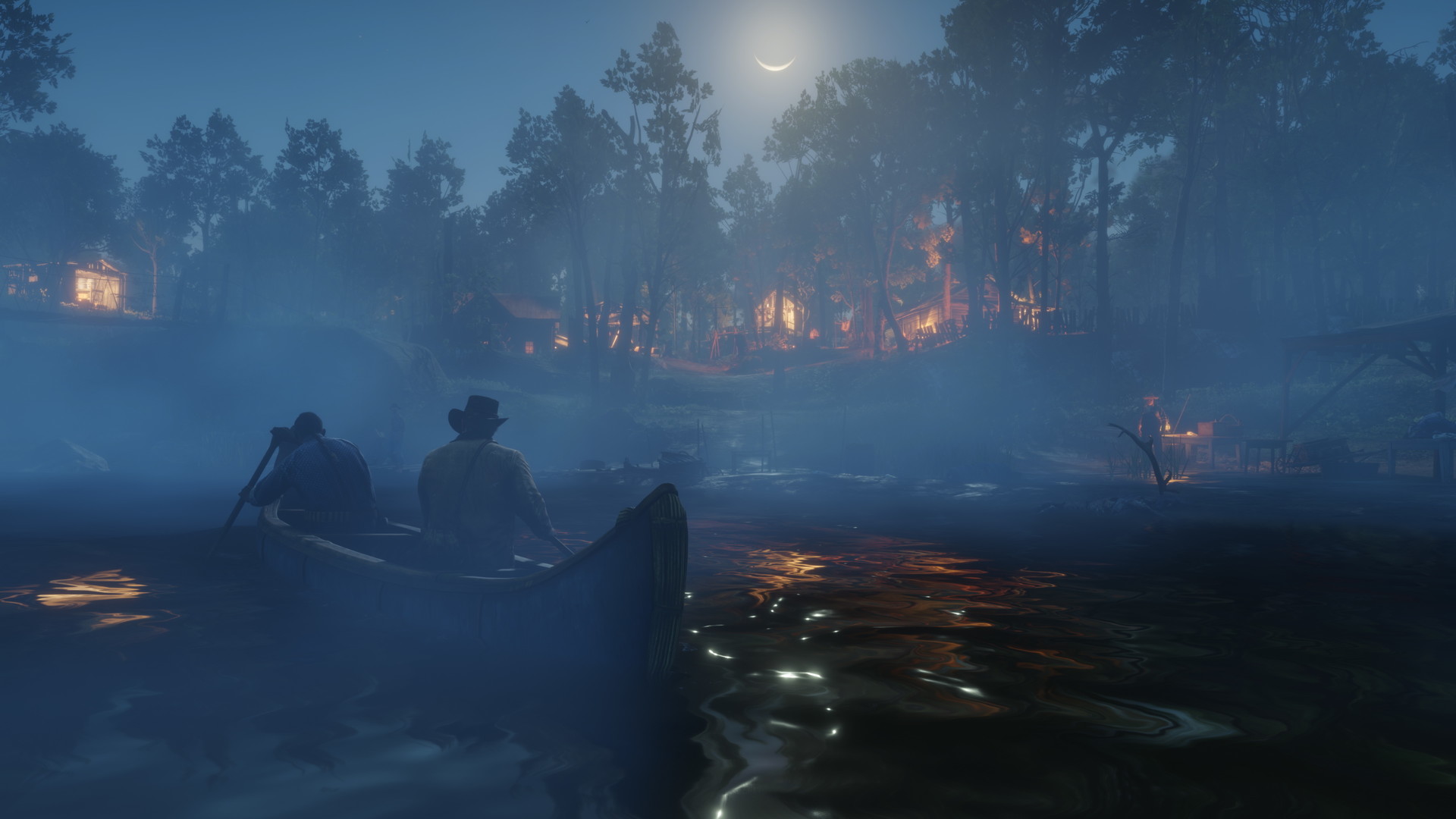
The main story spans six chapters and an epilogue — roughly forty to sixty hours of directed narrative — but the world surrounding it contains another forty to sixty hours of content that announces itself gently, if at all.
Arthur Morgan — One of Gaming's Best-Written Characters
The most important reason Red Dead Redemption 2 separates itself from other open world games is Arthur Morgan. He is not a blank avatar for the player to project onto, and he is not an uncomplicated hero. He is a man with a history of violence, genuine affection for the people he has lived alongside for decades, and a growing suspicion that the life he built for himself is built on sand.
The Journal System
Arthur keeps a journal. Every place he visits, every person he meets, every significant event — he records them in his own handwriting, illustrated with rough sketches. The journal is not a collectible or a quest log; it is a window into a character's interior life. His entries range from terse and practical to unexpectedly candid, and their tone shifts measurably as the game progresses and Arthur's circumstances change. Many players report reading journal entries they had missed and being caught completely off guard by the emotional weight of a particular line. "I read Arthur's journal and started crying" is not a rare Steam review.
Honor's Effect on Arthur's Self-Perception
The journal's tone shifts based on your Honor level. A high-Honor Arthur writes with something that approaches self-reflection — acknowledgment of difficult choices, cautious hope, a desire to do better. A low-Honor Arthur is cynical and fatalistic, viewing his own actions through a lens of resignation. The same event recorded by different versions of Arthur reads like entries from two different people. This is not game design; it is character writing of a caliber more commonly found in novels.
Two Endings, One Tragedy
The game's final hours present Arthur with a choice, and how that choice plays out depends on the Honor level you carried through the game. Both outcomes are tragic. What differs is the quality of the tragedy — the distinction between a man who found something worth dying for and a man who simply ran out of road. Both are earned by the narrative. Neither is comfortable. Many players report needing to sit quietly after the credits before they can think about anything else.
The Van der Linde Gang — A Cast of Characters That Earns Its Time
Red Dead Redemption 2's camp is populated with more than a dozen named characters, each with their own history, personality, and arc across the game's chapters. They are not backdrop — they are the substance of what makes Arthur's story feel real.
Dutch van der Linde
The gang's charismatic, philosophical leader. In the game's early hours, Dutch is genuinely compelling — his vision of freedom from an encroaching civilization is seductive, and his authority rests on a long history of protecting the people around him. As the game progresses, Dutch's judgment deteriorates in ways that are subtle at first and then impossible to ignore. He is the game's most tragic figure precisely because he is not a villain. He is a man who cannot relinquish an idea even as the idea destroys everything around him.
John Marston
The protagonist of the original Red Dead Redemption. In RDR2 he is a younger, rougher version of the man he becomes — impulsive, prone to poor decisions, not yet the figure his own game required him to be. Players who came to RDR2 first will finish the epilogue and find that starting the original game is a strange and melancholy experience. Players who played the original first will watch John in RDR2 knowing exactly where his story ends, which colors every moment he appears.
Sadie Adler
Consistently one of the most popular members of the gang, and for clear reasons. She enters the story as a widow in shock and becomes, over the course of the game, someone defined entirely by her own choices rather than what happened to her. Her missions with Arthur are among the game's most kinetic and enjoyable sequences, and her character arc is the most complete of any supporting cast member.
Lenny Summers
Arthur's friend among the gang's younger members — intelligent, warm, good company during a particular notorious evening in the city of Saint Denis that players consistently describe as one of the game's funniest sequences. His friendship with Arthur is one of the game's most genuine relationships, and its abrupt end is the more devastating for it.
Charles Smith
Quiet, principled, and deadly when necessary. The hunting and tracking missions Charles shares with Arthur are some of the game's most peaceful content, and Charles functions throughout the narrative as a moral constant — someone who knows the difference between what he does and what he is, and does not pretend otherwise.
Chapter by Chapter — Six Acts and an Epilogue
Red Dead Redemption 2's narrative is structured with deliberate care across its chapters, each of which carries a distinct emotional register.
Chapters 1–2: Optimism and Belonging
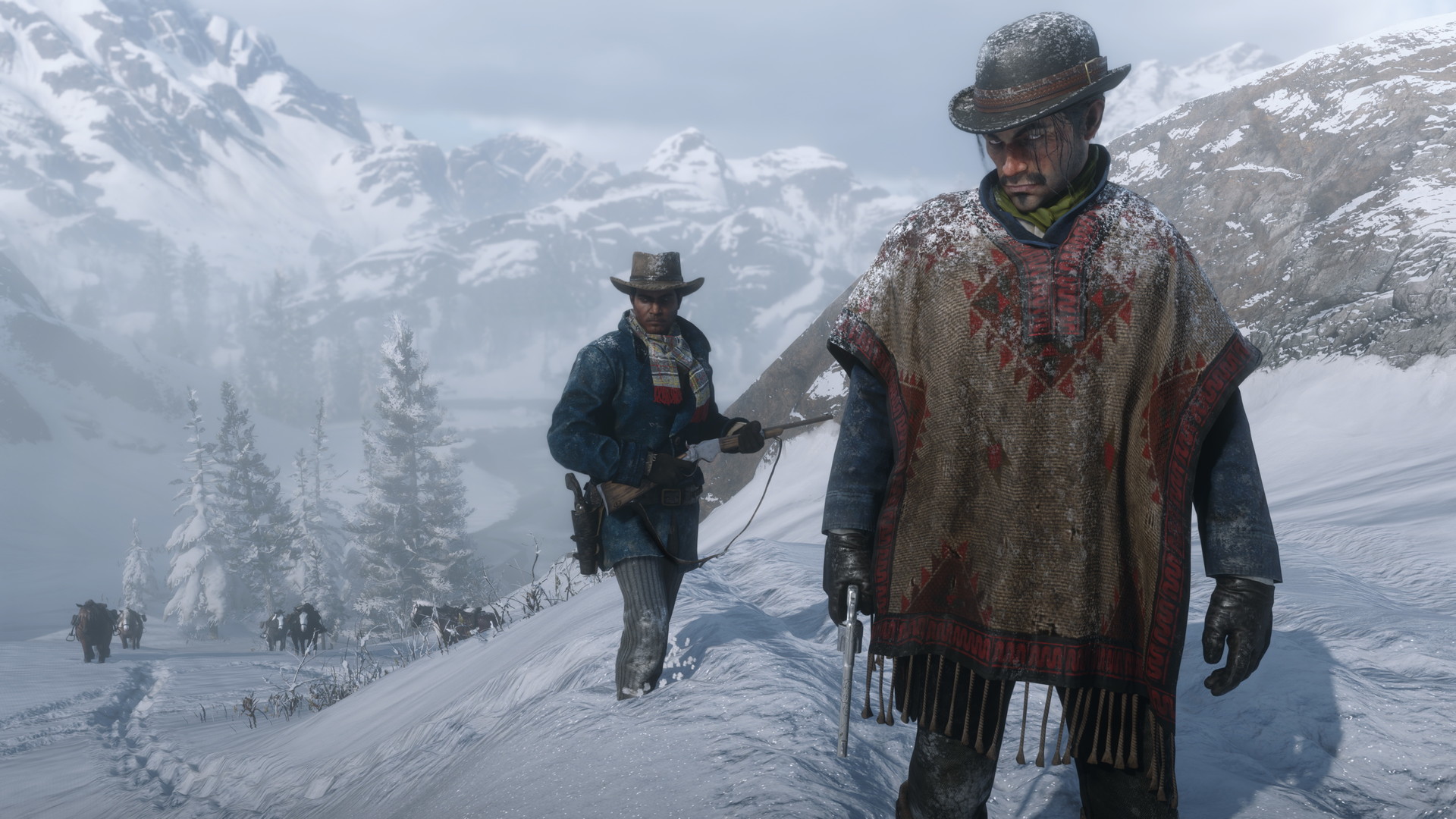
The game opens in crisis — the gang fleeing a botched job through a blizzard — but quickly settles into something warmer. The camp is alive, the gang is together, and Arthur's work feels purposeful. These chapters establish relationships that the later game will use against you. The tone is not carefree, but there is energy and forward motion.
Chapters 3–4: The Cracks Appear
Money gets tighter. Pressure from outside increases. Dutch's plans become more desperate and more costly. The gang's internal fractures start showing in conversations, in camp dynamics, in the way some characters look at Dutch and then look away. Arthur begins asking questions he has not asked before. These chapters are the game's most carefully constructed — the moment when a story about outlaws starts becoming something else entirely.
Chapters 5–6: Collapse
Betrayal and loss accumulate. Arthur's awareness of his own trajectory sharpens into clarity. The game's final chapters are among the most emotionally demanding extended narrative sequences in any medium, requiring you to continue performing the actions of an outlaw while everything that made that life meaningful falls away. The specific events of Chapter 6 have left players unable to discuss them calmly for years.
Epilogue: What Remains
John Marston takes over as the playable character, and the story shifts its register entirely. Many players, wrung out by Chapter 6, are reluctant to continue. Continuing is necessary. The epilogue completes the thematic arc of the entire game — what was built, what was lost, and what survives into the world that comes after. It also bridges directly into the events of the original game, and those who have played both will find additional meaning in everything the epilogue contains.
The Honor System — Two Very Different Games
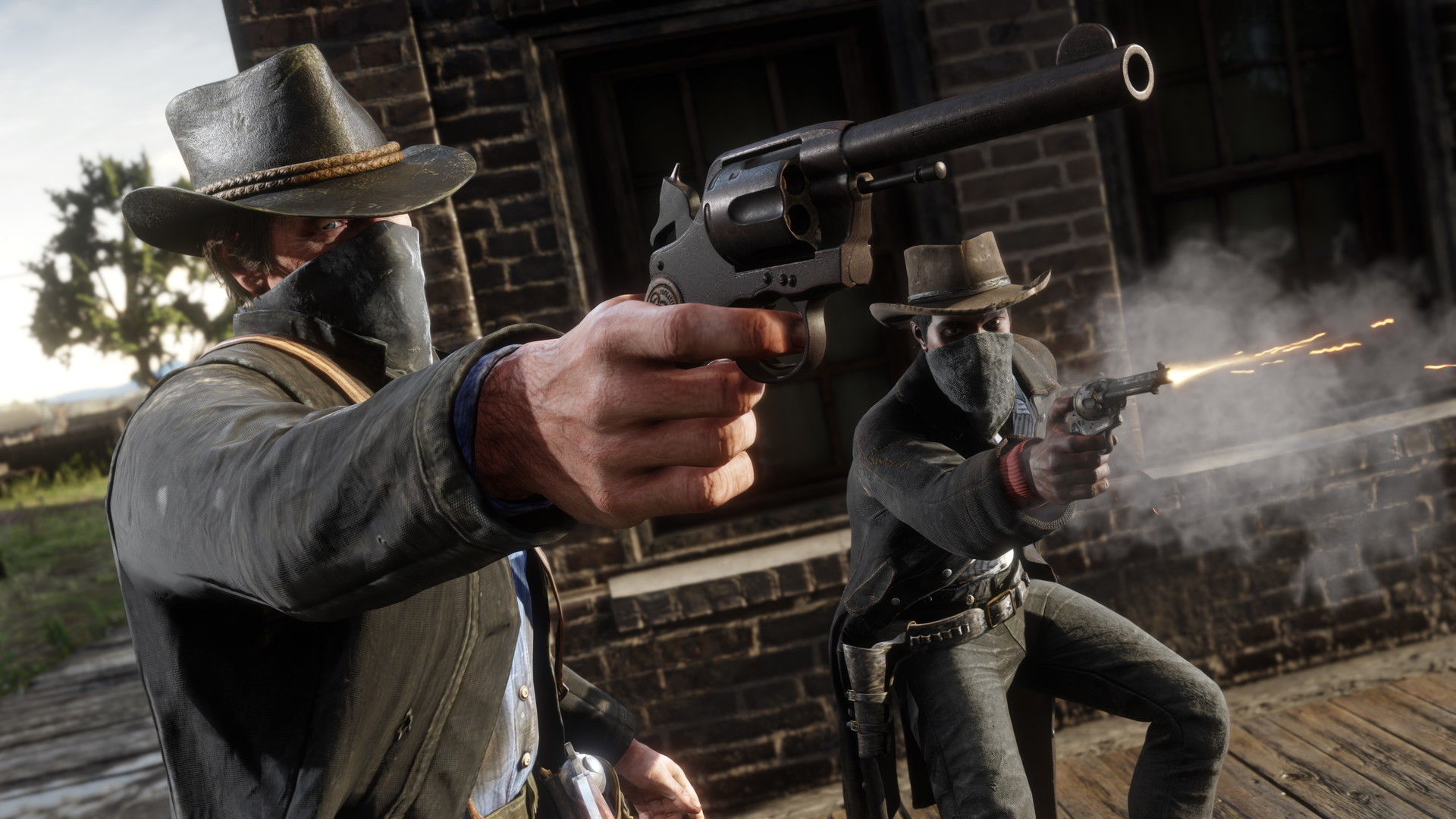
Rockstar's Honor system in Red Dead Redemption 2 is more sophisticated than it appears. It is not a morality meter that unlocks good or bad endings. It is a system that fundamentally changes how Arthur experiences the world, how NPCs relate to him, and how he narrates his own story to himself.
Building Honor
Helping strangers in distress, returning stolen goods, sparing surrendered enemies, letting wanted criminals be taken by the law rather than killing them yourself, releasing captives — these accumulate Honor. The game surfaces these opportunities constantly in the open world, many of them easily missed.
Losing Honor
Killing unnecessarily, robbing the vulnerable, killing witnesses after crimes, desecrating bodies, executing surrendered enemies, firing weapons inside towns — these reduce it. The system is observational: it tracks intent as much as outcome.
What High Honor Buys
Shop discounts in every town, warmer reactions from strangers, law enforcement that hesitates before escalating, fewer bounty hunters pursuing you, access to specific stranger mission payoffs, and an Arthur who — in his journal and his ambient dialogue — reflects on his choices with something approaching the possibility of redemption.
What Low Honor Creates
More hostile environments, higher prices, more aggressive law enforcement, a constant stream of bounty hunters, and an Arthur who seems to have made his peace with being exactly what everyone thinks he is. Low-Honor playthroughs are a different game — not lesser, but harsher in ways that feel appropriate to the choices that produced them.
The Most Alive Open World in Gaming
Rockstar's commitment to detail in Red Dead Redemption 2 borders on the obsessive, and the result is an open world that feels less like a game map and more like a place that exists independent of your presence.
The Living Ecosystem
NPCs follow daily routines, react to weather, and remember how you treated them in previous encounters. Guns develop rust when left unused. Your horse builds a genuine bond with you over time, improving its stats and behavior as trust grows. Arthur's beard grows with real time played; overeat and his physique changes visibly.
The wildlife ecology is equally meticulously constructed. Eagles circle carrion. Predators stalk prey. Rivers hold different fish species depending on region and season. The world does not pause when you are not interacting with it.
Hunting
Each animal type requires specific conditions for a perfect pelt — the right ammunition caliber, an appropriate range, a clean kill targeting vital organs. Perfect pelts allow crafting of upgraded equipment through the trapper system. Hunting is not a diversion; it is a parallel engagement with the world's ecology that rewards patience and knowledge.
Fishing
The game's fishing system is a complete activity on its own terms. Different species inhabit different bodies of water, secret fishing spots reward exploration, and legendary fish constitute their own collection challenge. It is the kind of activity that consumes thirty minutes before you notice, sitting on a riverbank watching the water while nothing in particular happens.
Foraging and Cooking
Herbs, plants, and mushrooms across the map can be collected and used in crafting recipes. Game meat from hunts can be cooked at camps and fires for stamina and health bonuses. These systems exist not because they are necessary for completing the game, but because they make the world feel inhabited.
Each town has a distinct culture and atmosphere, and the game is filled with optional questlines that never announce their own existence. The world does not exist to serve the player's progression — it simply exists, and you move through it.
The Pace Is the Point — Slow by Design
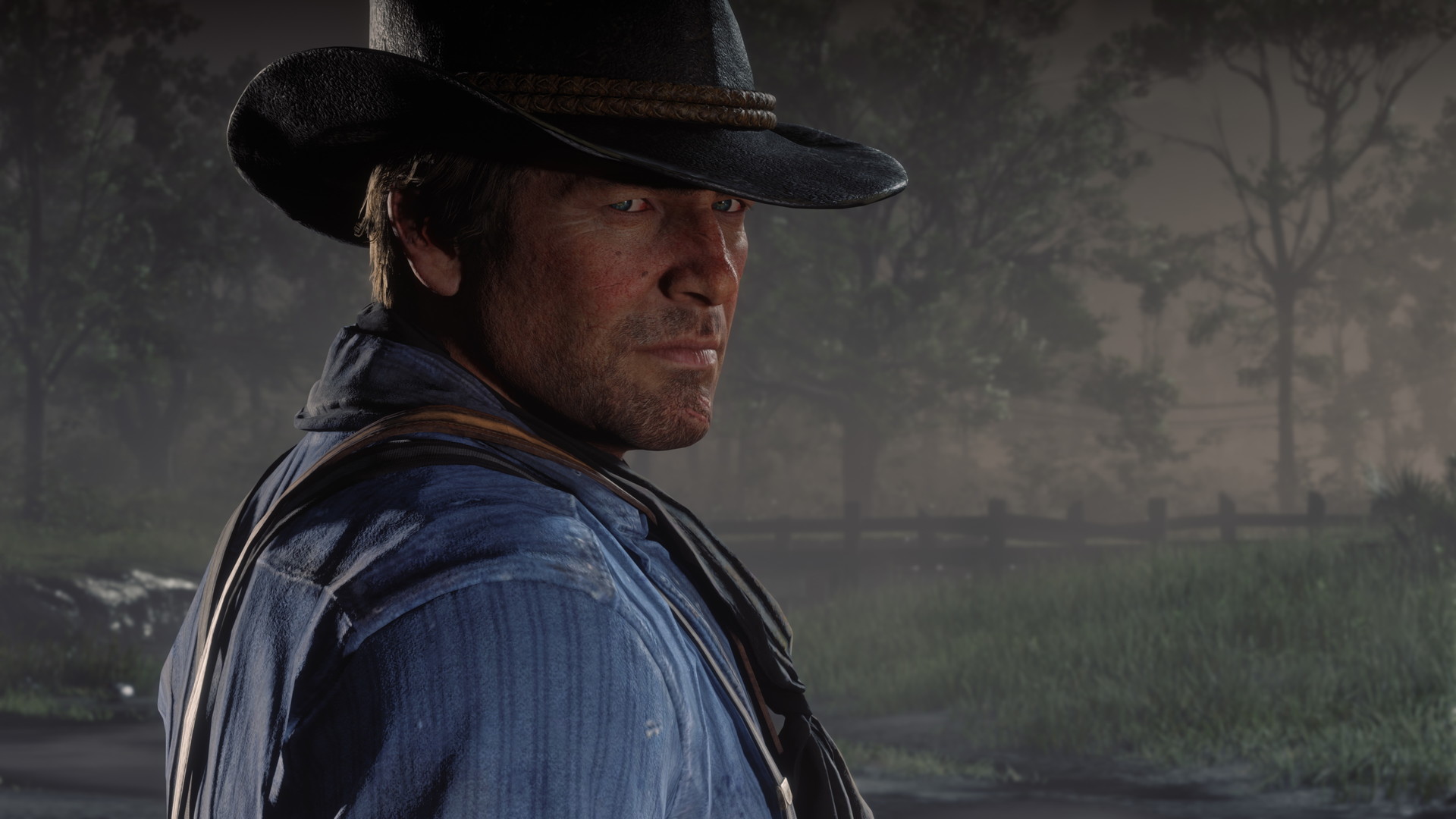
Red Dead Redemption 2 is, by deliberate choice, a slow game. Riding to a destination takes minutes. Conversations with shopkeepers cannot be rushed. Many players initially find this frustrating before realizing that this pacing is the engine of the game's immersion — the world only feels real because you are forced to be present within it, rather than sprinting through it toward an objective marker.
Combat is cover-based and deliberate, built around the satisfying slow-motion targeting of the Dead Eye system. The Honor system tracks your choices — sparing enemies, helping strangers, or going on murderous rampages — and adjusts the world's response accordingly. High honor earns shop discounts and warmer greetings; low honor brings more bounty hunters and hostile eyes wherever you ride.
Your horse is not incidental to this pacing. It is a companion that develops over time — its stamina and responsiveness improving as the bond between Arthur and the animal grows. Losing a well-bonded horse to a sudden encounter is a loss that lands unexpectedly, and the game knows this.
The PC Version: Technical Considerations
The PC version includes several enhancements over the console original: 4K resolution and HDR support, extended draw distances, improved shadow and reflection rendering, DLSS and FXAA anti-aliasing, and a photography mode. The launch in November 2019 was troubled — stuttering, crashes, and Rockstar's launcher infrastructure struggles made early reviews harsh. Today, those problems are largely historical. A mid-to-high-end PC handles this game at a locked 60fps or beyond without drama, and the visual improvements over the console version are substantial.
Getting the Most from Your Playthrough
- ▶Resist the minimap: The temptation is to navigate by the small map in the corner. Navigate instead by landmarks and compass bearing. The world is more legible than you think, and keeping your eyes on it rather than the UI enriches the experience enormously.
- ▶Contribute to the camp ledger: Camp upgrades matter in the first several chapters. Don't neglect the donation box.
- ▶Be consistent with Honor: Decide what kind of Arthur you want to play and commit. Both high and low honor routes offer meaningfully different experiences, but oscillating between them dilutes both.
- ▶Read Arthur's journal: It is easy to forget the journal exists. Open it regularly. The entries are brief, but they are some of the best character writing in the game.
- ▶Do not skip the Epilogue: Many players disengage after the main story's conclusion. The Epilogue is not optional filler — it completes the thematic arc of the whole game.
- ▶Let the world surprise you: Some of the most memorable moments come from wandering with no objective. Set the game aside for an hour and just exist in it.
Community Reception — What Players Keep Saying
Steam reviews for Red Dead Redemption 2 share consistent patterns that reveal what kind of impression the game makes.
"I couldn't talk about the ending for days" is the most commonly reported response to completing the main story. The emotional weight of Arthur's final chapters is severe enough that many players describe a period after finishing where they were not ready to engage with other games, other stories, or — as some reviewers put it — other people who had not experienced the same thing.
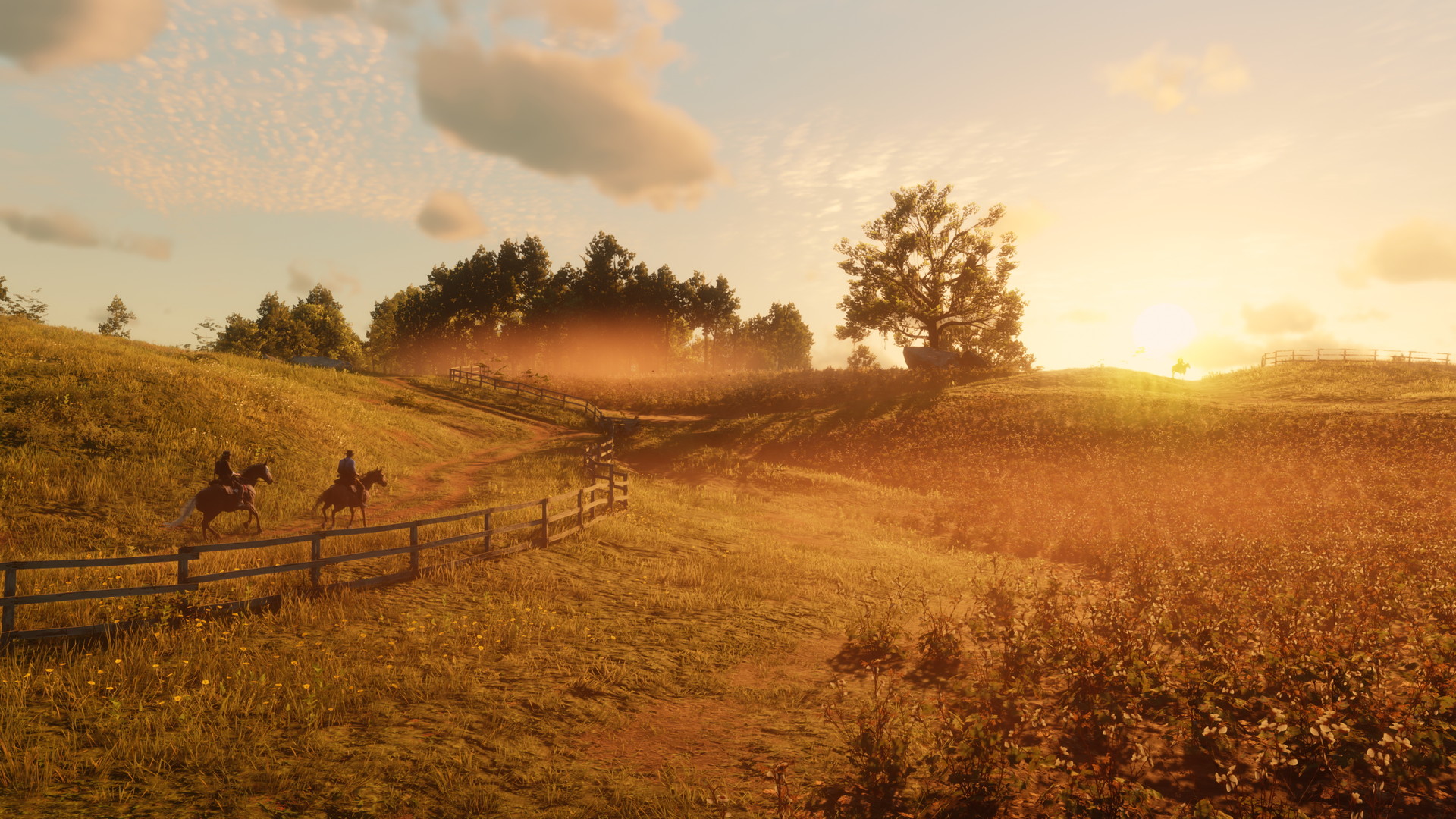
"I was riding somewhere and just stopped to watch the sunset for thirty minutes" captures something the game does that most open world games do not. The landscape is not a backdrop for activity — it is activity in itself. Dusk over a mountain range, morning mist lifting off a river, a thunderstorm moving across the plains with visible lightning in the distance. Players report losing track of time doing nothing in particular because the world makes nothing in particular feel worthwhile.
"I read Arthur's journal and it broke me" appears with striking frequency. Discovering the journal late, after having played enough of the game to understand what Arthur's entries mean against his circumstances, is an experience that catches people off guard in ways that formal cutscenes sometimes do not.
"One hundred hours and I feel like I missed things" is the final common pattern — a sense that the game's scope exceeds what any single playthrough can fully contain, and that returning to it would not be diminishing returns but a different experience.
Final Verdict — A Monument to What Games Can Be
Red Dead Redemption 2 is a monument. It demonstrates that the most commercially successful entertainment company in gaming can, when it chooses to, create work of genuine literary and emotional ambition. Arthur Morgan's story ends, but the world he lived in and the choices he made stay with you in a way that most narrative experiences in any medium cannot match.
The open world is the most detailed and internally consistent ever constructed in a game. The characters are written with care and performed with commitment. The score rises and falls with the drama of the moment. The Honor system makes your playstyle feel consequential rather than cosmetic. And beneath all of it, the story of a man who spent his life following someone else's dream and found, at the end, that he had his own — that story is simply excellent, by any standard you wish to apply.
One hundred hours of content at a price that frequently drops significantly during sales. If you have not yet made the journey to the dying American West, make it.