Editor's note: this article summarizes published reviews, store data and community reception. GamePeak did not run its own playtest, so no GamePeak score is given.
Steam Rating: Very Positive (200,000+ reviews) | Metacritic: 90/100 (PC)
Developer: Capcom | Release Date: August 9, 2018 (PC) | Steam Price: $29.99
“Steam reviews describe Monster Hunter: World not as a game but as a "lifestyle." When the PC version launched in August 2018, it became the entry point for millions of players new to the franchise — and the result was a genuine cultural phenomenon. The community saying "the first 30 hours are the tutorial, the next 30 are the real game" is not an exaggeration. It's one of the most rewarding slow burns in the history of the medium.
The New World: An Ecosystem That Actually Breathes
Monster Hunter: World's premise is deceptively simple: a research guild called the Research Commission has dispatched its Fifth Fleet to the New World, an uncharted continent where the great Elder Dragons migrate every few decades. You are part of that fleet. The mission: discover why.
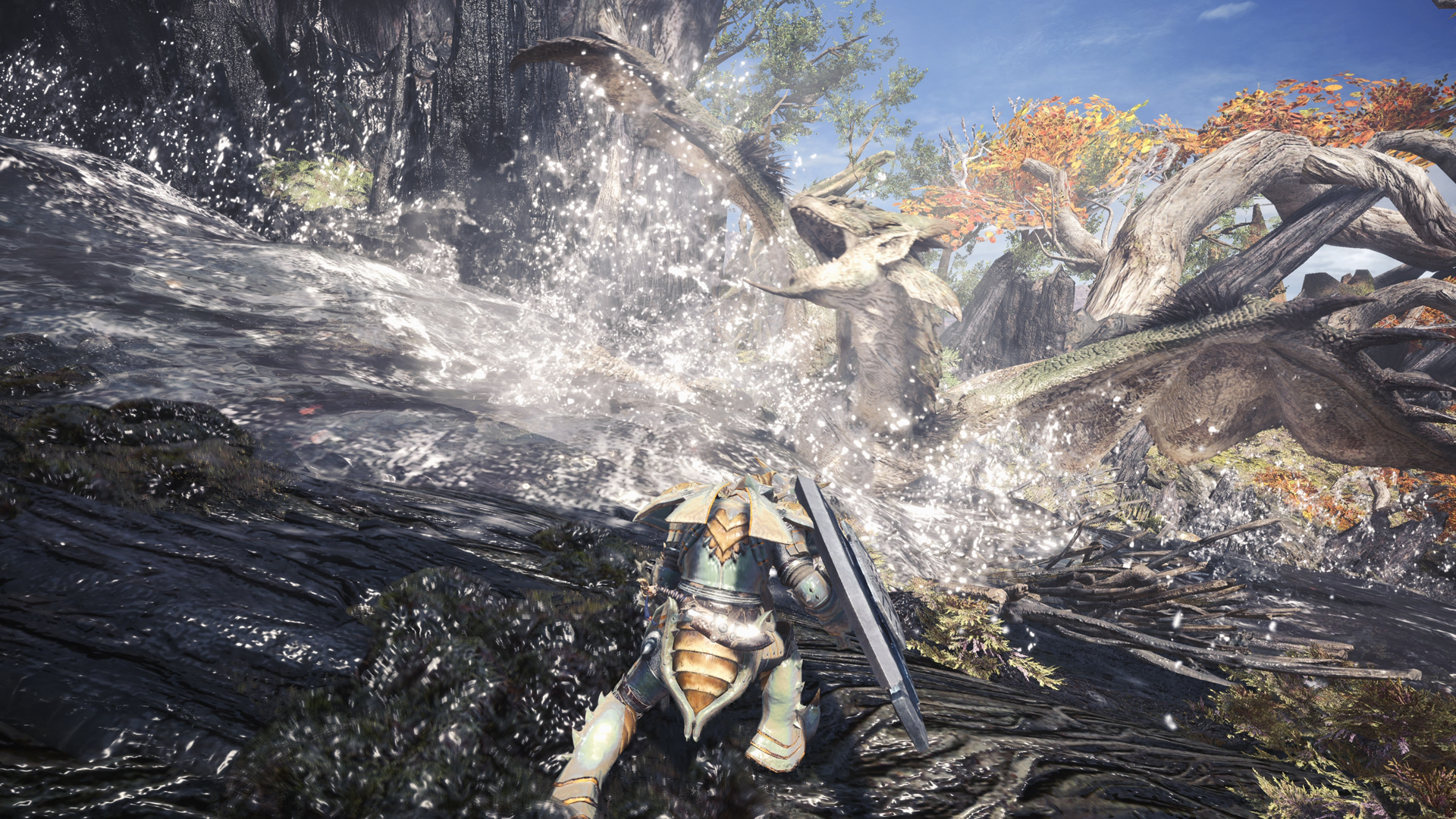
What elevates World above its predecessors isn't the story — it's the world itself. For the first time in the series, every monster exists within a genuine simulated ecosystem. Large monsters patrol their territories, hunt prey, drink from watering holes, sleep, and feud with rival predators. Arriving at your hunting target only to find it already mid-fight with a Rathalos is a regular occurrence, and one that never stops being thrilling.
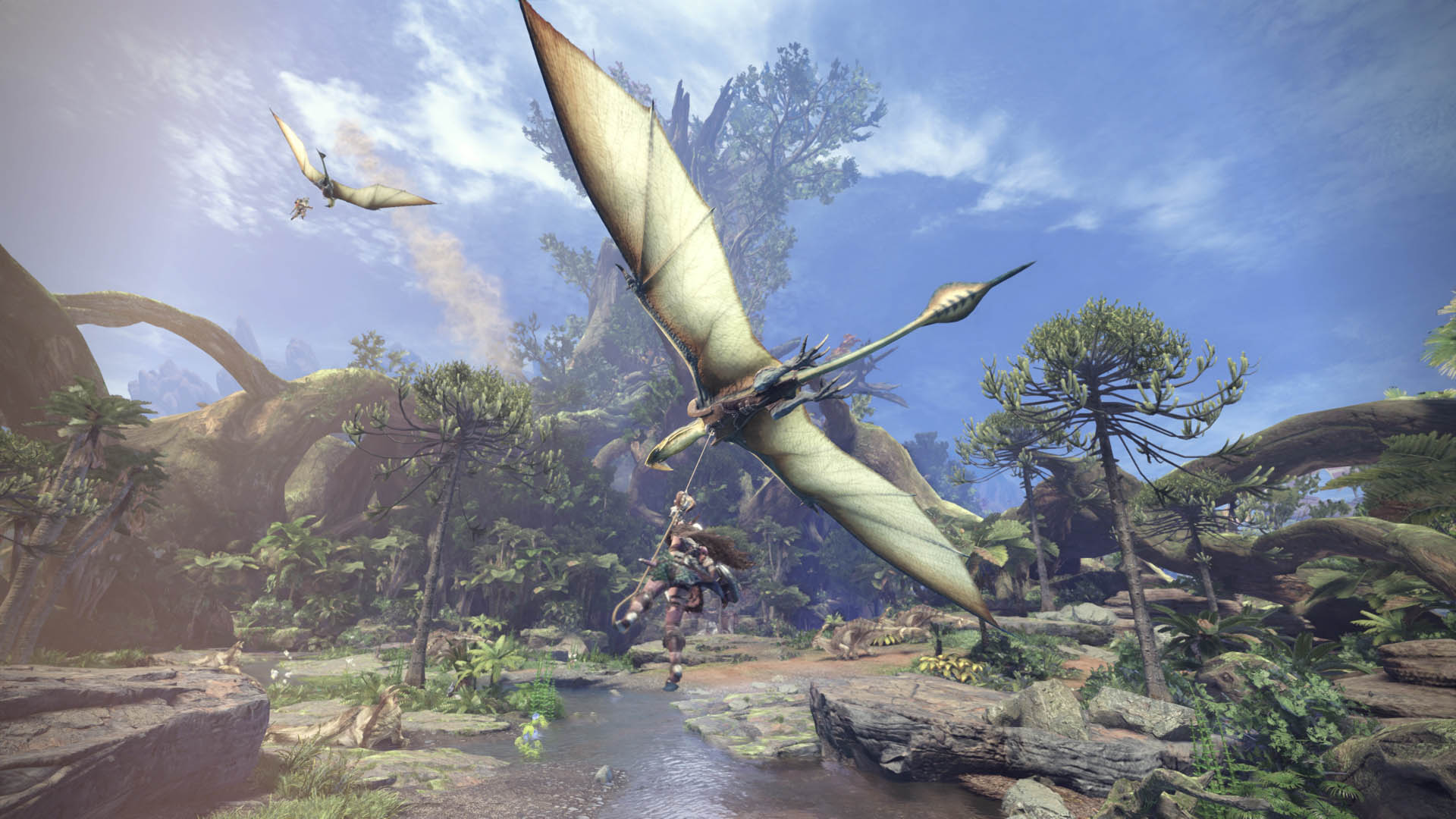
Five major hunting zones span radically different biomes:
- ▶Ancient Forest: Towering jungle canopy, the introductory hunting ground
- ▶Wildspire Waste: Arid desert terrain with unique burrowing monsters
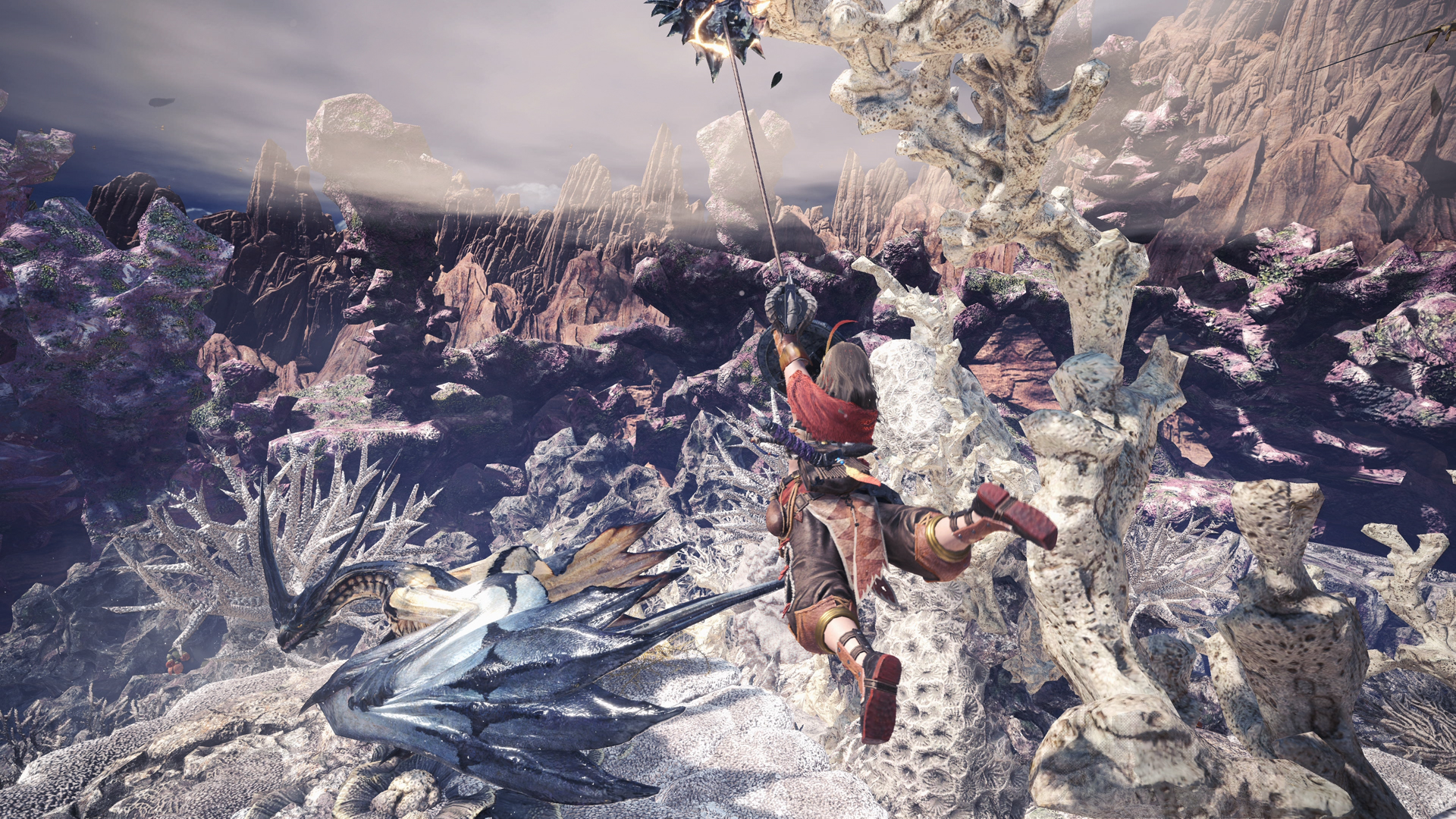
- ▶Coral Highlands: Surreal above-ground coral formations, stunning to explore
- ▶Rotten Vale: A toxic swamp of death and organic decay
- ▶Elder's Recess: A volcanic crystal cavern where Elder Dragons congregate
Each zone is interconnected, monsters migrate between areas mid-hunt, and the environment itself can be weaponized — luring a monster near a crumbling wall or under a beehive changes the fight entirely.
Fourteen Weapons: Fourteen Different Games
The single greatest design decision in Monster Hunter: World is the weapon roster. All fourteen weapon types are mechanically distinct enough to be considered separate sub-games. Switching from a Great Sword to a Hunting Horn isn't just changing a tool — it's changing how you fundamentally engage with every fight.
Great for beginners:
- ▶Great Sword: Massive damage on timed charge attacks. Simple concept, deep execution.
- ▶Dual Blades: High-speed combos with strong mobility — the arcade fighter of the weapon roster.
- ▶Sword and Shield: The most versatile weapon, allowing item use mid-combat.
Rewarding for experienced hunters:
- ▶Long Sword: A spirit gauge that builds toward explosive Foresight Slash counters — incredibly satisfying when mastered.
- ▶Charge Blade: Axe and sword modes with a complex phial system that rewards precision management.
- ▶Insect Glaive: A polearm with a mounted-attack mobility system unlike anything else in the roster.
Veterans with thousands of hours will still have weapons they've never mastered. That's intentional.
The Monsters: Opponents Worth Respecting
World's bestiary is one of gaming's finest collections of creature design. These are not obstacles — they are performances. Each monster has distinct anatomy, movement vocabulary, behavioral tells, and ecological logic.
Early-game standouts:
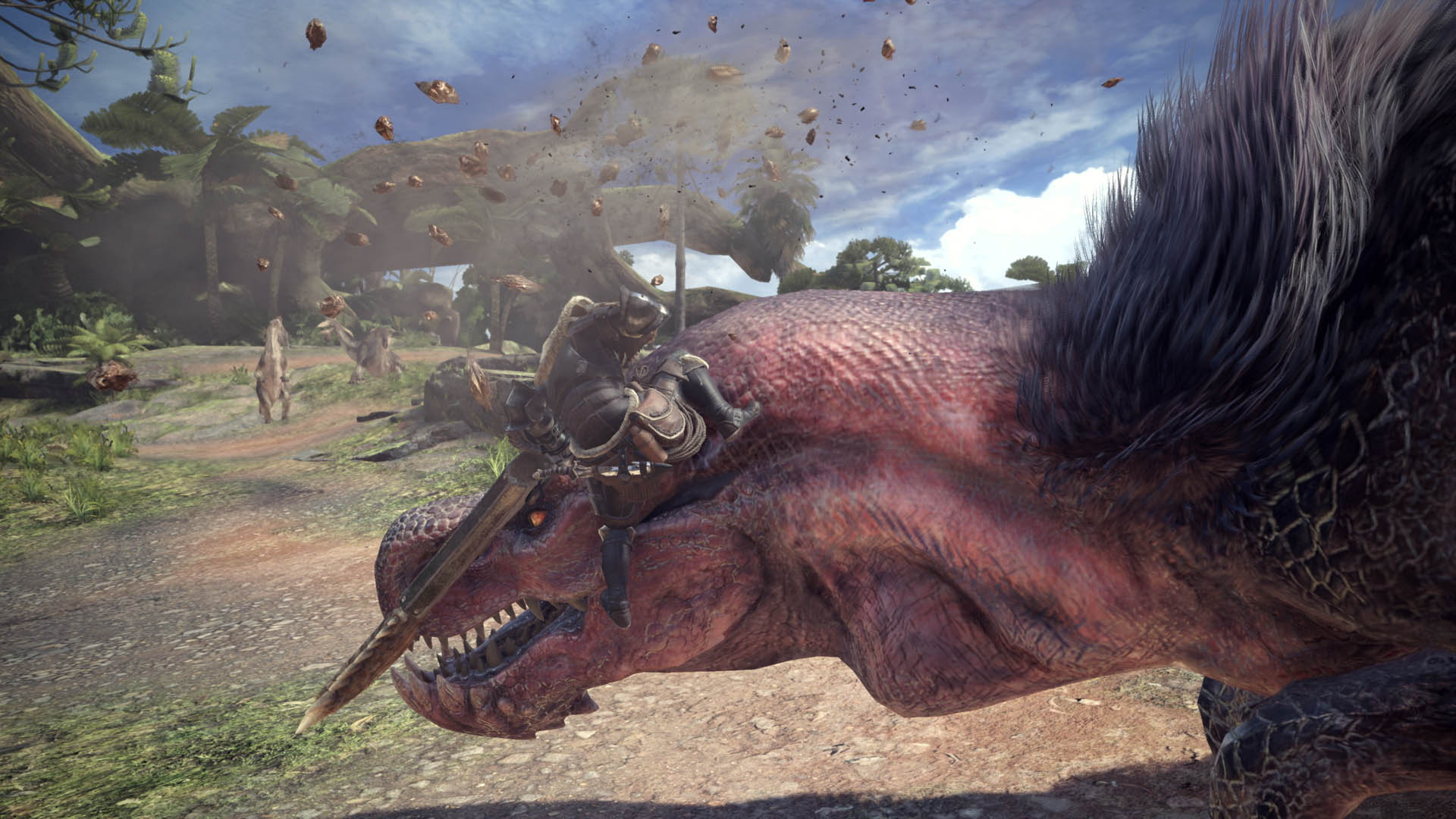
- ▶Anjanath: A T-Rex analogue with a nasal frill that inflates during enrage, teaching players to read behavioral cues
- ▶Rathalos: The franchise's iconic flying wyvern, demanding anti-air play and awareness of aerial dominance
- ▶Diablos: A dual-horned charging juggernaut — the game's first genuine skill wall
Late-game encounters:
- ▶Nergigante: The apex predator of the New World, culminating the main story with a spectacular confrontation
- ▶Kushala Daora: A steel-scaled dragon that wraps itself in perpetual windstorms
- ▶Teostra: A fire elder dragon that detonates explosive spores — among the most mechanically complex fights in the base game
Every monster you kill drops materials. Every material can craft weapons and armor. Every piece of armor carries skills. This loop — hunt, craft, grow stronger, hunt harder — is the heartbeat of the entire experience.
The Crafting Meta: Infinite Build Space
Monster Hunter's crafting system is where the hours truly vanish. Each armor piece carries specific skills, and assembling a set that activates your desired skill combination is the game's strategic depth layer.
A strong endgame build might weave together five different monster armor sets to simultaneously trigger: Maximum Might (affinity boost when stamina is full), Weakness Exploit (critical hit chance on weak points), Critical Boost (amplified crit damage), and Health Boost. Computing which monster materials you need, which decorations to socket, and which skills to prioritize is the "meta-game" that absorbs thousands of community hours of theorycrafting.
Co-op and the SOS System
World supports up to four-player cooperative hunts across all content. Hunt with friends in a pre-formed party, or use the SOS Flare system to call for reinforcements mid-hunt when a monster is giving you trouble.
The SOS system is one of World's most generous design decisions for solo players. Stuck on Diablos at 2am? Fire a flare and within minutes veteran hunters who enjoy helping newcomers will join your quest. It's an expression of a community culture that has remained genuinely welcoming since launch.
Iceborne: Doubling the Game
The Iceborne expansion — available separately or as the Master Edition bundle — adds a new Master Rank difficulty tier, over 30 new and returning monsters, and an entirely new region in the icy Hoarfrost Reach. It is not a minor content update. Iceborne essentially doubles the game's scope and sets a difficulty bar significantly above the base game. The bundle regularly goes on deep sale and is the recommended purchase for serious hunters.
Tips for New Hunters
Monster Hunter: World's early hours front-load information that can feel overwhelming. The trick is accepting that you will not understand everything immediately — and that's fine. The game reveals its depth gradually by design.
Essential starting advice:
- 1Pick a starting weapon that feels fun, not optimal — you'll switch anyway
- 2Observe monsters before committing attacks — pattern recognition beats damage races
- 3Your Palico companion is your most important solo ally — upgrade their equipment regularly
- 4Weapon upgrades matter more than armor upgrades early on
- 5Gather items freely in every zone — consumables are free and critical
The "wall" you will hit — likely Diablos or Odogaron — is intentional. It's the game telling you to study the monster rather than overpower it. The hunters who push through that wall understand why this franchise has survived for twenty years.
Final Verdict: One of Gaming's Great Long Games
Monster Hunter: World is a patient, demanding, extraordinarily rewarding experience that represents the absolute best that Capcom's flagship series has ever produced. It is a game about the deep satisfaction of incremental mastery — of learning a monster so thoroughly that a hunt which once took 45 minutes takes eight. Of understanding your weapon so deeply that every action feels inevitable.
The 200,000 Steam reviews overwhelmingly positive tell you something important: this game earns its hours. Every one of them.