Editor's note: this article summarizes published reviews, store data and community reception. GamePeak did not run its own playtest, so no GamePeak score is given.
# God of War (2018) — A God of War Learns to Be a Father
Developer: Santa Monica Studio | Release Date: PC January 14, 2022 (PS4 April 20, 2018) | Genre: Action Adventure
Steam Rating: Overwhelmingly Positive (87,000+ reviews) | Metacritic: 94/100
Buy on Steam: View on Steam | Price: $39.99
“On Steam, God of War commands review scores that hold their own against any PC exclusive. "I can't believe I get to experience this without owning a console," "the father-son relationship redefines what video game storytelling can accomplish," and "I haven't played a third-person action game this visceral and this tactical at the same time in years" are sentiments that appear with remarkable consistency. The PC version was specifically praised for exceeding the console original's technical presentation, arriving with genuinely impressive PC-specific features rather than a bare port.
The God Who Walked Away From His War
The God of War series spent years as one of gaming's most reliably spectacular action franchises: Kratos, the Ghost of Sparta, tearing his way through Greek mythology with unstoppable fury. The 2018 entry did something almost foolhardy — it threw all of that away and started over.
Kratos is now somewhere in Norse Scandinavia, living quietly in a forest with a woman he has come to love. He wants no part of any more divine conflict. But his wife has died, and her final wish was to have her ashes scattered from the peak of the highest mountain in the Nine Realms. This is the journey Kratos must make — and he must make it with his son Atreus, a boy he has kept at careful emotional arm's length because he does not entirely know how to be a father.
That tension — between a man who has spent his entire existence as an engine of destruction and a child who is curious, compassionate, and hungry for connection — is the emotional core of everything that follows. The supernatural threats encountered across the Nine Realms are spectacular, but the real drama plays out in every charged exchange between father and son.
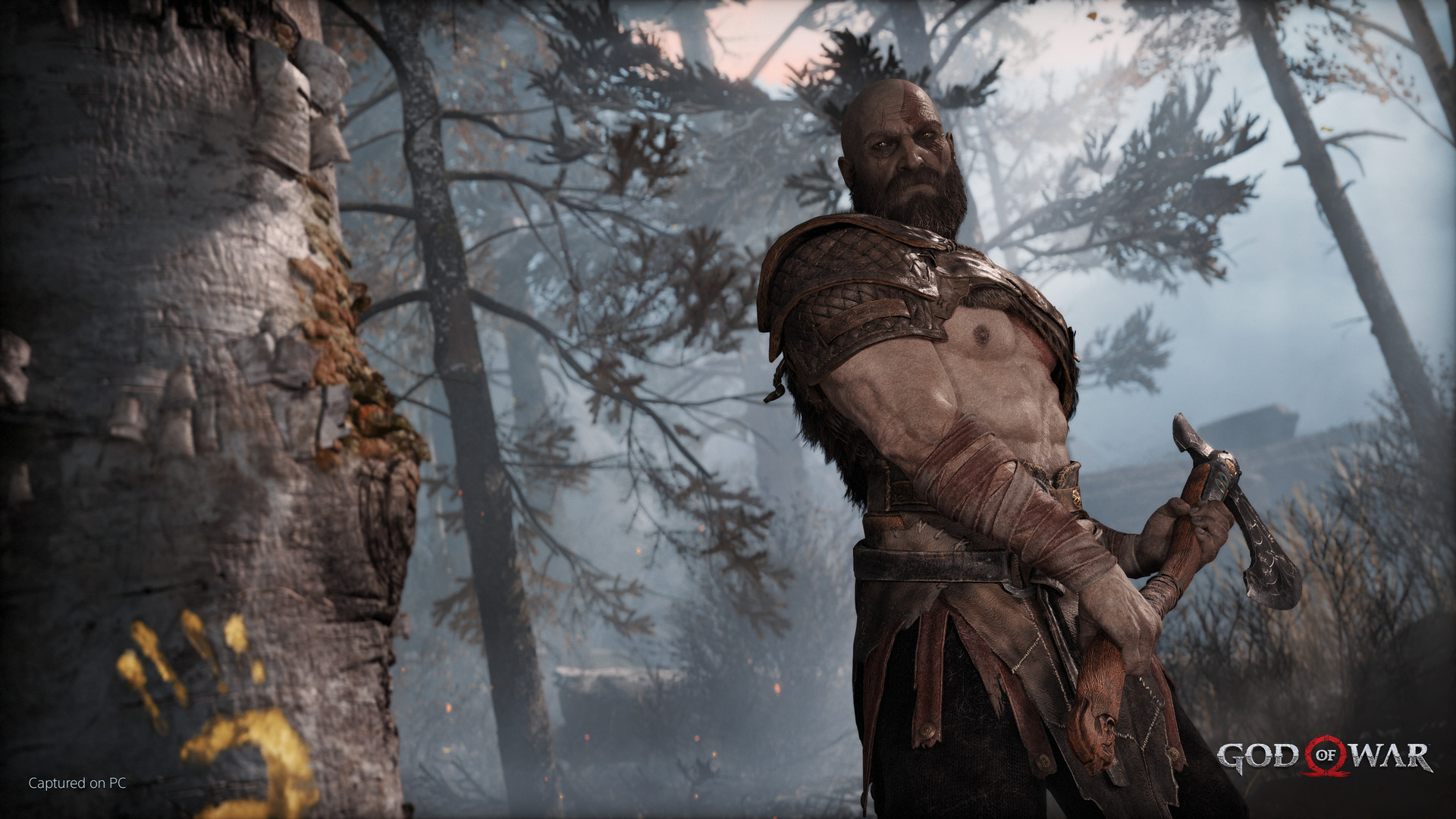
Kratos and Atreus — A Relationship Built Under Pressure
The game's deepest achievement is in how it portrays the relationship between its two protagonists over the course of a single journey.
Kratos conceals his past from Atreus. The boy does not know that his father was the Ghost of Sparta, that he slaughtered the Greek pantheon, that the god of war is not a title but a history written in divine blood. Kratos fears that the truth would cause Atreus to fear or reject him — but the secret also functions as a wall between them, a reason not to let his son fully in.
Atreus, for his part, does not know he is part god. His mother Faye kept that from him deliberately. The moment he learns the truth is a turning point in the game — and what immediately follows is a period in which Atreus becomes arrogant, reckless, and difficult. This is not a flaw in the writing. It is the game asking a serious question about what power does to people who receive it without preparation, and what a parent's responsibility is when a child misuses it.
The reconciliation between father and son is not staged as a single cathartic scene. It accumulates slowly — in shared combat, in small exchanges, in moments where Kratos says nothing and his silence means something different than it did at the start. Watching this relationship change is the most sustained emotional experience the game offers.
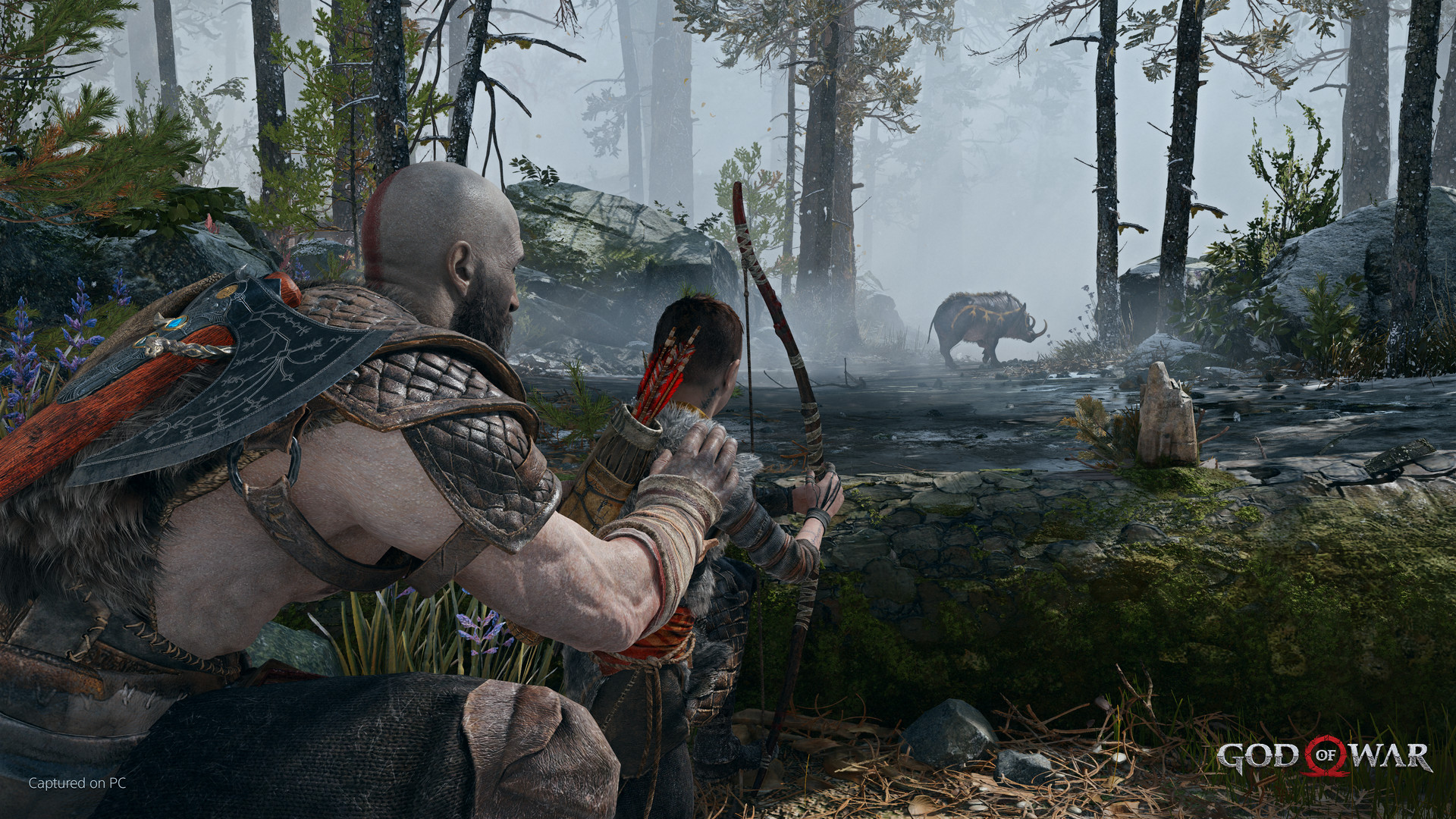
One Cut — The Unbroken Camera
The most audacious creative decision in God of War 2018 is structural: the entire game is presented as a single, unbroken camera shot. From the first moment of the opening scene to the closing credits, there is no cut, no loading screen that interrupts the visual flow, no moment where the camera shifts away from Kratos and Atreus. The camera sits over Kratos's right shoulder throughout, pulling you into his physical perspective in a way that traditional cutscene-driven games cannot achieve.
This is not merely a technical achievement — it is a narrative choice. Every conversation between father and son, every quiet moment before a battle, every revelation about who these characters are and what they mean to each other unfolds without interruption within the player's continuous experience. There is no distance between gameplay and story. They are the same thing.
The Leviathan Axe: When Game Feel Becomes Poetry
The Leviathan Axe is one of the great weapon designs in action game history. Forged for cold and ice, it can be embedded in enemies or surfaces, and then recalled back to Kratos's hand with a satisfying thwack that sends it through anything in the way. The physics and audio of this recall — the weight, the trajectory, the crack of arrival — communicate competence and power in a way that few games manage.
Combat is slower and more considered than the series' Greek-era predecessors. Spacing, blocking, and parry timing matter. The Spartan Rage mechanic remains for moments of escalating fury, but the base rhythm of combat rewards patience and reads rather than relentless offense.
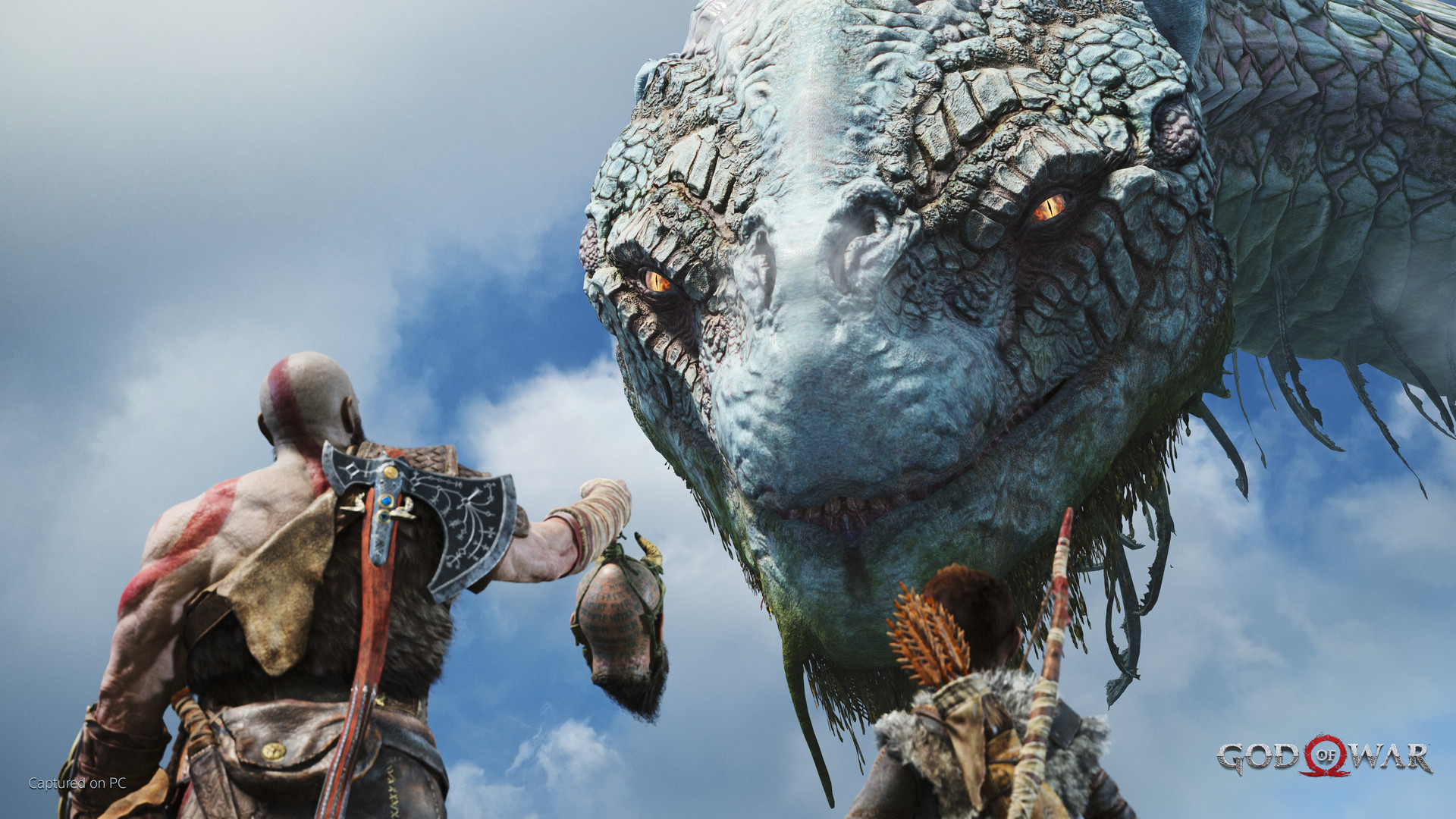
Atreus is not dead weight in combat. Calling him with a button prompt sends arrows into priority targets, creates juggle opportunities, and summons creatures as the game progresses. The father-son dynamic extends into the mechanics themselves — the most effective combat is collaborative.
In the game's second half, the Blades of Chaos return. This is one of the game's most effective emotional beats: the weapons of Kratos's violent past, which he buried, come back not as a simple power-up but as a moment of reckoning with what he was and what he is trying to become.
Rune Abilities and Armor Systems — Building Your Kratos
The tactical depth of God of War's combat extends well beyond basic weapon swings. A sophisticated equipment and ability system allows significant customization of how you approach fights.
Rune Abilities: Both the Leviathan Axe and Blades of Chaos accept a Light Runic Attack (L2 slot) and a Heavy Runic Attack (L1 slot). These are cooldown-based abilities ranging from targeted strikes to area-clearing sweeps. A practiced player alternates between axe and blade runic abilities, keeping multiple cooldowns cycling for near-constant high-damage options.
Armor Tiers: Gear comes in Rare (blue), Epic (purple), and Legendary (gold) quality. Major armor sets each optimize for different playstyles: Ivaldi's Armor emphasizes regeneration and poison resistance, making it forgiving for learning new encounters. Valkyrie Armor provides balanced peak stats at the cost of requiring you to defeat all nine Valkyries first. Niflheim Armor maximizes survival inside the poisonous Cursed Mist of that realm. Atreus's arrow types — including Shock Arrows for stagger and Light Arrows for standard damage — can be selected to complement your weapon loadout.
The Nine Realms — Each World a Different Experience
The game's world is not merely large. Each realm has a distinct visual identity and a different feel entirely.
Midgard: The main stage. Fog-shrouded lakes, snow-capped mountains, ancient Norse ruins. The Lake of Nine is the connective hub, and the area surrounding it holds the majority of the game's optional content.
Alfheim: The realm of the Light and Dark elves, locked in unending conflict over the Light of Alfheim. Visually striking in gold and shadow, and mechanically pivotal — the Light changes how certain obstacles and enemies are approached.
Helheim: The realm of the dead. Cold, desolate, and brutally atmospheric. The Leviathan Axe's frost damage is ineffective here, forcing players to adapt their approach in a way that feels both challenging and thematically appropriate.
Muspelheim: The realm of fire, operating as an optional arena challenge zone separate from the main story. Combat trials of escalating difficulty test specific mechanical skills. The rewards are worth it.
Niflheim: A cursed realm of shifting mist that is lethal to breathe for too long, operating as a roguelite dungeon. You enter, harvest resources, and escape before the mist kills you. The best non-Valkyrie armor comes from here.
Jotunheim: The realm of the Giants — the destination of the entire journey. What you find there, and what it means, is the most significant narrative revelation in the game. Arriving here earns the weight the story has been building across every other realm.
The Nine Valkyries — The Game's True Mechanical Test
The Valkyries are the optional challenge content that God of War 2018 uses to test everything its combat teaches. Nine Valkyries are imprisoned across the Nine Realms in Hidden Chambers, and defeating them requires mastery of blocking, parrying, dodge timing, and burst damage management.
Each Valkyrie has a distinct attack pattern. Some throw golden discs that must be blocked at precise moments. Some create sweeping wing blasts that require dodge rather than block. Some combine aerial dive attacks with ground slams that punish any single defensive response. They are significantly harder than any main story boss, and first encounters are frequently humbling.
Defeating all nine unlocks Sigrun, the Valkyrie Queen — who uses every attack pattern of the eight individual Valkyries in combination, escalating and mixing them unpredictably. Sigrun is, on higher difficulties, among the most demanding boss encounters in the action genre. Defeating her on Give Me God of War difficulty is a genuine achievement that requires near-complete mastery of every system.
The rewards — Valkyrie Queen armor, unique enchantments, and the lore satisfaction of understanding what happened to the Valkyries — make the challenge worth pursuing.
Mimir — The Smartest Man Alive, in a Bag
From mid-game onward, Mimir travels with you as a disembodied talking head — the former advisor to Odin, now freed from the tree he was bound to, and apparently quite cheerful about the arrangement given the alternative.
Mimir narrates Norse mythology throughout the journey. His accounts of Loki's schemes, Thor's rampages, Odin's manipulations, and the ancient wars between gods and giants are not filler. They are carefully embedded foreshadowing. The full significance of many of Mimir's stories only becomes clear on a second playthrough, or after completing Ragnarok.
The dynamic between Mimir's wit and Kratos's silence is one of the game's most effective tonal balances. When Atreus asks questions and Kratos says nothing, Mimir fills the space — and often says the thing Kratos cannot or will not. He is, in practical terms, the game's narrator, world-builder, and emotional mediator simultaneously.
The Music of Bear McCreary — A Score That Earns Its Moments
The God of War 2018 soundtrack, composed by Bear McCreary, is a masterwork of adaptive scoring. It combines traditional Norse instruments — frame drums, hardanger fiddle, tagelharpa — with full orchestra to create a sound that feels both ancient and cinematic.
The main theme evolves over the course of the game. Early, it is percussion-heavy, martial, closed. As Kratos's emotional arc progresses, strings gradually take more prominence — the music itself reflecting the opening of a character who has kept himself shut for decades. It is a small detail that rewards close listening.
Boss encounter music is intense throughout, but the Valkyrie fight theme is the most distinctive — aggressive choral work over driving percussion that communicates the sacred, terrible nature of what you are fighting. "Deliverance of the Dead," accompanying one of the game's most emotionally weighted scenes, is the track most players cite as the moment the score truly landed.
The PC Version's Specific Advantages
Santa Monica Studio did not simply port God of War to PC — they built a dedicated PC version. Unlocked frame rates, DLSS and AMD FSR support, an adjustable field of view, DualSense haptic feedback and adaptive trigger support for players with compatible controllers, and full HDR output. Playing this game at 4K 60fps is a substantially different visual experience from the PS4 original, and the accessible PC price point makes it a compelling proposition even for players who experienced the console version.
The Connection to Ragnarok
God of War 2018 ends in a way that directly sets up God of War: Ragnarok (2022), without requiring Ragnarok to feel complete. The final scene of this game establishes the central conflict of the sequel, and certain environmental details scattered throughout — particularly in Jotunheim — take on their full meaning only after the sequel is played.
If you have not played either game, 2018 is where to begin. They function as a single extended story in two parts, and the emotional payoff of Ragnarok is substantially greater if you have spent the time with this entry first.
Practical Advice for New Players
- ▶Explore thoroughly: The Lake of Nine and surrounding areas hide optional chambers that contain some of the best gear in the game. The main quest won't take you everywhere.
- ▶Use Atreus actively: Many players forget to call for arrow support during the heat of combat. Weaving Atreus's attacks into your rhythm pays dividends.
- ▶Invest in Rune abilities: These are core combat tools, not secondary options. Experiment to find combinations that feel right for your playstyle.
- ▶Upgrade armor before Valkyries: Attempting the optional Valkyrie fights underpowered is a reliable way to spend an afternoon being defeated repeatedly.
- ▶Complete the Valkyries eventually: They represent the mechanical apex of this game. The reward, both in lore and in combat satisfaction, is substantial.
- ▶Listen to Mimir: The stories he tells are not background noise. They are context for the main plot and foreshadowing for the sequel.
Visual Design — Art Direction That Earns Its Beauty
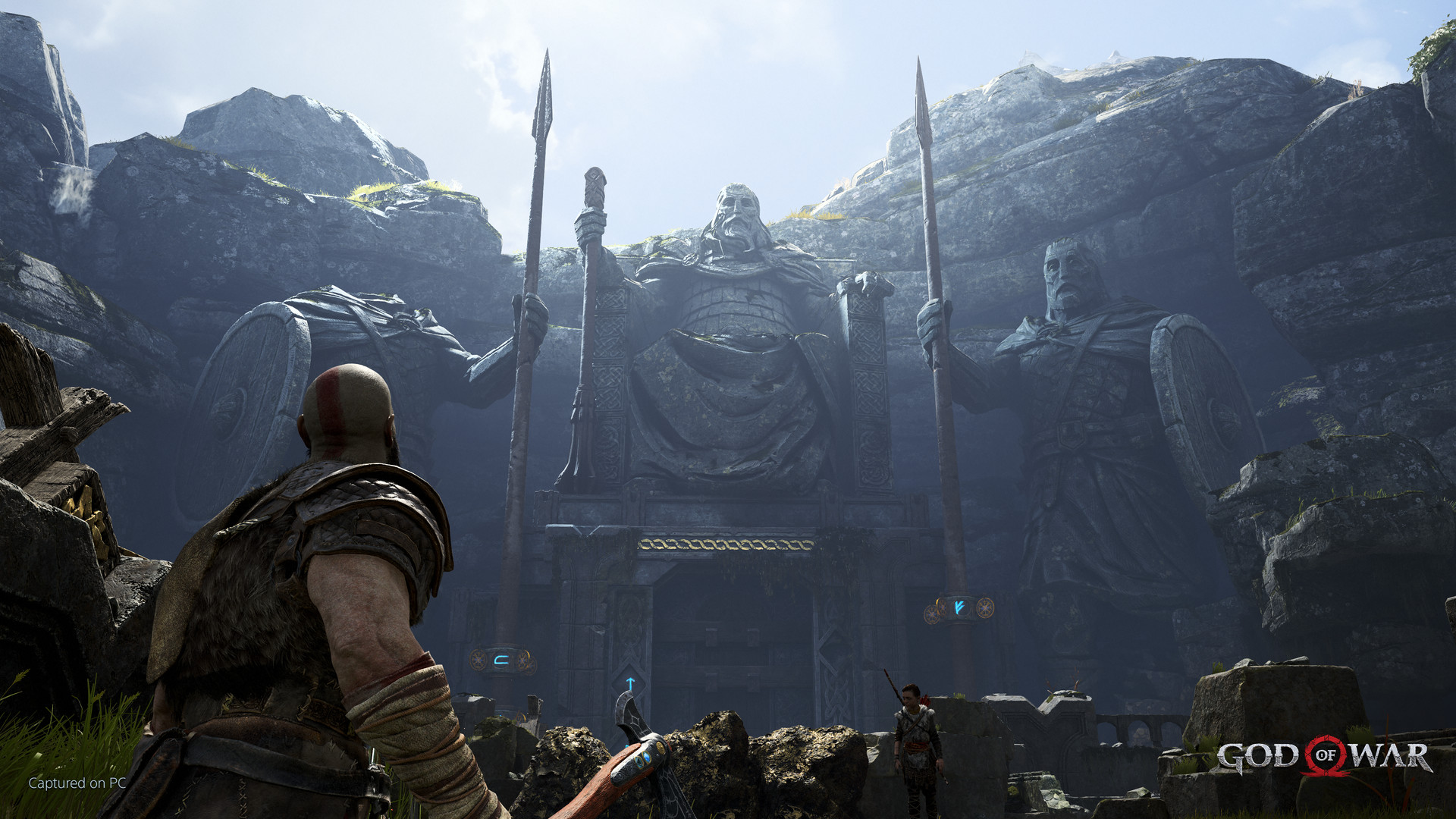
God of War 2018 was released as a visual benchmark for the PS4 generation and arrived on PC two years later still competitive with contemporary releases. The environmental art deserves particular attention: each realm is not merely "the ice level" or "the fire level" but a fully realized world with its own architectural language, color theory, and sense of scale.
Midgard's Lake of Nine — the central hub — changes appearance as the game progresses, and the degree to which this single body of water communicates the passage of time and the shifting of the world's order is a quiet piece of environmental storytelling. Alfheim's contrast of golden light and consuming darkness, Helheim's frozen, colorless desolation, Muspelheim's volcanic arena — each landing produces a visual reaction that the art teams have clearly engineered carefully.
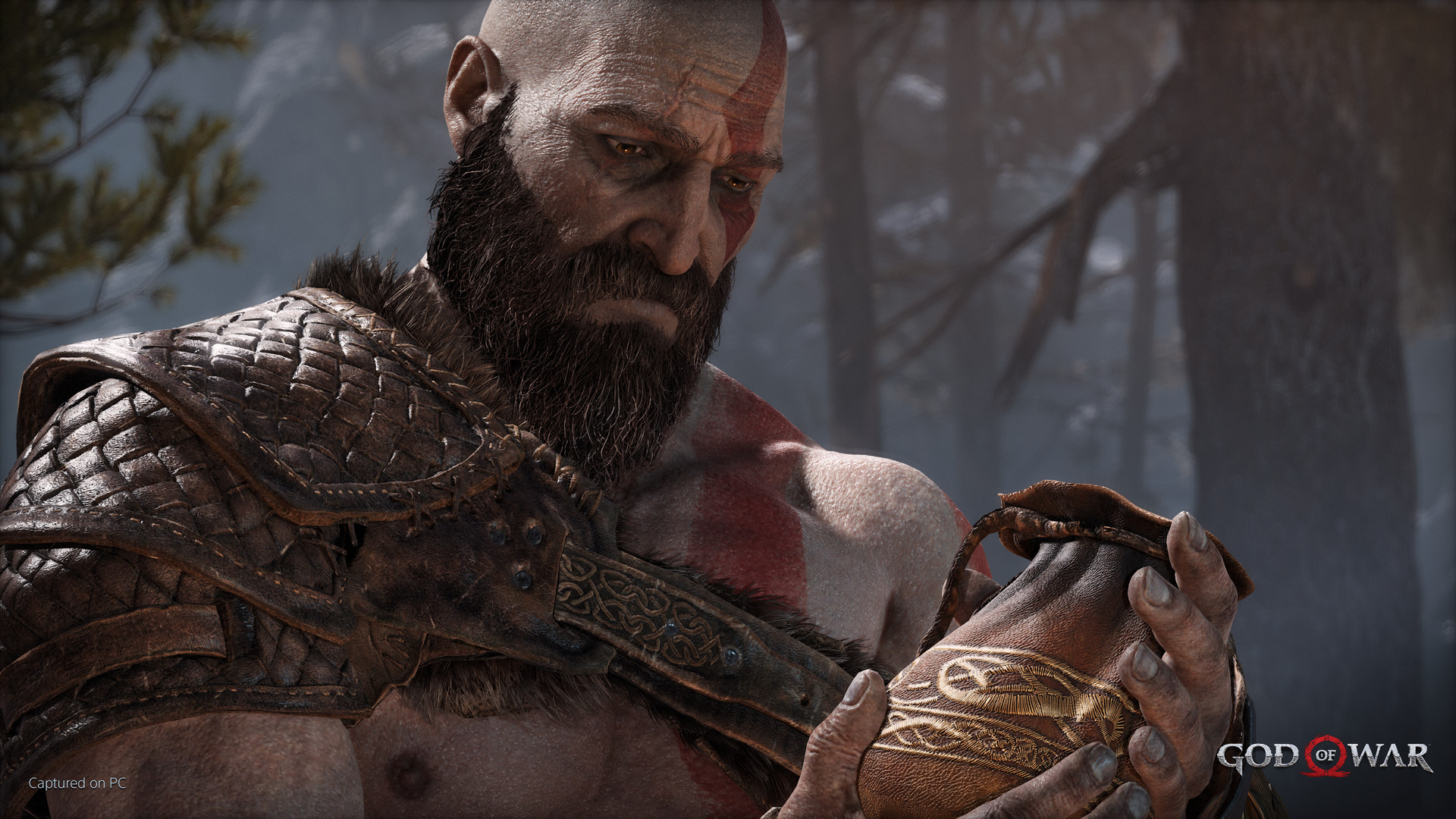
The performance capture applied to Kratos and Atreus is also exceptional. The game communicates Kratos's emotional state through subtle facial performance in a character designed to show minimal expression — a technical achievement that makes his rare moments of visible feeling land with unusual weight.
Accessibility and Difficulty Options
God of War 2018 offers a well-considered range of difficulty settings that genuinely change the combat experience rather than simply scaling enemy health. The four settings — Give Me a Story, Give Me a Balanced Experience, Give Me a Challenge, and Give Me God of War — are distinct enough that the choice meaningfully affects the type of game you are playing.
Give Me a Story removes most of the friction from combat, allowing players focused on the narrative and world to move through encounters without repeated failure. Give Me God of War enforces a level of precision and preparation that makes the Valkyrie fights genuinely punishing even for experienced players.
The game also includes subtitle customization, adjustable HUD elements, and controller remapping. For a AAA title of this scale, the accessibility options are thoughtfully implemented without condescending to players at any end of the skill spectrum.
Community Reaction
God of War 2018 produced a specific kind of reaction at launch: "This is actually a God of War game?" The premise of a brutal action franchise reinventing itself around a story of paternal grief and emotional reticence was met with skepticism before release and near-universal acclaim after. The pivot worked completely.
The portrayal of Kratos specifically generated intense community discussion. The character had previously been a deliberately flat vehicle for power-fantasy gameplay. The 2018 version made him complex in ways that players found unexpectedly moving. The observation that Kratos tells Atreus to "be better than me" — without ever explaining what "me" has done — was cited repeatedly as the moment players understood what the game was actually about.
Christopher Judge's voice performance as Kratos became a particular point of community appreciation. The restraint required to convey emotion through a character designed to show none is a specific skill, and Judge's delivery of even minimal dialogue carries weight throughout.
Final Verdict — The Reinvention That Became a New Benchmark
God of War 2018 is what happens when a franchise refuses to coast on an established formula and instead challenges itself to justify its own existence. The result redefined what AAA action games can aspire to emotionally, mechanically, and cinematically. Kratos became a character instead of a power fantasy, Atreus became one of gaming's most memorable child companions, and Santa Monica Studio proved that a series can be reinvented without losing its essential identity.
The PC version is the definitive way to experience it. At this price, there is no reason to wait.