Editor's note: this article summarizes published reviews, store data and community reception. GamePeak did not run its own playtest, so no GamePeak score is given.
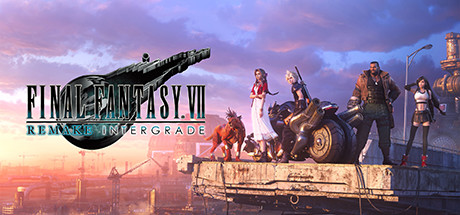
# Final Fantasy VII Remake Intergrade — The Reimagining That Earned Its Place
Why This Is Not Just a Remake
The word "remake" carries expectations. Clean up the graphics, record new dialogue, maybe adjust a few menus. Ship it. Square Enix looked at that blueprint and tore it up.
Final Fantasy VII Remake Intergrade takes Midgar — the industrial, dystopian opening city of the 1997 original — and transforms what was once a multi-hour prologue into a thirty-to-forty-hour standalone epic. Every street of Sector 7, every shadow in the Shinra Building's corridors, every moment between Cloud, Aerith, Tifa, and Barret has been rebuilt with the full weight of modern production behind it. This is not the original game with a coat of paint. It is the original game rethought at a fundamental level: what would Midgar feel like if you could actually live in it?
The answer, it turns out, is extraordinary.
From PSX Polygon to Photorealistic Midgar
The original Final Fantasy VII launched in 1997 on the PlayStation. Its characters were blocky polygonal figures with no facial detail beyond a few pixels. Its world was a series of pre-rendered backgrounds and fixed camera angles. And yet the story it told — of a mercenary soldier named Cloud Strife, an eco-terrorist cell called AVALANCHE, and the world-devouring corporation Shinra Electric Power Company — resonated with a generation so deeply that it has never left the cultural conversation.
Square Enix announced the remake in 2015 at E3, and the gaming world's response was something close to disbelief. When the PS4 version launched in April 2020, that disbelief turned into admiration. The Intergrade upgrade, released for PS5 in June 2021 and PC in the same window, added a complete new episode starring Yuffie Kisaragi — one of the original game's optional characters — along with visual and performance improvements that made an already stunning game even more impressive.
The development team was clear from the outset: this was not a faithful reproduction. This was a reimagining. Certain events diverge from the original in ways that feel intentional and thematically coherent. For veterans of the 1997 game, those divergences are a conversation. For newcomers, they are simply the story as it exists in this version.
Core Gameplay: ATB Meets Real-Time Action
The Hybrid Combat System
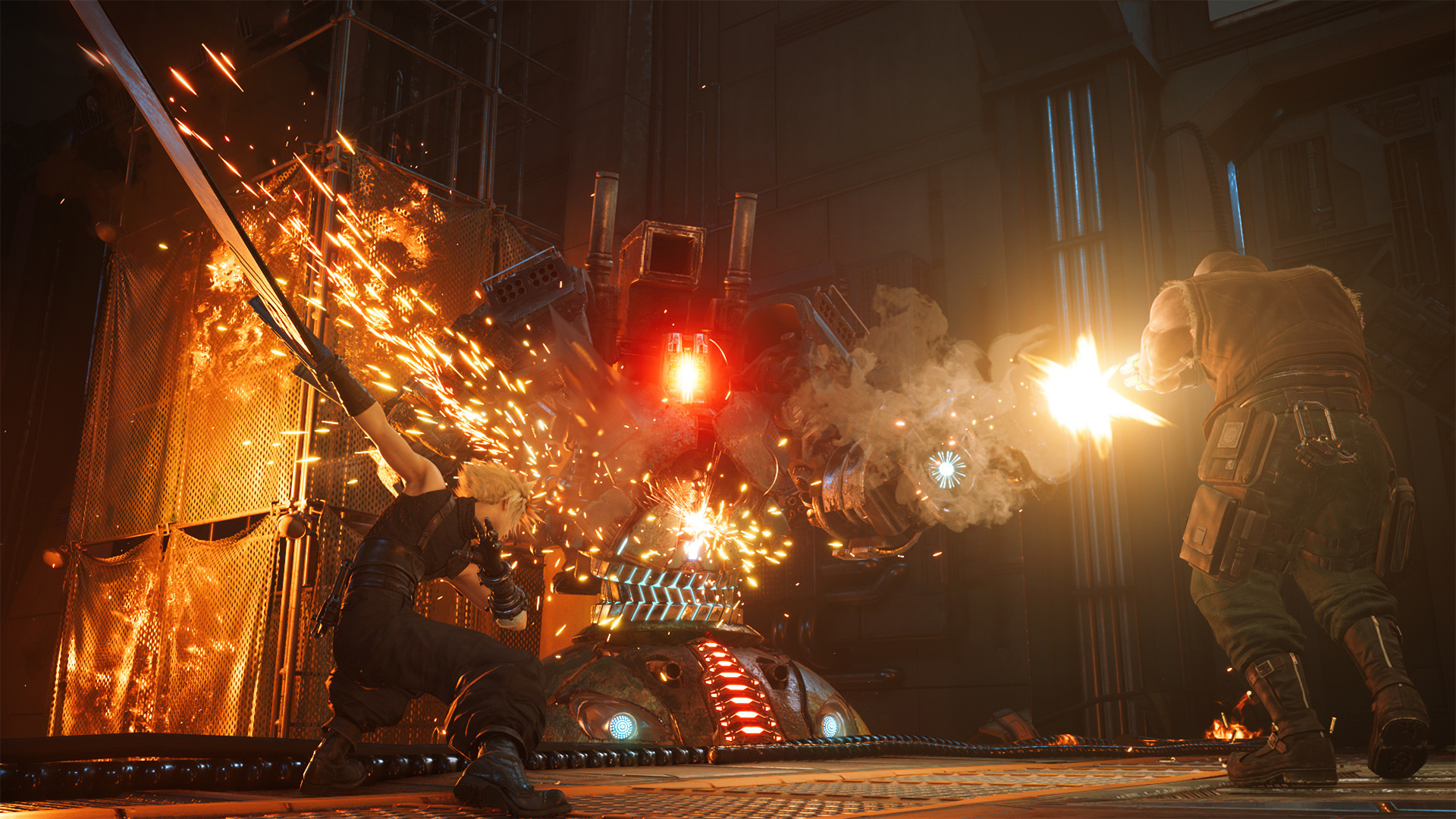
FF7 Remake's greatest achievement may be its combat, which somehow reconciles two approaches to JRPG battle design that were previously considered incompatible. On the surface, fights are real-time action: you run, dodge, block, and attack in direct control of your character. Underneath that action layer sits the ATB (Active Time Battle) gauge, a system inherited from the original game, which charges as you attack and opens the door to a completely different level of play.
When your ATB bars are full, you open the command menu and time slows. From here, you select abilities, spells, and items — the turn-based vocabulary of the classic FF games. A fireball costs one ATB charge. A healing spell costs one. Unleashing a devastating special ability might cost two. Managing that gauge, deciding when to slow down and spend it versus when to keep the pressure up in real-time, is the central tension of every encounter. It rewards both reflexes and thinking, which is a genuinely difficult balance to strike.
Switching Characters Mid-Battle
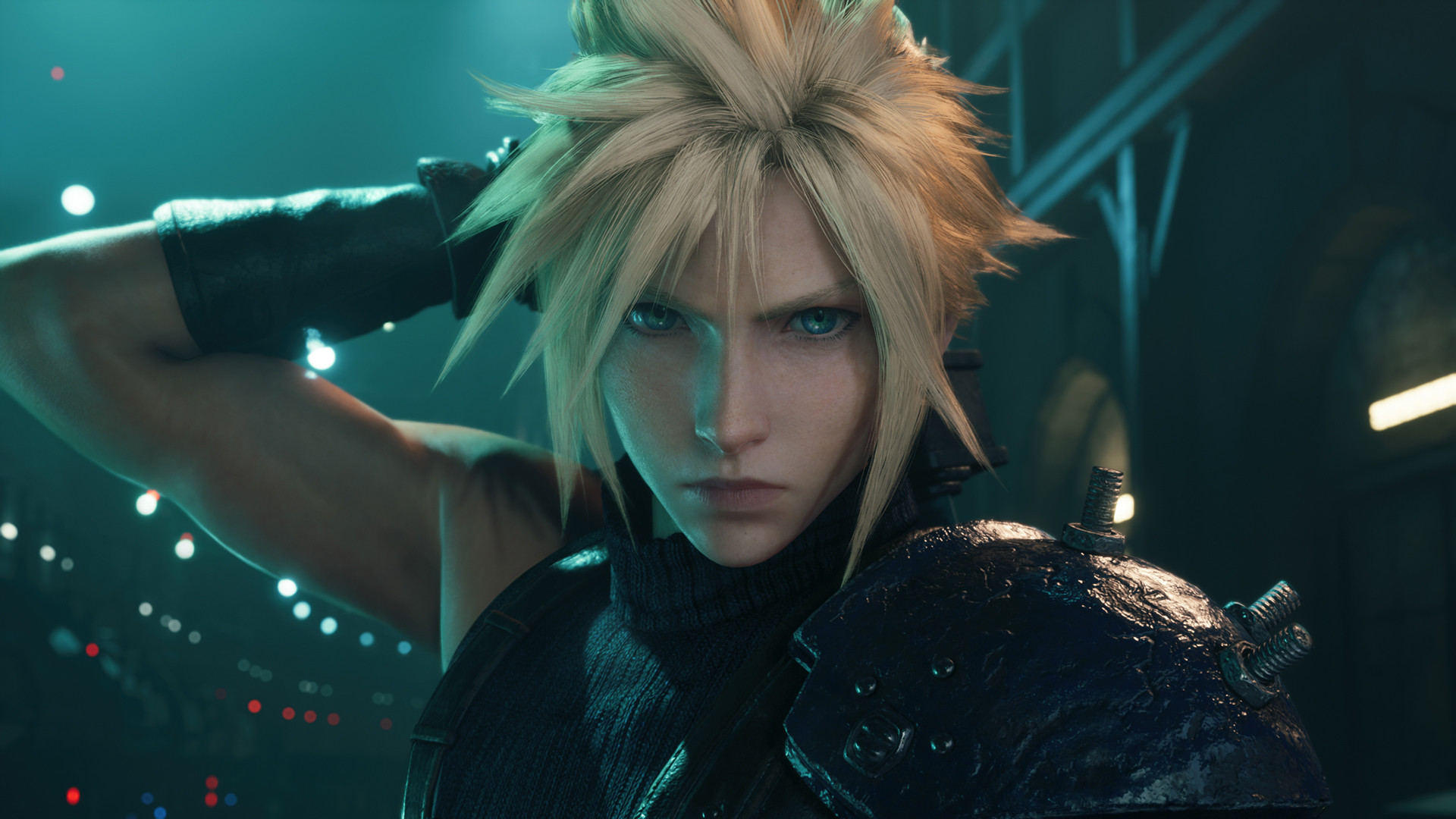
You control one character at a time but can switch between party members instantly with the shoulder buttons. Each character plays completely differently. Cloud is grounded and powerful, with a "Punisher Mode" that parries physical attacks and counterattacks automatically. Barret fights at range with his arm cannon, and is your go-to when enemies demand you keep distance. Tifa is close-range and fast, building up a pressure system that unlocks devastating finishers. Aerith is a mage who shields herself inside magical zones and delivers some of the highest-damage spells in the game.
Learning the flow between characters mid-battle — swapping to Barret when flying enemies take to the air, back to Cloud when they land, to Aerith when you need burst damage — is deeply satisfying once it clicks.
Stagger and the Pressure System
Every significant enemy has a Stagger gauge. Deal enough pressure to an enemy and it staggers, becoming vulnerable to massively amplified damage for a window of time. Building that pressure is usually the core puzzle of a boss fight: certain abilities, spells, or character-specific actions deal extra pressure. The Stagger window is your payoff for solving that puzzle correctly. Getting a boss to stagger at exactly the right moment, with ATB bars full and the right abilities queued up, delivers a surge of satisfaction that the game never lets get old.
Materia: The Spell and Ability Economy
Materia are crystallized magical energy — the game's equipment slots for spells and abilities. Equip a Fire Materia and any character in your party can use Fire, Fira, and Firaga spells. Equip a Synergy Materia paired with Elemental and your physical attacks deal elemental damage. The pairing system adds combinatorial depth without demanding a spreadsheet: most effective combinations are discoverable through exploration and experimentation, and the game's structure gives you time to experiment.
The World of Midgar in Full
A City Worth Exploring
In the 1997 original, you moved through Midgar efficiently. Narrative momentum kept you going forward. FF7 Remake does something more generous: it lets you stop.
The slums beneath the upper plates — Sectors 5 and 7 particularly — are populated with characters who have their own problems, their own side quests, their own personalities. Helping a woman find her missing cats. Clearing out a monster infestation for a local gang. Doing odd jobs at a battle simulator run by a man in a dress. These digressions are optional, but they transform the people of Midgar from backdrop into community, and they make the moments when that community is threatened feel genuinely painful.
The Shinra Building
The game's final act, set inside the Shinra Electric Power Company headquarters, is a tour de force of environmental variety. You move through corporate lobbies, research labs, prison cells, rooftop heliports, and finally the executive floors, each section with its own visual identity and gameplay rhythm. It is designed both as a spectacle and as a statement: Shinra is massive, Shinra is everywhere, and taking it down is not something that happens in one night.
The Intergrade Episode: Yuffie's Mission
The Intergrade expansion adds "Episode INTERmission," a two-chapter story following Yuffie Kisaragi, a shinobi from Wutai who has infiltrated Midgar on a mission to steal a powerful Materia from Shinra. Yuffie plays completely differently from the main party: her weapon is a giant throwing star that she can launch at enemies and control mid-flight. She is also given a partner, Sonon, whose abilities she can direct but cannot control directly. The episode is approximately four to five hours long and is an excellent showcase for how much the combat system can flex around a single character's design. It also sets up threads that continue into Final Fantasy VII Rebirth (Part 2).
Moments You Won't Forget
The Reactor Bombing opens the game with Cloud, Barret, and AVALANCHE blowing up a Mako Reactor. In the original this was a five-minute sequence. Here it is a full-scale action sequence lasting over an hour — and it recontextualizes immediately when the game starts questioning whether AVALANCHE is doing the right thing.
The Train Graveyard is one of the game's strongest atmospheric sections. You move through abandoned railcars haunted by ghosts while Aerith tells Cloud, quietly, things she somehow seems to know that she shouldn't. It is eerie and intimate simultaneously.
The Wall Market Sequence — Cloud going undercover — is comedic, surprising, and one of the most faithful expansions of an original scene in the entire game. It commits completely to its own absurdity and earns it.
The Plate is where the game stops pulling punches. A sequence near the end of the game delivers a blow to the player that veterans of the original will see coming and still feel, and newcomers will not see coming at all.

Tips for New Players
- 1Don't skip side quests in the slums. They give character upgrades and — more importantly — make the world feel real before the game takes that world apart.
- 1Learn Punisher Mode on Cloud. Auto-parrying physical attacks in Punisher is extremely powerful and feels great once you commit to it.
- 1Keep your ATB charges for bosses. It's tempting to spend ATB abilities in regular fights, but entering a boss at full ATB charge gives you an enormous early advantage.
- 1Experiment with Materia pairings. The game rewards equipping the same element in both a Materia and an Elemental slot combination. Early on, even basic fire/ice/lightning pairings make encounters significantly easier.
- 1Switch to Hard Mode after your first playthrough. Hard Mode removes item usage entirely (no potions, no ethers), which fundamentally changes how you manage resources and is genuinely the most interesting the combat gets.
- 1The Yuffie DLC is not optional content — play it. If you plan to continue to Rebirth, Episode INTERmission is thematically important and mechanically excellent.
Community Reception
Final Fantasy VII Remake Intergrade holds a Steam rating of Very Positive (87%) across tens of thousands of reviews. The PC version launched with some performance issues that were patched over subsequent months, which pulled the score below where it might otherwise sit — the gameplay itself is nearly universally praised.
The Metacritic score for the PC version is 87, with the PS5 version hitting 89 and the original PS4 release landing at 87 on that platform as well. Critics consistently highlight the combat system, the visual fidelity of Midgar, and the performances of the voice cast (particularly Cody Christian as Cloud and Briana White as Aerith) as standout achievements.
The community is deeply engaged on two levels: newcomers experiencing the story fresh, and veterans debating the implications of the game's departures from the original with the kind of intensity that signals genuine investment. The Rebirth release in 2024 proved the audience remained committed — it launched to similarly strong reception and extended the trilogy's first chapter into an open-world second act.
Why This Is a GamePeak Pick
GamePeak Picks flags games that function as benchmarks — titles that do something important for the medium and hold up when you return to them outside of their release window.
FF7 Remake Intergrade qualifies because it solved a problem most people didn't think was solvable: how do you modernize a beloved classic without either dishonoring what made it work or simply rebuilding it without a reason to exist? The answer Square Enix found — expansion, reimagination, and genuine narrative courage — is one other developers will study for years. The combat system alone represents one of the most thoughtful fusions of action and turn-based design in modern gaming.
It has also sold over 7 million copies as a part of this series and spawned a sequel that deepened everything the first game established. This is a franchise in full creative command of itself, and Remake Intergrade is where it begins.
Final Verdict
“Final Fantasy VII Remake Intergrade is what happens when a legendary studio applies its full capability to material it cares about. The combat is a revelation. Midgar is magnificent. The characters earn every emotional beat the story asks them to carry. Whether you played the 1997 original or have never touched a Final Fantasy game, this is required playing. An unqualified GamePeak Pick.