Editor's note: this article summarizes published reviews, store data and community reception. GamePeak did not run its own playtest, so no GamePeak score is given.
# Deep Rock Galactic — The Best Co-op Game You Might Have Missed
Rock and Stone: How Four Space Dwarves Became Gaming's Best Community
There is a phrase that defines Deep Rock Galactic more precisely than any review or trailer ever could: "Rock and Stone." It is the battle cry of the dwarves you play, the greeting between strangers who join the same mission lobby, the response when a teammate does something impressive, the spontaneous chorus that erupts in voice chat when a mission goes perfectly. It has its own emote. It has spawned its own memes. It has been written on tattoos.
The fact that a two-word phrase used by fictional mining dwarves in a co-op shooter became a genuine cultural artifact tells you something specific about what Ghost Ship Games built here. Deep Rock Galactic didn't just create a good multiplayer game. It created a community culture — something that happens with extreme rarity in online gaming, and almost never this positively.
"Rock and Stone" is said to be wholesome. The DRG community's reputation is legendary: no toxicity, no gate-keeping, instant help offered to new players, veterans carrying beginners through missions with the patience of people who remember learning themselves. In a medium where online multiplayer communities are routinely described as hostile and exhausting, this stands out to a degree that deserves examination.
The game earned it. This is how.
Ghost Ship Games: A Small Studio With a Very Good Idea
Ghost Ship Games is a Danish studio based in Copenhagen. When they released Deep Rock Galactic into Steam Early Access in February 2018, they were a team of around a dozen people with a game built around a concept they were convinced would work: what if left-for-dead style co-op, fully destructible alien cave systems, and the visual personality of a Tolkienian dwarf were combined into a game about space mining?
The concept sounds like a pitch that gets laughed out of a publisher meeting. Dwarves. In space. Mining. With bugs.
Coffee Stain Publishing saw it differently and signed on. Over two years of Early Access, Ghost Ship Games built a community by doing something unusual: listening to it. Bugs reported by players were fixed quickly. Balance suggestions were discussed publicly. The development roadmap was transparent. When the game hit full release in May 2020 — during a pandemic lockdown that made co-op gaming suddenly essential — it was already a polished, feature-complete product that had been shaped by its player community.
Five million copies sold later, Ghost Ship is a studio whose reputation for quality and player respect is as solid as any in the industry.
The Mission: Four Classes, One Planet, Infinite Caves
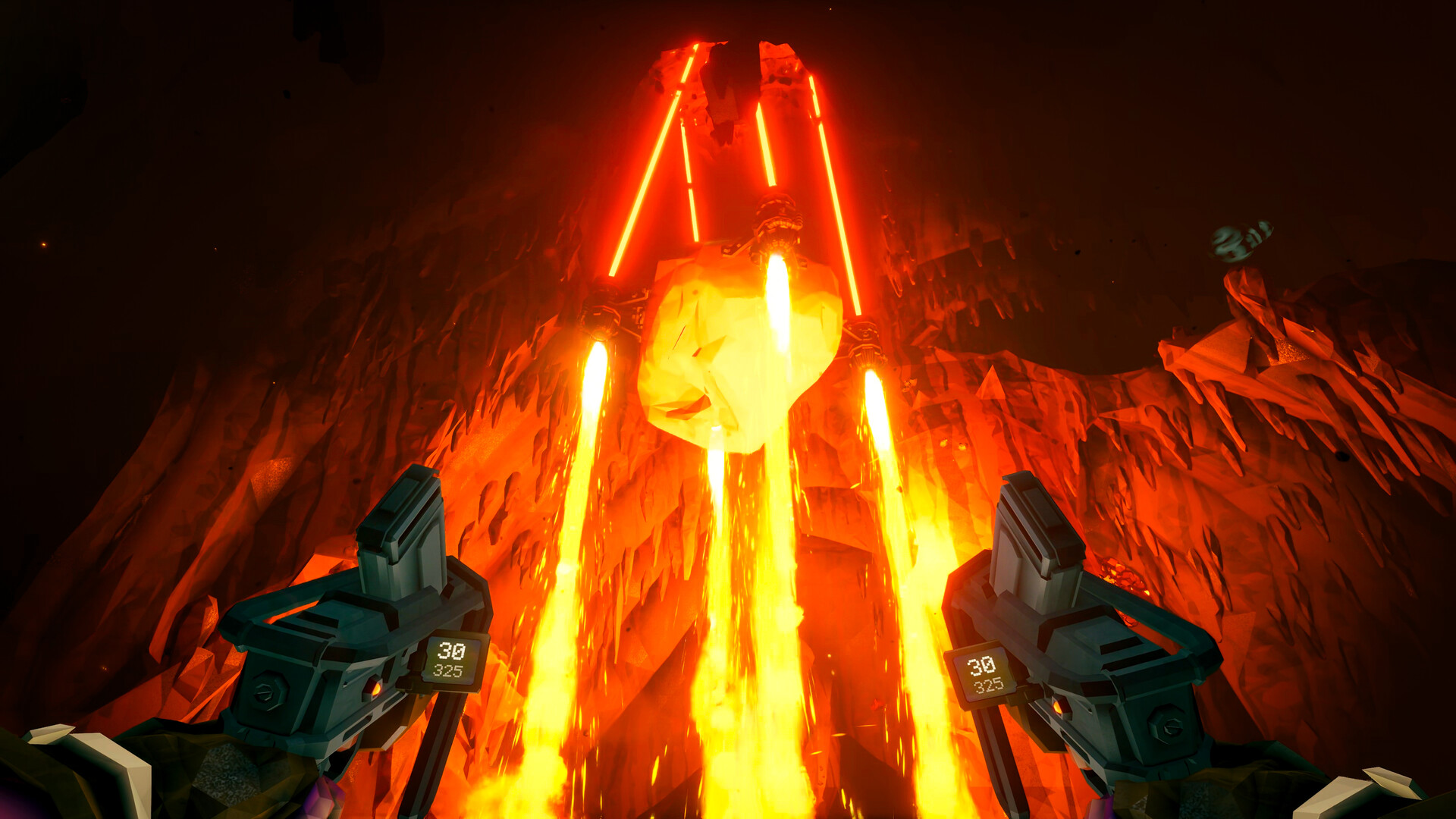
Deep Rock Galactic is a four-player co-op first-person shooter in which you play dwarven employees of the Deep Rock Galactic corporation, dropped onto the hostile alien planet Hoxxes IV to complete mining objectives under constant attack from insectoid aliens called Glyphids.
The setup is intentionally comic: you are blue-collar workers. You have a boss named Karl (whom the community immortalized as a fallen hero with the cry "For Karl!"). You drink beer in the space station between missions. The game does not take itself seriously, and that tonal lightness is fundamental to why it creates the community atmosphere it does.
The Four Classes
Each player controls one of four dwarf classes, each with distinct tools, weapons, and roles:
The Driller carries a massive power drill capable of boring through any terrain. He is the mobility specialist, creating tunnels to objectives, shortcuts for extraction, and emergency escape routes when missions go wrong. His secondary weapon selection leans toward area-of-effect damage for dealing with swarms.
The Gunner is the team's heavy fire support, deploying a zipline launcher that creates traversal routes through vertical cave systems and carrying weapons with the highest raw damage output. When a Glyphid swarm arrives, the Gunner's job is to be facing it.
The Scout is the fastest dwarf, equipped with a grappling hook that allows rapid movement through any cave layout. The Scout is responsible for illuminating dark caves (lighting is a genuine mechanic — caves start almost pitch black), locating objectives across large spaces, and reaching areas other classes can't.
The Engineer builds platforms, deploys a sentry gun, and provides top-down fire support with his grenade launcher. The Engineer turns chaotic situations into defensible ones, and the combination of well-placed platforms and turrets can completely change the viability of a defensive hold.
Class Synergy and Team Composition
The four classes are designed to be complementary rather than interchangeable. A Scout illuminates the cave so everyone can see. A Driller creates the path to the objective. A Gunner suppresses the swarm during the mining phase. An Engineer fortifies the extraction point for the final sprint.
Playing a solo session with AI companions (nicknamed "Bosco") is a legitimate option and functions well, but the experience in a full human lobby is categorically different. The dynamic between a Scout grappling to a distant mineral vein, a Driller tunneling to reach it faster, and a Gunner holding back the bugs that spawn in response is a co-op design lesson in miniature.
The Cave System: Procedural Generation Done Right
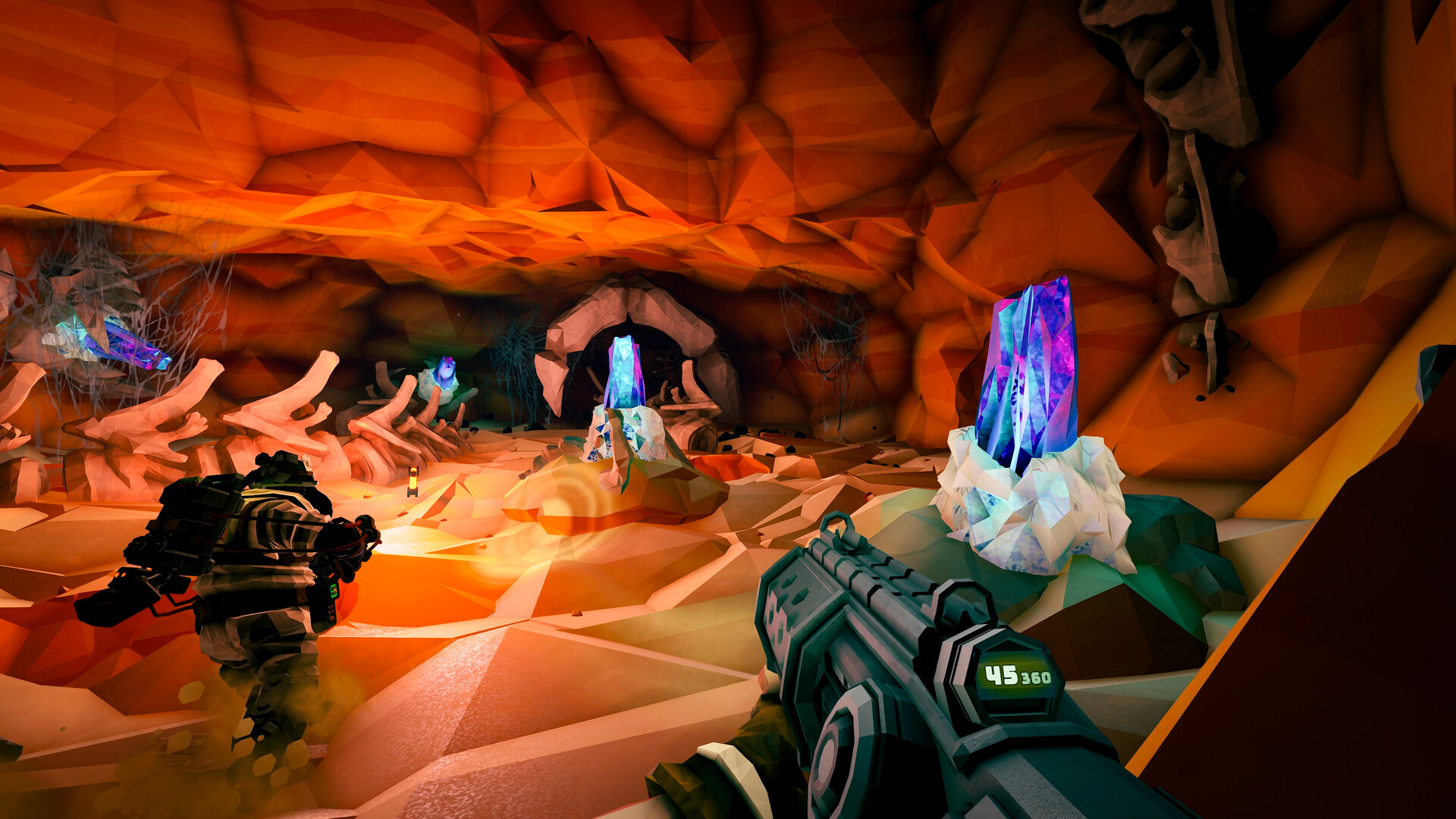
Deep Rock Galactic's cave systems are procedurally generated, but the generation is structured rather than random. Each biome — the Azure Weald, the Crystalline Caverns, the Magma Core, the Fungus Bogs among others — has distinct visual language, enemy variants, and terrain characteristics that create genuinely different gameplay conditions.
The Magma Core requires constant attention to lava flows and heat vents. The Hollow Bough features enormous organic structures that limit sightlines and create ambush points. The Radioactive Exclusion Zone throws in environmental hazards that kill dwarves who stand still too long. Each biome demands tactical adjustment.
Full terrain destructibility means that the Driller is never decorative — every rock wall is a potential path, and cave layouts can be actively remodeled by the team during a mission. An emergency tunnel through a wall to reach extraction faster, cut by the Driller in thirty seconds, can save a mission that would otherwise end in failure.
Mission Types
Five mission types give each session a distinct objective:
- ▶Mining Expedition: Collect a quota of mineral ore spread across the cave system
- ▶Egg Hunt: Locate and destroy alien eggs hidden across the map
- ▶Salvage Operation: Repair damaged equipment while defending against escalating waves
- ▶Elimination: Hunt and kill a specific large elite enemy
- ▶Point Extraction: Extract a specific resource from a single location while defending against continuous waves
The rotation of mission types across different biomes at different difficulty levels means that a session of three or four missions with friends rarely feels repetitive.
Progression, Promotions, and the Long Game
Deep Rock Galactic's progression system is generous without being coercive. Each class levels up independently through mission XP, unlocking new weapons, weapon upgrades (called Overclocks), cosmetic options, and passive skill choices. No class reaches a "finished" state quickly, but the progression always feels meaningful rather than artificially stretched.
Overclocks: Build Customization
Overclocks are weapon modifications that can fundamentally change how a gun plays. A Scout's rifle can be overclocked to fire faster at the cost of accuracy, or to deal bonus damage to specific enemy types. Some Overclocks are "clean" (pure upgrades), some are "balanced" (gains and losses), and some are "unstable" (dramatic power increases with significant drawbacks that change the weapon's entire role).
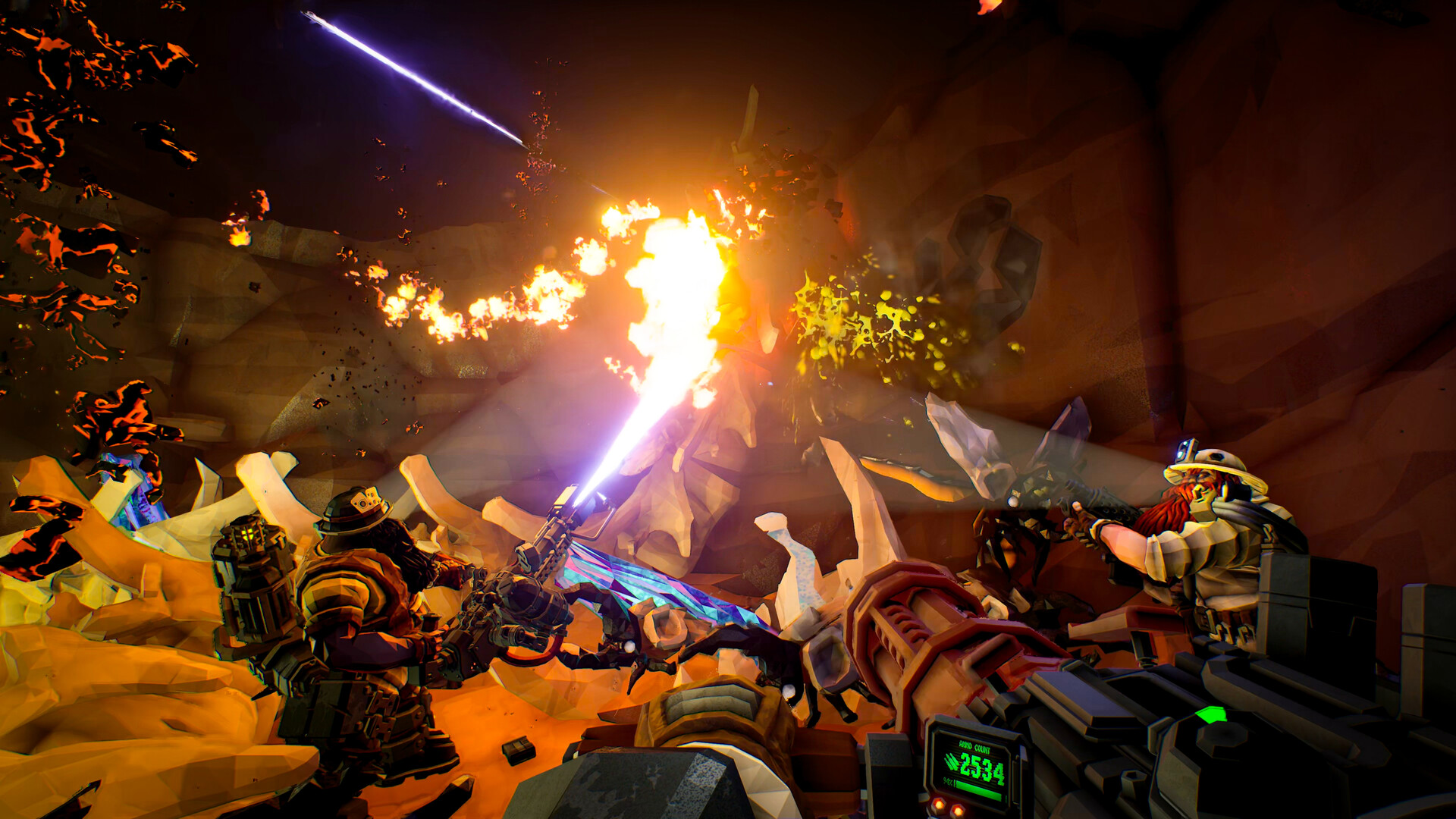
The Overclock system is where Deep Rock Galactic's build depth lives. A Driller with an Overclocked flamethrower that creates persistent fire zones plays very differently from one focused on burst damage. Coordinating Overclock choices with your team in a planned session adds a layer of preparation that regular players genuinely engage with.
Promotions and Prestige
Once a class reaches level 25, you can promote them — resetting their level to 1 but granting prestige rewards including cosmetic rank insignia. Promotion resets aren't punitive; promoted classes retain all unlocked weapons and Overclocks. The system rewards committed play without gating content behind it.
The Space Rig
Between missions, players spend time in the Space Rig — a shared lobby space complete with a bar where you can pour drinks, a jukebox with the game's excellent metal soundtrack, target shooting ranges, and a launch bay. The Space Rig is where the game's personality lives. Veteran players often spend time in the bar just talking with teammates between drops.
Why the Community Is Different
Online gaming communities trend toxic for a cluster of reasons: competitive pressure, anonymous communication, and games designed to rank players against each other. Deep Rock Galactic eliminates most of these conditions by design.
There is no competitive mode. There are no rankings. Success is defined by completing the mission together, and failure means the entire team wipes — there is no MVP screen, no performance comparison, no leaderboard. The game structurally rewards collaboration and makes individual ego-driven play not just unhelpful but actively counterproductive.
Veterans who have completed hundreds of hours of missions have nothing to gain by dismissing new players. Helping a new player learn their class is more effective than criticizing them — a team with a capable beginner clears missions; a team distracted by criticism fails them. The incentive structure produces kindness.
The "Rock and Stone" tradition crystallizes this. It is a greeting between strangers that signals membership in a community culture the game itself created. When a new player joins a lobby and says "Rock and Stone" for the first time, the response from veterans is almost always immediate and warm. The game taught them to behave that way by giving them nothing to gain from doing otherwise.
Tips for New Miners
- 1Communicate your class role before dropping. Let your team know what you're bringing. In random lobbies, mention your Overclock focus if it affects team composition.
- 1Illuminate the cave early. If you're the Scout, flares are free and caves start dark. Throw them generously, especially in new biome types where the team is still learning the layout.
- 1The Driller can save everyone. If a mission is going badly and the extraction point is far away, a well-placed Driller tunnel can shorten a dangerous sprint into a safe one. Always ask your Driller before attempting the surface route.
- 1Rock and Stone. When a teammate does something impressive, when you start a mission, when you cross the finish line — say it. It is the correct response to everything.
- 1Don't rush the extraction. Calling the Mule (the extraction robot) starts the final countdown and escalates the swarm. Make sure your team is ready and well-supplied before you trigger it.
- 1Difficulty scales gradually. Start on Hazard 2 (normal) and work up to Hazard 4 and 5. Hazard 5 is genuinely hard, and rushing there with an under-leveled class is how new players get frustrated.
Why This Is a GamePeak Pick
The co-op shooter genre is crowded. The case for Deep Rock Galactic doesn't rest on it being the only option — it rests on it being the best one, by a margin that becomes obvious within the first few sessions.
The class system is thoughtfully designed. The procedural generation is actually procedural without feeling random. The progression is generous and long-lasting. The mission variety is sufficient to carry hundreds of hours. The tone is light enough to make failure funny rather than frustrating. And the community that formed around it is, by any honest assessment, the best-behaved large community in online gaming.
Games that earn that last description don't do it by accident. Ghost Ship Games built an incentive structure that makes good behavior rational, and the players responded by making it cultural. That combination — great game, great community — is the rarest outcome in this medium. When it happens, it's worth pointing at.
Rock and Stone.
Final Verdict
“Deep Rock Galactic is the benchmark against which every co-op shooter should measure itself. Thoughtfully designed, genuinely funny, and backed by the best community in the genre, it offers hundreds of hours of content that never outstays its welcome. A unanimous GamePeak Pick.