Editor's note: this article summarizes published reviews, store data and community reception. GamePeak did not run its own playtest, so no GamePeak score is given.
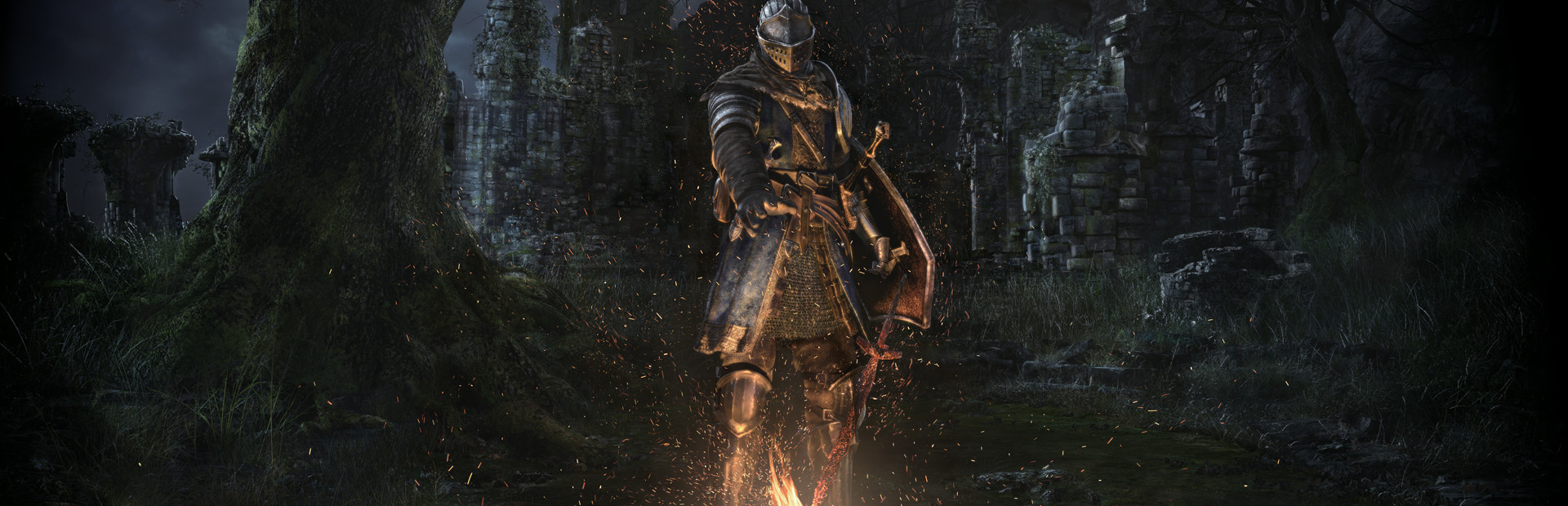
# Dark Souls Remastered — The Game That Changed Everything
Why Dark Souls Still Matters
There is a moment, somewhere deep in your first hours with Dark Souls, where the game stops feeling unfair and starts feeling inevitable. Every death becomes a lesson. Every fog gate a threshold. The hostility isn't cruelty — it's respect. FromSoftware built a world that assumes you're capable of learning it, and that assumption turns out to be one of the most generous things a game has ever offered a player.
Dark Souls Remastered is that world, rebuilt for modern hardware. Better frame rates, higher resolutions, improved multiplayer — and every inch of Lordran exactly as it was designed, waiting for you to break against it and come back stronger. If you've never played it, this is the only version you need. If you have, the remaster gives you the excuse to revisit one of gaming's genuine monuments.
The Origin of a Genre
In 2011, Dark Souls arrived with almost no marketing fanfare and rewired what a generation of players thought games were allowed to do. Its spiritual predecessor, Demon's Souls, had established the template — no hand-holding, no waypoints, a world built on failure as a learning mechanism — but Dark Souls refined it, expanded it, and connected it into something more architecturally ambitious than anything that had come before.
Director Hidetaka Miyazaki had a precise vision: a game where the world itself was the narrator, where lore emerged through item descriptions and environmental storytelling rather than cutscenes and dialogue dumps. The kingdom of Lordran wasn't explained to you. It was discovered, piece by piece, in the margins of things you found while you were busy dying.
The 2018 remaster, handled by QLOC alongside FromSoftware, upgraded the game to run at 60fps on PC and consoles, improved texture resolution, added dedicated servers to replace the peer-to-peer multiplayer of the original, and increased the online matchmaking pool from 4 to 6 players. Purists debated whether the lighting changes altered the atmosphere. Everyone agreed the improved performance made the combat feel significantly tighter.
The World of Lordran: An Interconnected Masterpiece
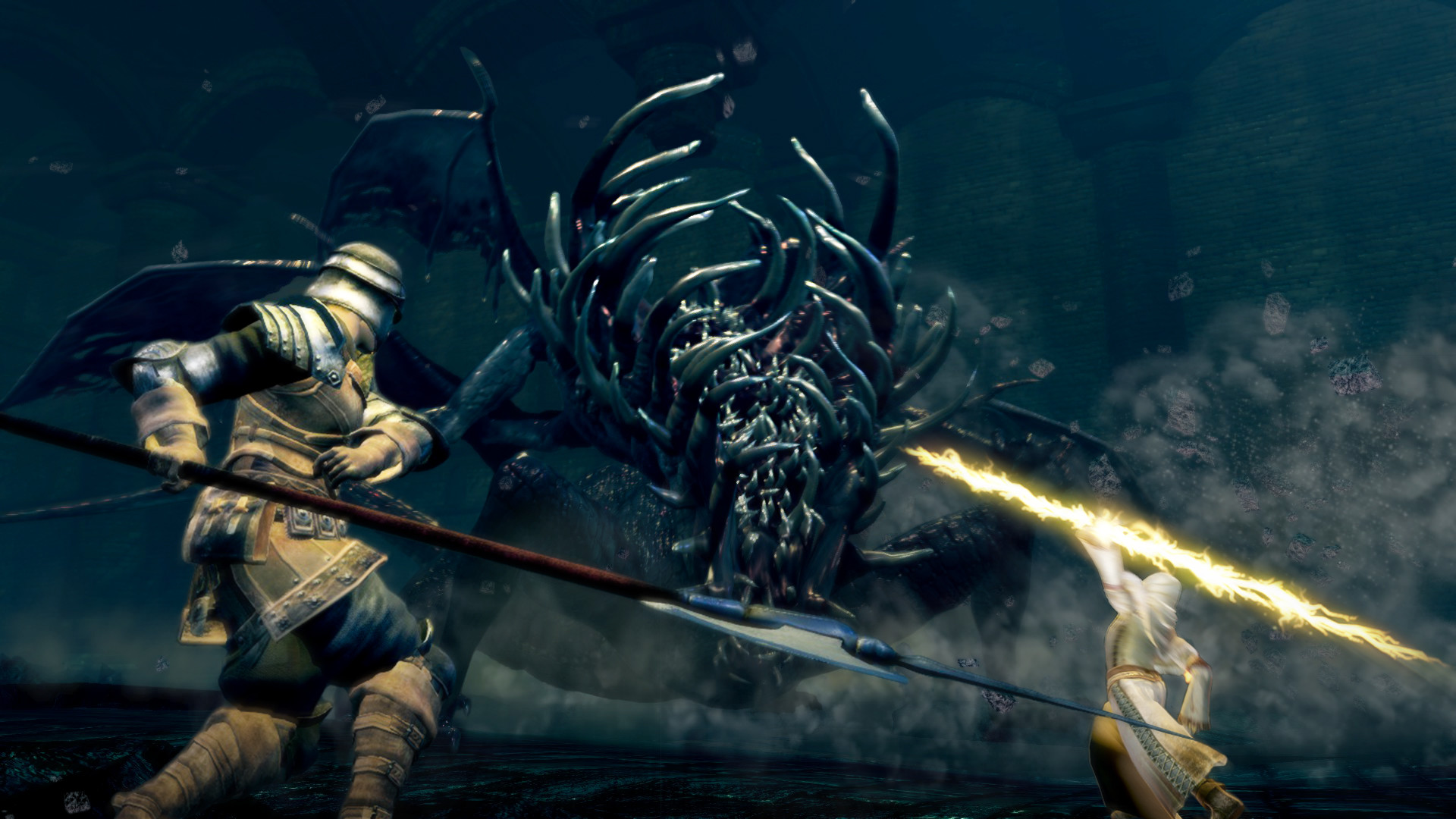
Lordran is the game's greatest achievement, and it predates any of its individual mechanics or bosses. Almost uniquely among open-world games, Lordran is not a collection of regions stitched together by loading screens or fast travel — it is one continuous, interlocking space where almost every area connects physically to every other.
The Undead Burg leads up to Undead Parish. A ladder in the Parish brings you down to Darkroot Garden. Darkroot's rear exit connects to a cliffside path above New Londo Ruins — and the top of the ruins feeds back into Firelink Shrine, your central hub, which you started the game beside. You can walk, uninterrupted, from the highest point of Anor Londo to the lowest depths of Blighttown, and every traversal teaches you more about how the world fits together.
This design philosophy creates moments of discovery that no quest marker can manufacture. Emerging from the sewers of the Depths to find yourself in a familiar valley, finally understanding how two places you've visited separately are actually the same place seen from opposite ends — these moments feel earned in a way that's unique to Dark Souls.
The major regions of Lordran include:
- ▶Undead Burg / Parish: The starting gauntlet. Narrow streets, crossbow archers, and the Bell Gargoyle bosses at the top.
- ▶Darkroot Garden / Basin: A lush, silent forest where ancient knights stand guard. Optionally visited early; strongly recommended late.
- ▶Sen's Fortress: A trap-filled ascent to Anor Londo, widely regarded as the game's most elaborate single zone.
- ▶Anor Londo: The city of gods. Towering architecture, silver knights, and the game's most iconic boss encounter waiting inside the cathedral.
- ▶The Depths / Blighttown: The descent. Poison, tight corridors, framerate warnings (addressed in the remaster), and one of the most satisfying shortcuts in gaming history.
- ▶New Londo Ruins: A ghost town flooded with spectral enemies and a story about what happens when power is misused.
- ▶The Catacombs / Tomb of the Giants: Where respawning skeletons and near-total darkness make you use a torch.
- ▶The Duke's Archives / Crystal Cave: The late-game pivot toward strangeness, culminating in Seath the Scaleless.
- ▶Lost Izalith: The game's weakest zone by consensus — a reminder of the development crunch that accompanied the original release, now part of the history.
Core Mechanics: Discipline and Mastery
Stamina: The Hidden Boss
Every action in Dark Souls consumes stamina — attacking, blocking, rolling, running. The green bar beneath your health is the game's true difficulty axis. A player who understands stamina management survives encounters that look impossible. A player who ignores it dies to enemies they've already beaten.
The fat roll versus medium roll versus quick roll distinction (determined by your equipment load) is one of the game's foundational build decisions. Heavy armor with a greatshield means you block everything but move slowly and must carefully ration defensive stamina. Light equipment means every dodge needs to be timed precisely but rewards you with generous invincibility frames. Neither approach is correct. Both require understanding your chosen rhythm.
Estus Flask and Bonfire Progression
You begin with a single Estus Flask charge — your sole source of mid-combat healing. As you discover Bonfires scattered across Lordran and kindle them with Humanity, you increase your charge count. The resource loop of finding a new Bonfire, sitting at it to restore your charges, and then pushing forward into unknown territory gives the game its moment-to-moment pacing. Every Bonfire reached is a checkpoint earned, not given.
Weapons, Upgrades, and Build Philosophy
Dark Souls has one of the most expansive weapon upgrade systems in the genre. Weapons can be reinforced along a standard path or infused with elemental properties — fire, lightning, magic, divine — each feeding into different stat builds. A sorcerer pumping intelligence builds toward the crystal catalyst and crystal magic weapon. A quality build balancing strength and dexterity can take almost any weapon to its ceiling. A pure strength build running a +15 Zweihänder with both hands is its own entire philosophy.
The variety isn't just cosmetic. Different attack patterns, different stance mechanics, different range and speed trade-offs — the weapon choice shapes how the game plays completely. Dark Souls rewards committing to a direction.
Humanity and the Hollowing System
In Dark Souls, death has a visual cost: your character gradually "hollows," becoming gaunt and dead-eyed. Humanity items reverse this, restoring your human appearance and enabling several key mechanics — kindling Bonfires, summoning allies through co-op, invading other players' worlds as a hostile phantom. The system ties the game's narrative theme (the curse of undeath, the cost of perseverance) directly into its mechanical layer. You are not just playing a character who might hollow. You are playing a character who is actively resisting it.
Moments That Define the Game
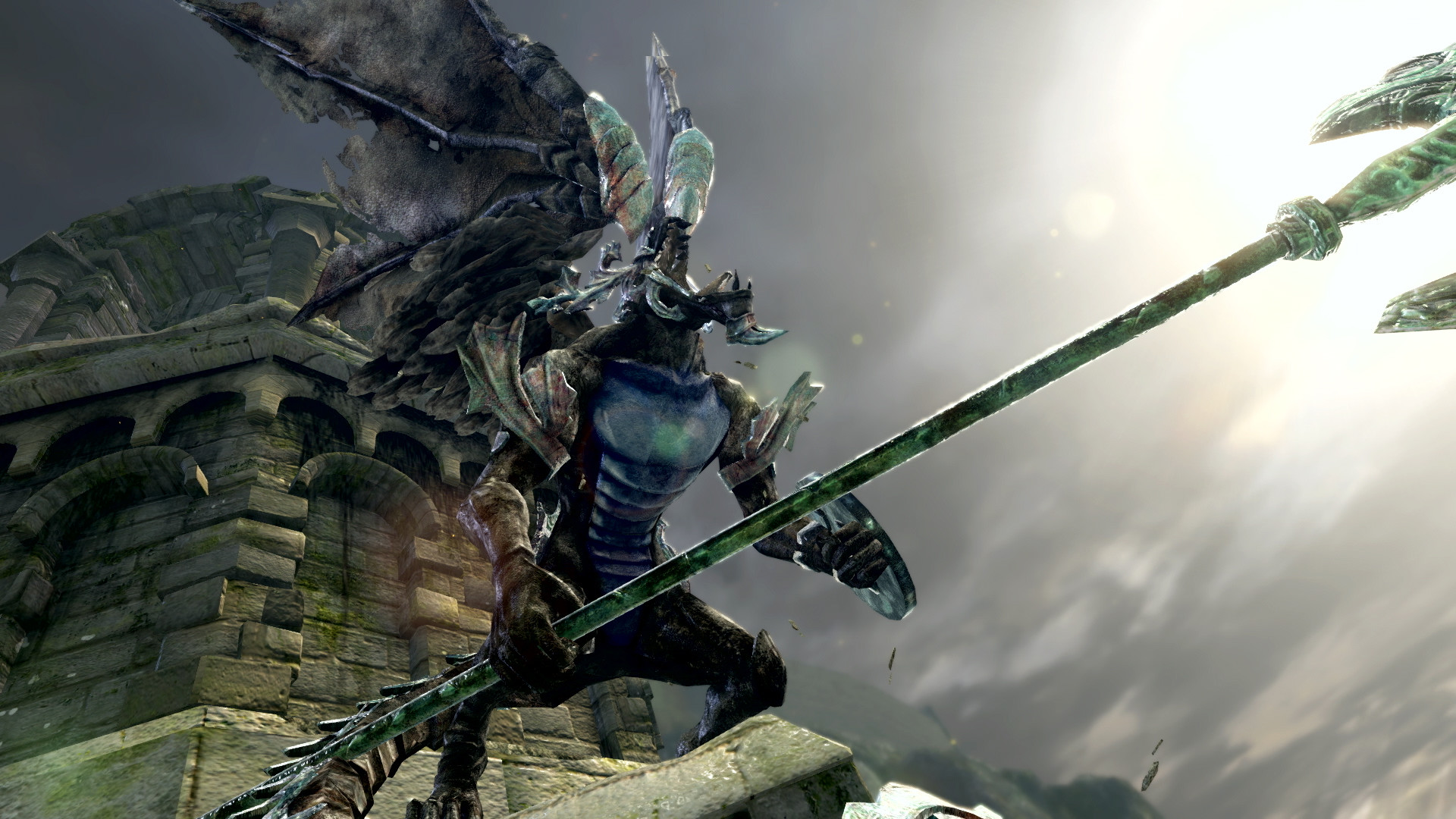
The Bell Gargoyles are where many players either quit or commit. Fighting one gargoyle at the top of Undead Parish is manageable. The moment the second one drops from the roof with its tail already on fire is the game announcing what it is. Players who survive this fight — who learn to control the space between two aggressive enemies simultaneously — understand something about Dark Souls that carries through every subsequent encounter.
Sen's Fortress is the game's prolonged joke at your expense. Pendulum blades over narrow bridges. Floor tiles that drop you into a snake pit. A mimic chest at the top waiting for the unwary. An NPC named Big Hat Logan imprisoned in a cage, discoverable only if you somehow think to talk to a clearly distressed man in an iron cage. It is designed to be remembered, and it is.
Ornstein and Smough is the series' most famous boss encounter: a lightning-fast spear knight and a massive hammer-wielder who fight simultaneously, both recovering HP when the other dies and entering a powered-up state as the survivor. It is the game at its most collaborative — the encounter essentially requires you to have learned everything up to this point and apply it all at once. The first time you kill them without summons is a moment players describe in the present tense for years afterward.
Anor Londo itself — the city of the gods, lit in perpetual golden afternoon, vast and silent — is one of game design's greatest bait-and-switch operations. It looks like a reward. It is another level. The reveal of what Anor Londo actually is, and what happened to it, is a lore payoff that requires assembling context from item descriptions and NPC fragments scattered across the preceding thirty hours.
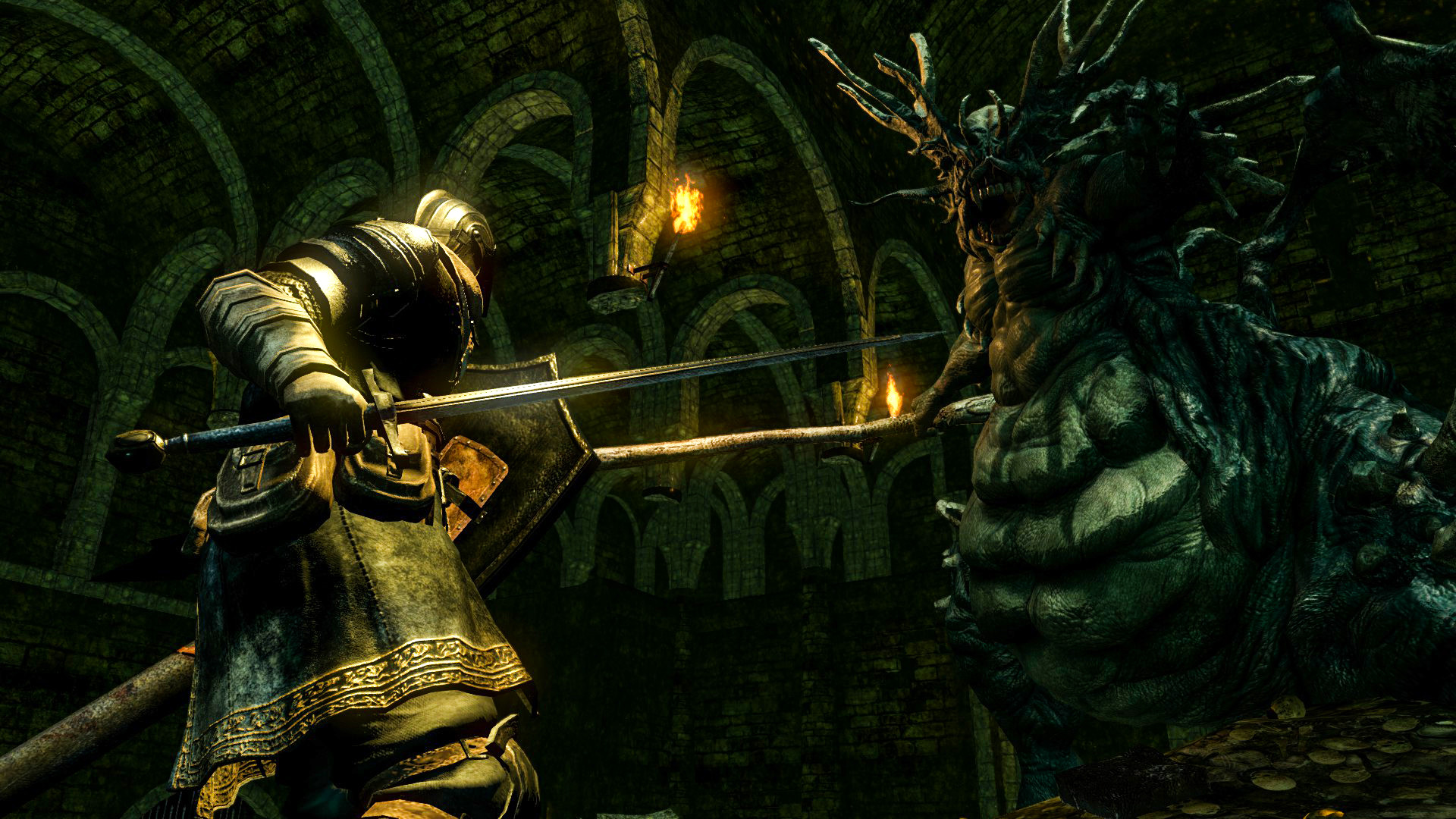
Screenshots from Lordran
Community Reception
Dark Souls Remastered holds a Very Positive (88%) rating on Steam across tens of thousands of reviews. The core criticism from longtime fans centers on the lighting engine changes — the original's particular atmospheric darkness was partially an artifact of its technical limitations, and the remaster's brighter rendering, while technically correct, loses something specific to the 2011 experience. The consensus, however, is that the remaster is the best available version for new players by a significant margin.
The wider Dark Souls community is one of gaming's most enduring subcultures. YouTube channels dedicated exclusively to lore analysis have accumulated millions of subscribers parsing item descriptions and environmental details years after release. The "You Died" meme entered the broader cultural lexicon long ago. Streamers routinely return to challenge runs — no-hit, SL1 (minimum level), broken straight sword only — and the game supports all of them because the skill expression ceiling is effectively infinite.
The phrase "git gud" — internet shorthand for the game's "improve through failure" philosophy — originated in the Dark Souls community. Whatever you think of the phrase itself, the sentiment it encodes (that friction is not a flaw but the point) has influenced game design discourse in ways that extend well beyond the series.
Metacritic scores the remaster at 84 for PC. The original 2011 release scored 89. The delta largely reflects remaster-skeptic criticism about pricing and the lighting changes, not the underlying game quality.
Tips for New Players
Starting Dark Souls Remastered for the first time can feel paralyzing. A few principles that will help:
- 1Read everything. Item descriptions, NPC dialogue, enemy placement — the game is constantly telling you things in indirect language. Pay attention.
- 1Upgrade your weapon before you upgrade your character. A +10 weapon in the early game is worth more than ten levels. Find the blacksmith in Undead Parish early.
- 1The Drake Sword is a crutch. You can get a powerful weapon very early by farming the Hellkite Drake's tail. It will carry you through the first quarter of the game and make the second quarter significantly harder when it stops scaling. Know what you're choosing.
- 1Equip load matters. Keep your equipment load below 25% (fast roll) or below 50% (medium roll). Above 70%, your dodge becomes a slow, punishable stumble.
- 1Human form is optional. You can complete the entire game while Hollowed. The benefits of human form (co-op, invading) are real, but so is the risk of being invaded. Make the trade consciously.
- 1The first Firelink shortcut is the game in miniature. When you open the gate from Undead Parish back down to Firelink Shrine, notice how the world clicks into place. That moment of geography resolving is what Dark Souls is made of. Keep that feeling with you.
- 1Save NPC questlines for New Game Plus if needed. Several NPC arcs require hitting specific triggers in a specific order. If you miss them, they're gone until NG+. Don't stress about perfecting them first run — just play.
Why This is a GamePeak Pick
GamePeak Picks marks games that function as cultural reference points — titles whose influence persists long after their initial release window and that remain compelling to install today, not just historically significant.
Dark Souls Remastered qualifies on both counts. It is the origin point of an entire genre. Every soulslike released since 2011 — from Bloodborne to Hollow Knight to Lies of P to Elden Ring itself — exists in conversation with what Dark Souls built. Playing it in 2026 is not an act of archaeology. It is playing the game that defined the most influential design philosophy of the last fifteen years, in its cleanest available form, to discover firsthand why that philosophy still holds.
The satisfaction of learning Lordran has not aged. The architecture is still beautiful. The bosses are still memorable. The feeling of emerging from the Catacombs into a familiar area you've visited from a different direction — and finally understanding how everything connects — is still one of gaming's best moments. None of that requires nostalgia to land.
Final Verdict
“Dark Souls Remastered is not comfortable. It is not friendly. It does not explain itself. What it offers instead is something rarer: the complete, uncompromised experience of a game that decided to trust you entirely, and built a world worth the effort of learning. An essential GamePeak Pick.