Editor's note: this article summarizes published reviews, store data and community reception. GamePeak did not run its own playtest, so no GamePeak score is given.

# Cyberpunk 2077 — The Most Remarkable Redemption Arc in Gaming
Why Cyberpunk 2077 Belongs in Every Gaming Library
There has never been a story quite like Cyberpunk 2077's story — and we don't mean the one about V and Johnny Silverhand. We mean the story of the game itself. No major title in this era has fallen as hard, been written off as thoroughly, or then risen as completely. Today, in 2026, Cyberpunk 2077 isn't just redeemed — it's routinely cited alongside The Witcher 3 and Elden Ring as one of the defining RPGs of its generation.
If you avoided it after launch — or you played it in 2020 and never returned — this article is for you. Night City is ready, and it's never been better.
The Launch That Shook the Industry
To understand what Cyberpunk 2077 became, you have to understand what it was on December 10, 2020. The hype cycle surrounding the game had been building since 2012. By the time the game shipped, it was carrying a weight of expectation that very few releases in history have had to bear.
What arrived was fractured. On PC — particularly with high-end hardware — the game was visually breathtaking and largely functional, though still plagued by bugs. On last-generation consoles (PS4, Xbox One), it was a different story entirely. Frame rates were in freefall, texture streaming stuttered badly, and the experience was so unstable that Sony pulled the game from the PlayStation Store. CD Projekt Red issued public apologies and began offering refunds.
The gaming press — and the internet broadly — issued their verdict quickly. Cyberpunk 2077 was a failure. A cautionary tale about overpromising.
They were right about 2020. They underestimated the team that built it.
The Rebuild: From Broken to Brilliant
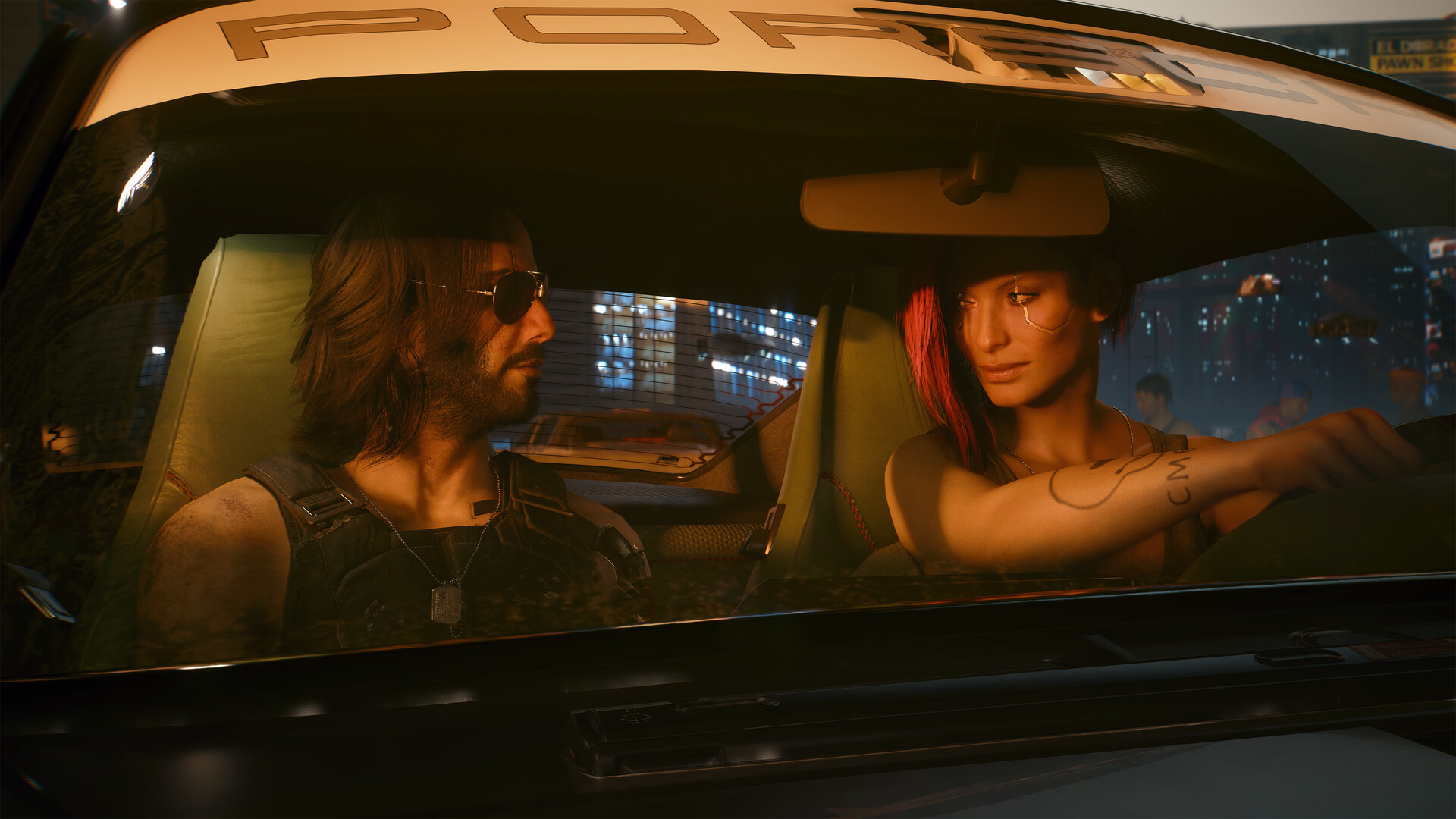
Over the next three years, CD Projekt Red did something unusual for a AAA studio: they stayed. While many studios would have patched minimally and moved on, CDPR released a continuous stream of updates. Performance patches came first — the game was stabilized, console versions were gradually brought up to acceptable standards, then overhauled for current-gen hardware.
But September 2023 represented something beyond stabilization. Patch 2.0 arrived alongside the Phantom Liberty expansion, and together they didn't just fix Cyberpunk — they fundamentally redesigned it.
The skill tree was gutted and rebuilt from scratch. The old system rewarded grinding specific actions; the new one presents players with meaningful build-defining choices. Police AI was completely overhauled — no longer did cops simply teleport behind you when you broke the law; they now pursue you in escalating waves across Night City's districts. Vehicle combat became a real system, not an afterthought. Cyberware implants were restructured around a RAM management economy that makes build crafting genuinely strategic. Enemy AI was improved throughout.
The game that exists in 2026 is not the game from 2020. It shares the world and the story, but the underlying systems architecture is different — and vastly superior.
Night City: The Living, Breathing Antagonist
Night City, the fictional California megalopolis where Cyberpunk 2077 takes place, remains one of the most impressive feats of environmental world-building ever committed to interactive media. It is dense in a way that most open worlds are not — not geographically sprawling in the manner of Red Dead Redemption 2's frontier, but vertically layered, architecturally chaotic, and relentlessly atmospheric.
The city is divided into six distinct districts:
- ▶Watson: The decaying corporate hub where V starts — former megacorp territory now populated by gangs and street markets.
- ▶Westbrook: Neon-drenched wealth. Japantown, North Oak mansions, Charter Hill's expat professionals.
- ▶City Center: Gleaming corporate towers. The financial and political heart, where Arasaka and Militech cast their longest shadows.
- ▶Heywood: Latino cultural stronghold. Vibrant street life sits over simmering gang tensions between Valentinos and 6th Street.
- ▶Pacifica: An unfinished resort turned open-air prison controlled by the Voodoo Boys.
- ▶Santo Domingo: Industrial zone. Power plants, manufacturing sprawl, the unglamorous machinery that keeps Night City alive.
Every district has its own architecture, its own gang presence, its own audio landscape, its own street food and neon signage. Walking through Night City at 3 AM in the rain — through a back alley in Watson, past a noodle stall where a vendor watches a holo-screen in silence — is one of gaming's great atmospheric experiences.
Core Gameplay: Systems Built Around Choice
Character Build and the Reworked Skill Tree
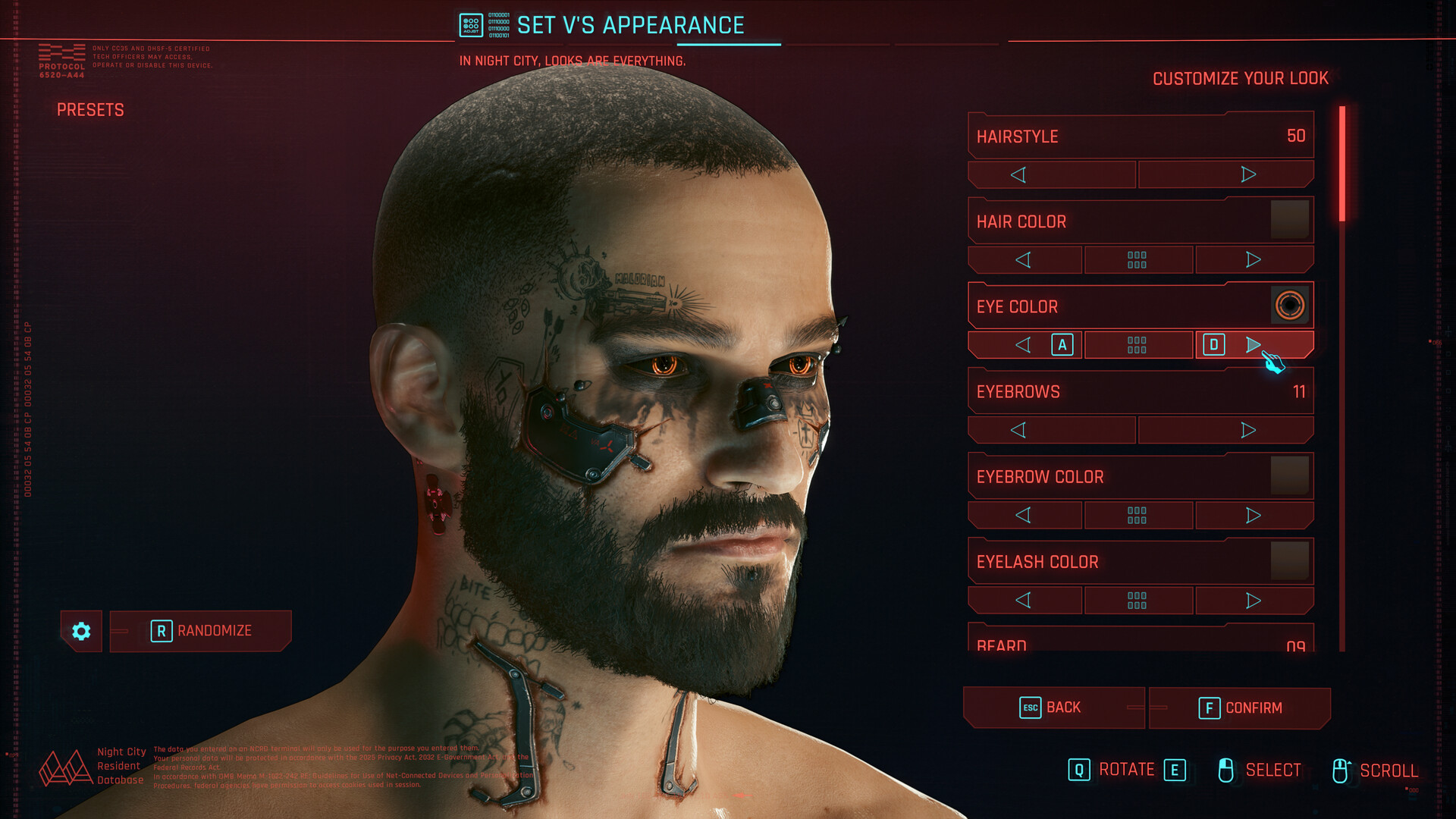
Post-Patch 2.0, character creation in Cyberpunk 2077 is genuinely one of the deepest RPG build systems on the market. Five core attributes — Body, Reflexes, Technical Ability, Intelligence, and Cool — govern which perks you can access, which dialogue options appear, and how you can approach combat encounters.
Inside each attribute are distinct perk branches. A Reflexes build opens the Blade and Handgun trees for a fast, aggressive, close-quarters playstyle. Intelligence unlocks Netrunner perks that let you hack enemies into unconsciousness, detonate their cybernetic grenades, or simply crash their operating system from across the room. Technical opens crafting, engineering, and the ability to brute-force electronic locks. Body gives you superhuman melee power, LMGs, and the ability to smash through reinforced doors.
Most importantly, these builds interact. A netrunner who has invested in Cool for stealth can upload a Contagion virus and watch it spread through an entire base, then slip past the bodies without firing a shot. A Body/Reflexes hybrid can wade into a firefight with a katana, deflect bullets with a Sandevistan reflex booster, and dismantle a dozen enemies in slow-motion. Both approaches are valid. Both feel remarkably different.
Cyberware: Your Body, Your Weapon
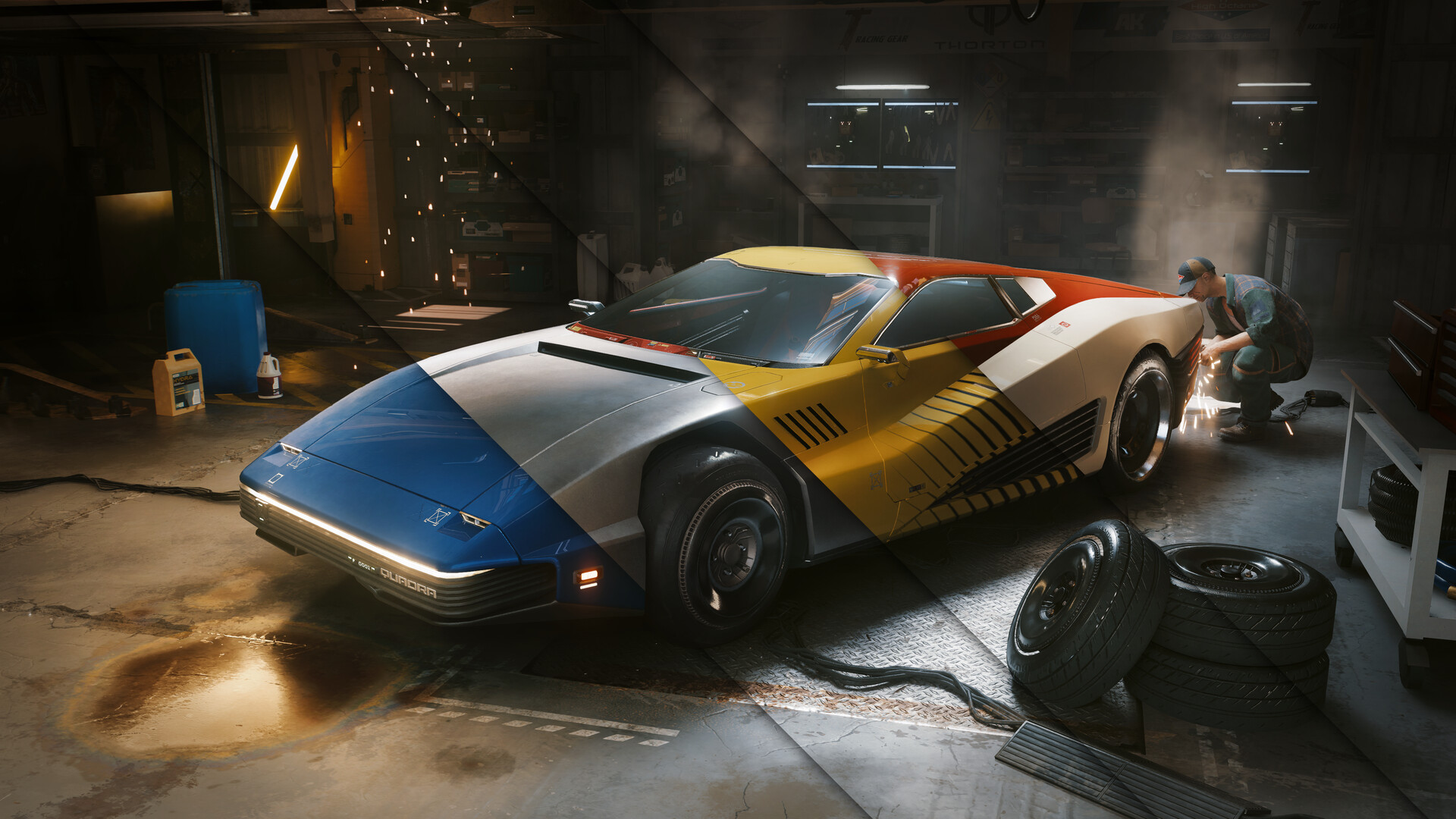
Cyberware implants allow V to modify their body with combat technology — subdermal armor plating, optical scanners, reinforced tendons for jump height, or the legendary Mantis Blades that retract from the forearms. The Patch 2.0 Cyberware rework tied implants to a RAM system: every implant costs RAM, and your RAM capacity determines what you can have installed simultaneously.
This creates meaningful trade-offs. You can't just be a Netrunner god who also runs Mantis Blades and has full Sandevistan reflexes and subdermal armor. You choose a lane. That choice defines your Night City.
Combat: Three Completely Different Games
Depending on your build, Cyberpunk 2077 plays like three fundamentally distinct games:
Gunplay builds play as a satisfying cover shooter with exceptional weapon variety — Tech weapons that charge-fire through walls, Smart weapons that home in on targets, Power weapons with bullets that ricochet off surfaces. Weapon handling is tight and responsive, with enough variety to find several setups that feel personally satisfying.
Netrunner builds play as an immersive puzzle game. You scope an area from a distance, identify networked cameras and enemies, upload Quick Hacks, and watch the encounter resolve without drawing your sidearm. A high-Intelligence Netrunner can clear a full enemy compound in near-silence.
Blade and melee builds — especially with a Sandevistan equipped — play as the closest a game has come to a genuine cyberpunk power fantasy. Time slows to a crawl, you sprint between enemies at inhuman speed, and the Mantis Blades arc in lethal geometry. It is, bluntly, spectacular.
The Story: V, Johnny, and the Ghost in the Machine
Cyberpunk 2077's main narrative centers on V — a mercenary whose ambition lands them in possession of the Relic, a military-grade biochip containing the engram (digitized consciousness) of Johnny Silverhand, a legendary rock star and anti-corporate terrorist played by Keanu Reeves. The chip is killing V from the inside, overwriting their neural architecture with Johnny's personality. The main story is the race to find a solution before V ceases to exist.
What makes this narrative work — deeply, memorably — is the relationship between V and Johnny as it develops over the course of the game. Johnny begins as hostile and self-interested. The conversations between them, which happen at idle moments throughout the game, are often the best writing in the script: sharp, funny, occasionally devastating, always honest. By the third act, the question of who V is, and what they owe to themselves versus the ghost sharing their skull, carries genuine emotional weight.
The game's multiple endings — some harrowing, some strangely hopeful — all land because the writing has earned them.
Phantom Liberty: The DLC That Demands to Be Played
The Phantom Liberty expansion adds a self-contained storyline set in Dogtown, a walled district carved out of Pacifica and governed by a military strongman. Solomon Reed — played by Idris Elba — is a FIA agent who draws V into a web of espionage, betrayal, and genuinely unexpected moral choices.
Phantom Liberty is widely considered to be the best piece of content CD Projekt Red has ever made. It's tighter, more confident, and more emotionally complex than any portion of the base game. It also adds a sixth ending to Cyberpunk 2077's main story — one that recontextualizes everything that came before it.
Moments That Define the Experience
The Heist — the opening mission that sets everything in motion — is a masterclass in establishing stakes. Played from the perspective of a mercenary team that doesn't know it's already doomed, it introduces the game's world, its power dynamics, and V's core personality with confidence and momentum.
Chippin' In — a late-game mission spent almost entirely with Johnny Silverhand — is one of the finest single quests in any RPG. A road trip, a concert, a confrontation with the past. No combat required. Just the story doing its work.
The Nomad questline involving the Aldecaldos — V's found family on the outskirts of the city — delivers a type of warmth that most action RPGs never reach for. These people feel real. Losing them would hurt.
Community Reception
Cyberpunk 2077's current Steam rating sits at Very Positive at 86% — a number that would have been unthinkable in the weeks after launch, when negative reviews were flooding in. The trajectory of its Steam reviews is itself a data visualization of the redemption arc: a valley that deepened through 2021, plateaued through 2022, and climbed sharply from late 2023 onward.
The Metacritic PC score is 86, with individual critics routinely awarding higher marks in retrospective reviews written after Patch 2.0.
Lifetime sales have exceeded 25 million copies — a commercial success that, when viewed alongside the game's troubled history, represents an extraordinary recovery.
Community sentiment has shifted completely. Forums that once served as rallying points for refund requests now host intricate lore debates, build theory-crafting, and screenshot threads. The modding community has been active for years, producing everything from quality-of-life improvements to total conversion mods. The sub-Reddit regularly receives posts from players who finally gave it a try in 2024 or 2025, discovering that Night City had been waiting for them all along.
Tips for New Players
- 1Pick a playstyle before you pick a build. Cyberpunk rewards commitment. Don't spread attribute points broadly — lean into one fantasy (netrunner, blade, gunslinger) and develop it.
- 1Do the early Rogue and Panam side quests before diving into the main story. These characters have the best writing in the game and their questlines cross into the main story in meaningful ways.
- 1Play on Balanced or Hard. Easy mode undercuts the tension that makes the game feel real. If you're new to action RPGs, Balanced is ideal.
- 1Your Cyberware determines your build identity. Don't treat implants as optional accessories — they are the core mechanical expression of who V is in combat. Invest in them early.
- 1Explore on foot, not just by car. The street level of Night City — the vendors, the graffiti, the ambient dialogue, the hidden access points — is designed for pedestrian discovery. Drive when you have somewhere to be. Walk when you have nowhere to be.
- 1Play Phantom Liberty. It's sold separately but it's essential. Do it before finishing the main story, as it integrates with the ending options.
Why This is a GamePeak Pick
GamePeak Picks is about games that have earned their place in the permanent library — titles that reward purchase today, not titles that were impressive at the time of release.
Cyberpunk 2077 earns its Pick on an unusual basis: it is proof that games can be rebuilt. It is proof that a studio's commitment to fixing something, even past the point of commercial logic, can result in something genuinely great. But more than that argument, the game earns its Pick on its own merits in 2026 — as an open world RPG with one of the finest fictional cities ever constructed, a character system that produces meaningfully different playthroughs, and a story that stays with you.
Twenty-five million copies sold. Very Positive on Steam. A Metacritic score that understates the current product. Night City is waiting. There has never been a better time to visit.
Final Verdict
“Cyberpunk 2077 is the most compelling argument in gaming for patience and second chances. What CD Projekt Red ultimately delivered — after years of work, after absorbing every criticism, after rebuilding major systems from the ground up — is one of the most impressive RPGs ever made. Night City is extraordinary. V's story is worth living. An unqualified GamePeak Pick.