The Wait Is Over
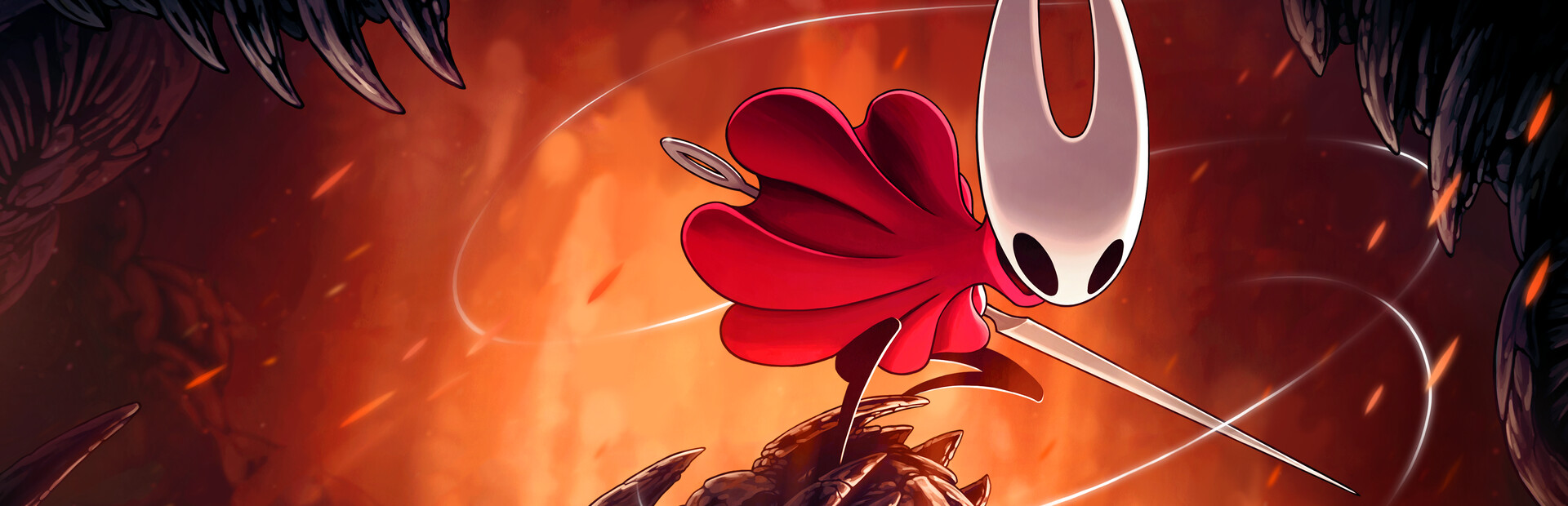
In February 2019, Team Cherry announced a free DLC for Hollow Knight centered on Hornet, the enigmatic antagonist from the base game. The announcement was quiet, the screenshots looked beautiful, and the community was immediately enthusiastic. That DLC was never released. Instead, over the following months, the scope grew — new kingdom, new systems, new everything — and by mid-2019 Team Cherry confirmed Silksong had become a full sequel.
What followed was one of gaming's most drawn-out release sagas. Six-plus years of anticipation, punctuated by precisely timed gameplay trailers that looked extraordinary, followed by stretches of silence long enough to spawn their own meme ecosystem. "Silksong release date" jokes became a genre unto themselves in gaming communities. Every Nintendo Direct, every gaming showcase, every major gaming event became a potential Silksong announcement moment — and when it didn't happen, the community's collective reaction became a ritual of its own.
The wait built enormous expectations in two competing directions: players who had lived with Hollow Knight for years had internalized the original as a benchmark, and they wanted a sequel that met that benchmark. But the wait was also long enough that a vocal portion of the community had consciously or unconsciously decided that nothing could meet the expectations the wait had created. Team Cherry was playing against a psychological accumulation, not just a game design challenge.
On September 4, 2025, it launched. It was worth it.
Silksong follows Hornet as she awakens in Pharloom — a kingdom of silk and temples, ruled by an oppressive ritual cycle she must dismantle. The tone is immediately darker than Hollow Knight's underground melancholy. Pharloom is luminous and ornate on the surface, but the systems beneath it are brutal. This is not the mournful, dying world of Hallownest — it is something more actively sinister, a place where the structures of power are still functioning and still consuming.
Pharloom: A Kingdom of Ceremony and Silk
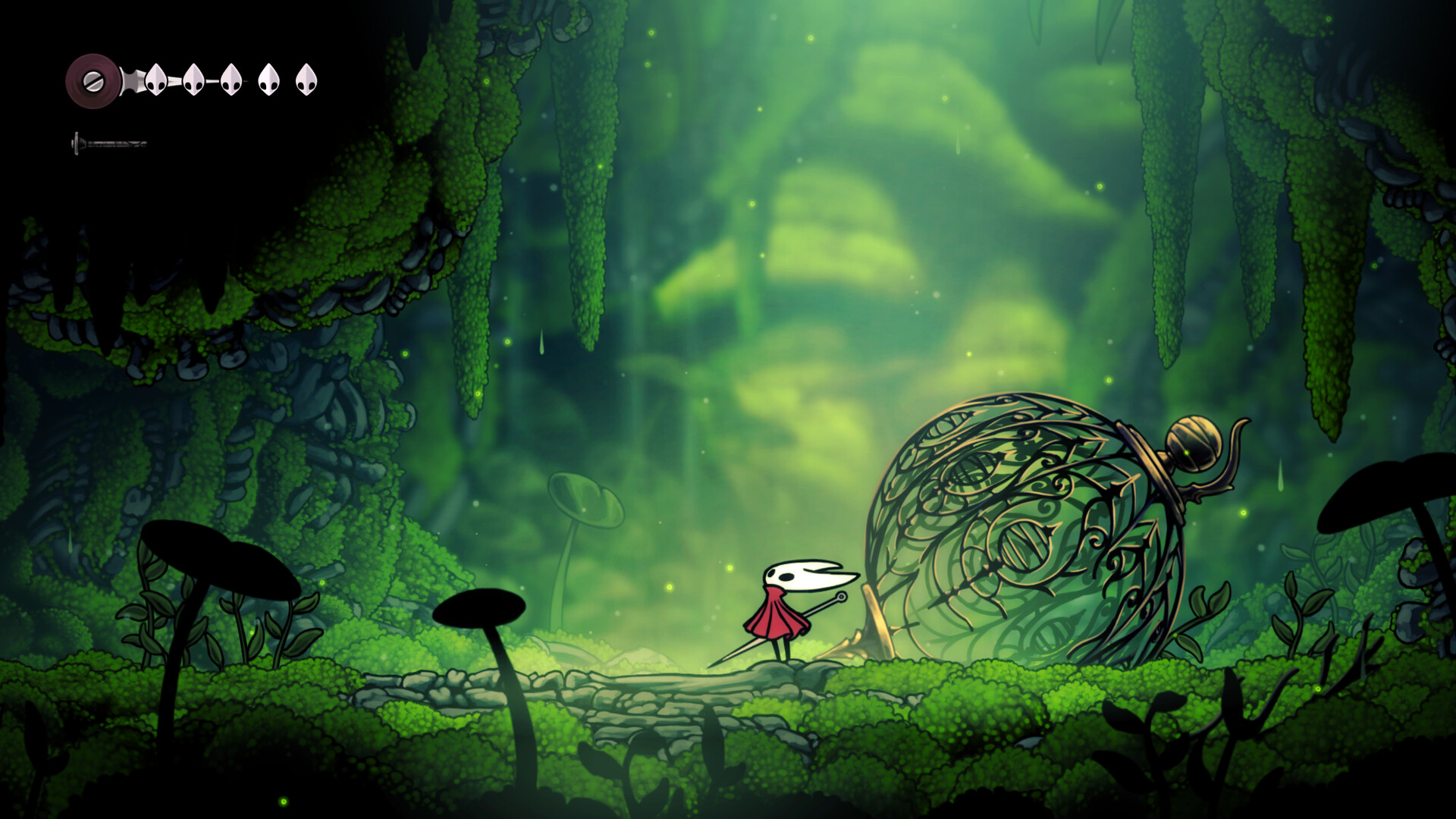
Where Hallownest was a civilization preserved in decay — a dead empire whose ruins contained the remnants of its greatness — Pharloom is a living system that is actively harmful. The ritual cycle that governs Pharloom isn't a historical artifact; it is ongoing, enforced, and consuming the creatures who live within it.
The kingdom is organized into distinct zones, each with a sharply different visual identity:
The Ceremonial Temple Districts occupy the core of Pharloom and serve as its literal and figurative center of power. Grand stone architecture draped in silk, elaborate iconography celebrating the ritual cycle, and densely populated areas filled with NPCs who have accepted the cycle as simply the way things are. These districts are the first areas players explore and they immediately communicate Pharloom's tonal distinction from Hallownest: this place is beautiful in a way Hallownest never was, and that beauty serves the system.
The Outer Reaches are where Pharloom's control weakens and nature reasserts itself. The ceremonial structures remain, but vines and roots have cracked the walls, and the creatures here are wilder, less bound by ritual. The visual transition from the polished temple districts to the overgrown outer reaches is deliberate environmental storytelling — the system has limits, and past those limits, something else exists. These areas contain some of the game's most rewarding exploration, with hidden routes and optional encounters that reward thorough searching.
The Ceremonial Upper Districts are where the ritual cycle is most extreme. The architecture here isn't just ceremonial in aesthetics — the structures themselves are functional components of the ritual. Boss encounters in these districts carry the most narrative weight, and the story revelations that occur here give Pharloom's design a retrospective coherence. Things you saw in the temple districts make new sense once you understand what they were serving.
The structural difference from Hallownest is fundamental. Hollownest sprawled horizontally, a map that could be read roughly left-to-right with downward branches into its deepest secrets. Pharloom stacks vertically — you are climbing, ascending toward the source of the ritual cycle. This reorientation changes the feeling of progression significantly. You always have a sense of going somewhere; the destination is up, always up, and the late-game revelation of how areas interconnect across that vertical span produces the same "oh, this whole time" spatial revelation that Hollow Knight's best map design delivered.
The Pin System: Charms Evolved
Hollow Knight's Charm system was among the most elegant progression designs in the metroidvania genre. A finite number of Notches, a wide variety of Charms with different costs, and the choice of which to equip forming a meaningful expression of playstyle. Players could run aggressive builds, defensive builds, exploration builds, or weird hybrid builds that centered on unusual interactions between Charms. The system had real depth, communicated itself simply, and never felt arbitrary.
Silksong's Pin system inherits the core philosophy — limited equip slots, meaningful choice — and refines it through categorization.
Pins are organized into three categories:
Combat Pins affect Hornet's direct offensive capabilities: damage, attack speed, conditional bonuses that trigger on specific combat events (landing a certain number of hits, successfully using a Silk Trap, maintaining a hit streak). Players building around raw combat effectiveness will find their Pin priorities here, and the most powerful Combat Pins have specific conditions that reward the playstyle they enable. A Pin that boosts damage after a Silk Trap detonates creates a meaningful incentive to use Silk Traps well, rather than just awarding passive bonuses.
Movement Pins affect traversal and positioning: dash distance, aerial control, wall-cling improvements, and related mobility enhancements. In a game where Hornet's positioning is as important as her offensive capability — her close-range kit requires being near enemies, and her tool kit requires being in specific positions to set traps effectively — Movement Pins directly translate to combat effectiveness as well as exploration reach. Several hidden zones in Pharloom are only accessible with specific movement upgrades, making Movement Pin investment a prerequisite for full map completion.
Tool Pins amplify Hornet's silk-based toolkit: Silk Traps, Silk Summon, binding techniques. Players who build around the toolkit rather than the needle will find that Tool Pins transform already-strong abilities into defining build elements. A Tool Pin that increases Silk Trap count radically changes how you approach large combat arenas.
The philosophical similarity to Charms is clear: limited slots, meaningful selection, playstyle expression through combination. The difference is the categorization makes the decision structure more readable. Rather than scanning through an undifferentiated list of Charms asking "which of these is good right now?", Pin selection begins with a question: "what kind of player am I being in this run?" The categories give that question a framework.
Combat: Faster, More Aggressive
Hornet's kit centers on her needle and thread. She's fundamentally more aggressive than the Knight — her bouncing attacks are faster, her recovery is quicker, and her tool set rewards players who maintain offensive pressure rather than those who turtle and wait.
The Needle, the Silk, and How They Connect
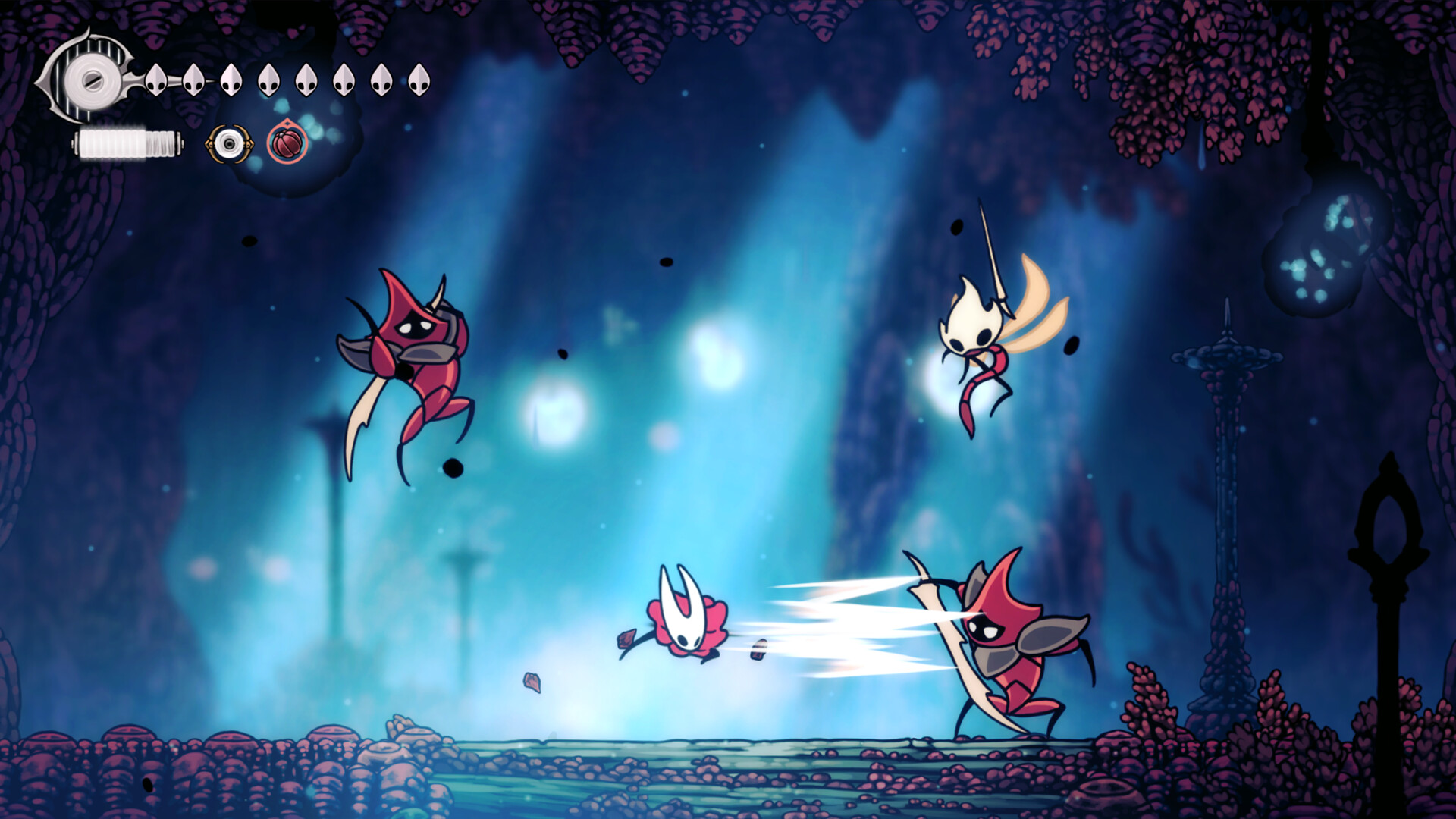
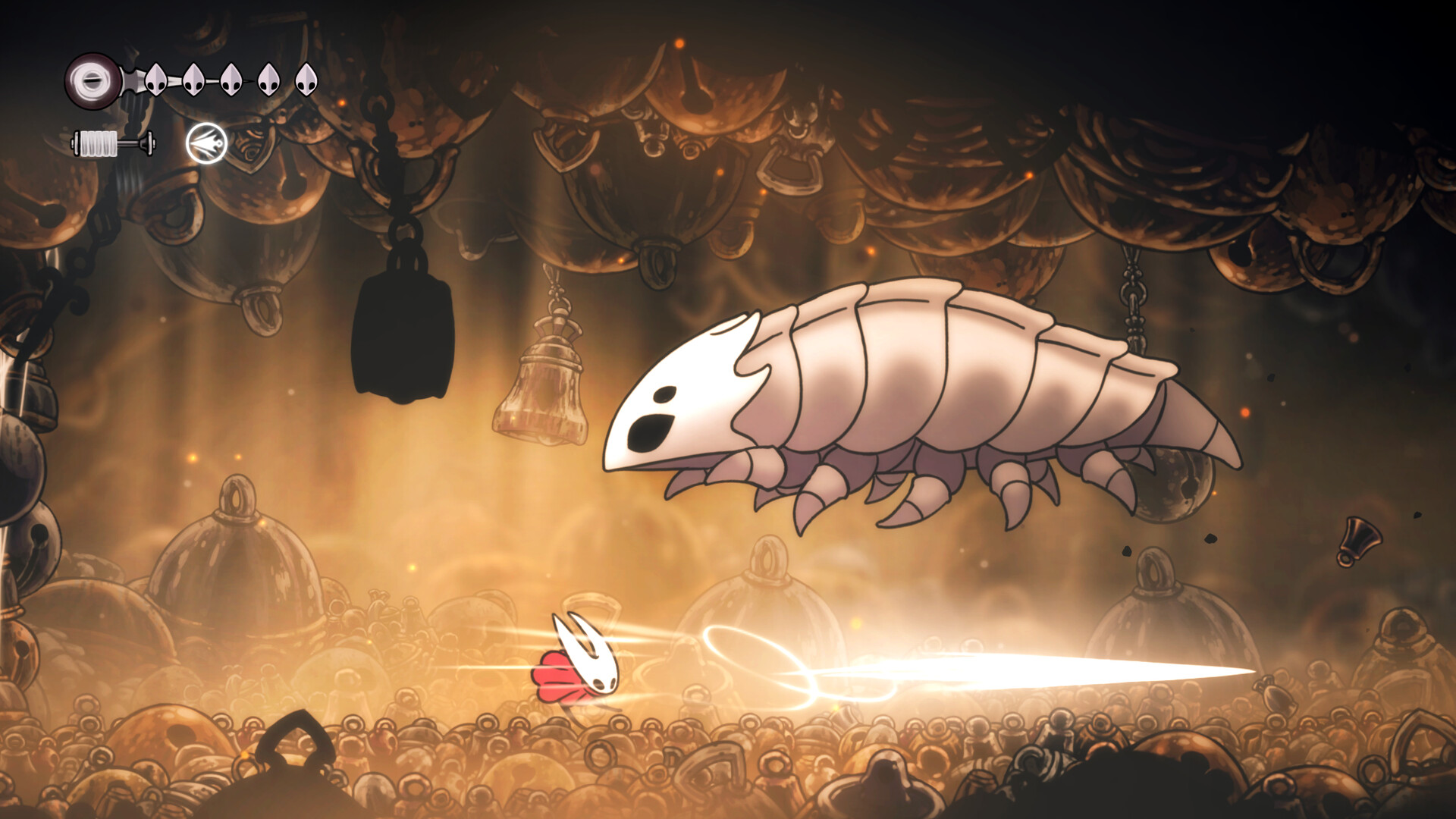
Hornet's basic attack — her needle — is shorter-ranged than the Knight's nail but significantly faster. The rhythm of combat with Hornet is denser: you're landing more hits in less time, and the window between attacks is smaller. She excels at dash-strikes and jump-attacks, and the game rewards fluid movement during combat in ways the Knight's heavier, more deliberate attack animations didn't require.
Silk Traps are Silksong's most distinctive combat tool. Hornet can deploy traps that attach to enemies or specific environmental positions. These traps activate in two ways: they can bind enemies, restricting their movement for a period, or they can be set to detonate after a delay, dealing area damage. The interplay between trap placement and activation timing is where Silksong's combat system achieves real depth — a well-placed trap that binds a fast-moving boss mid-combo creates opportunities for the kind of high-damage follow-up that defines a great run, and learning the specific trap timing for each major enemy type is what separates adequate play from skilled play.
Silk Summon calls a combat support entity that automatically attacks nearby enemies. The summon has limited duration and a cooldown, and like many of Silksong's systems it interfaces with Tool Pins to create stronger versions of itself in specific builds. The Summon is useful as a distraction tool during boss fights and as a damage supplement during encounters where you can't maintain constant melee pressure.
Recovery is where Silksong most clearly distinguishes itself from its predecessor philosophically. The Knight recovered health by using Soul — a resource accumulated from hitting enemies — in a dedicated meditate action. This created a decision: spend Soul on magic attacks or hold it for healing. It was a defensive economy that encouraged patient, methodical play.
Hornet's recovery requires aggression. Health restoration comes through pressing offensive sequences through to completion, landing finishing strikes on vulnerable enemies, maintaining combat momentum. The game actively discourages retreat and passive recovery: pulling back to a safe corner and waiting doesn't restore health the way it could in Hollow Knight. This is not a flaw — it's a deliberate character statement. Hornet is defined by offensive commitment, and her recovery system reinforces that identity at the mechanical level.
The Bosses of Pharloom
Boss design was the element most discussed in critical coverage following launch, and Silksong's roster earns that attention.
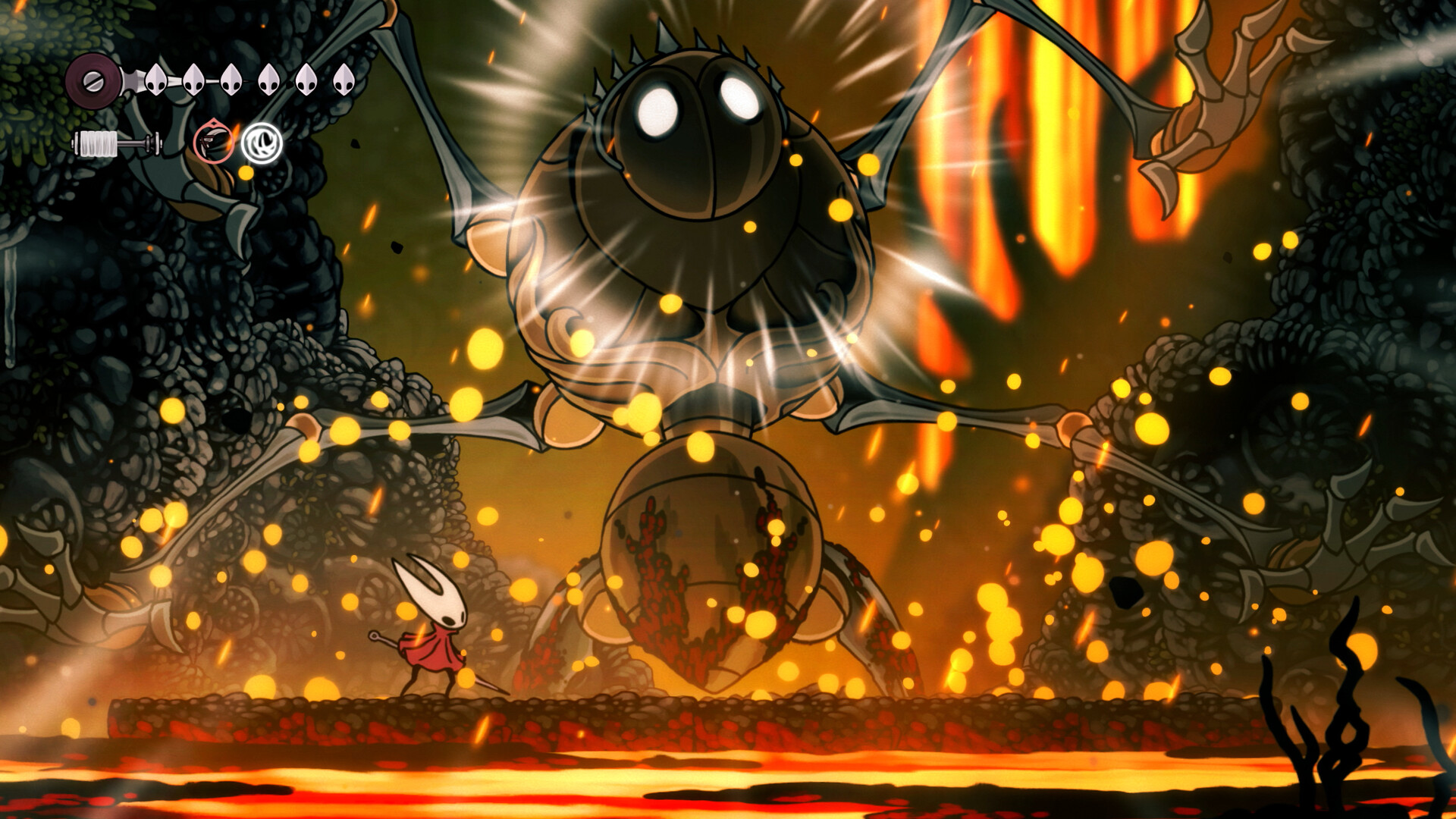
The Weavers — the Temple District's primary guardian encounter — is the first major test and sets the tone for what Silksong expects from players. The fight has two phases: a pattern-heavy first phase that trains you in the boss's attack vocabulary, and a second phase that remixes those patterns under time pressure. The guardian's motivations are revealed before the fight in a brief conversation, and the emotional texture of that exchange makes landing the final hit feel complicated in the best possible way. This is the design ethos that made Hollow Knight's bosses memorable: the opponents are not simply obstacles, they are characters.
The Ritual Enforcers are mid-to-late game encounters that function as pure combat tests. Unlike the Weavers, their stories are minimal — they exist to fight, and they are excellent at it. The Enforcer encounters are the game's answer to Hollow Knight's pure-challenge optional bosses: fast attack patterns, arenas that use the full vertical space of Pharloom's architecture, and multi-phase health bars that demand sustained performance across extended fights. These bosses separate players who have genuinely internalized Hornet's movement from those still learning it.
The Final Encounter — the source of Pharloom's ritual cycle made manifest — is a multi-phase fight that uses the environmental design of the Upper Districts as an active element. Platforms shift, the arena reconfigures between phases, and attacks from the first phase recur in the final phase with altered timing that catches returning players who have over-memorized the early patterns. The story revelation that occurs during this encounter recontextualizes Pharloom's design retroactively, and the post-fight dialogue delivers the emotional resolution the game's narrative has been building toward across its entire runtime.
Soundtrack: Christopher Larkin's New Voice
Hollow Knight's soundtrack was built on orchestral darkness — strings and piano that leaned into the dying grandeur of Hallownest, music that felt ancient even when synthesized. It was remarkable work, and it created an expectation for Silksong that could have been a trap: make the same kind of music and risk feeling like a retread, make something different and risk alienating players who loved the original's sonic identity.
Larkin navigates this skillfully by centering Silksong's sound on a fundamentally different tonal palette.
Eastern instrumentation — guzheng, shakuhachi, tabla — underpins much of Pharloom's ambient music, blended with strings that provide continuity with the original's classical grounding. The ceremonial districts have heavy percussive elements that reinforce their ritual identity. The outer reaches shift to more organic, wind-instrument driven themes. The upper districts bring the score to a more dissonant, tense register that mirrors the narrative escalation.
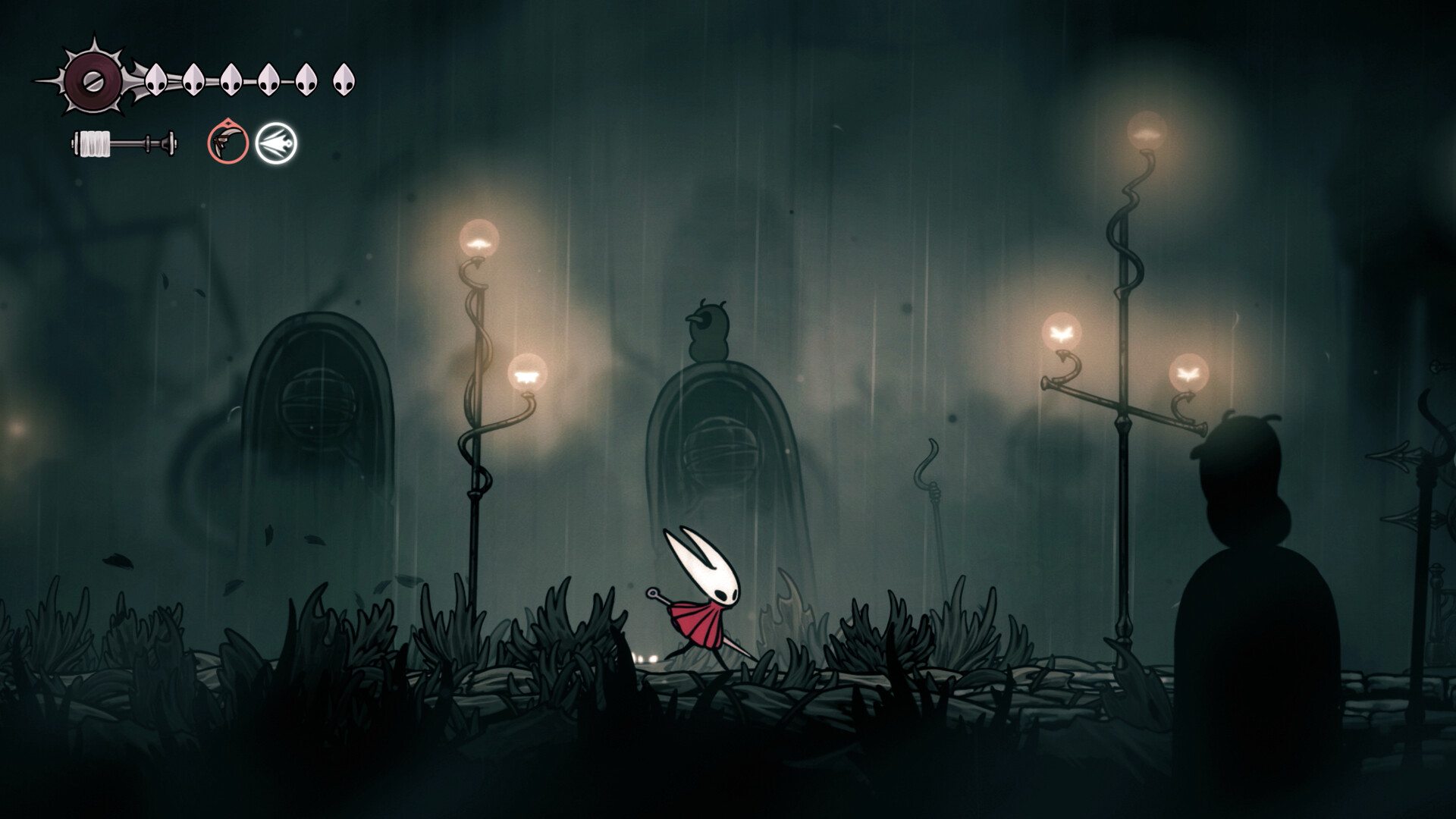
The contrast with Hollow Knight is intentional and appropriate. Hallownest was silent and mourning. Pharloom is active and oppressive. The music reflects this: where the original soundtrack often conveyed absence and loss, Silksong's score conveys presence — the weight of ritual, the sound of a system in operation. It is ceremonial music that over time reveals the ceremony to be a mechanism of control.
Boss music maintains the quality standard established by the original. Each major encounter has a distinct score that reflects the boss's character, and the final boss theme — which builds through three phases — is arguably the finest piece of music in either game. The decision to score the Weavers fight with something almost melancholic, given what you learn about them before the fight, is a compositional choice that rewards players who are listening while fighting.
What Critics Said
“"Silksong is one of the finest action-platformers ever made. The wait was long, but this is exactly what it needed to be." — IGN, 9.5/10
“"Team Cherry has done the seemingly impossible: delivered a sequel that doesn't merely live up to the original but expands what the genre can accomplish." — PC Gamer, 94/100
Metacritic: 92 | Steam Rating: 96% Overwhelmingly Positive
Community Reception
The community verdict on "was it worth the wait" resolved fairly quickly in the affirmative, but the nuances of that reception are worth examining. Silksong did not arrive to unanimous "masterpiece" declarations — the response was more specific than that, and more interesting.
The direct comparison to Hollow Knight produced a consistent pattern: players who approached Silksong expecting a bigger Hollow Knight were sometimes initially disoriented by how different it felt. Hornet's aggressive combat rhythm, Pharloom's vertical structure, the Pin system's categorized approach to build customization — these differences were real and noticeable to players arriving with strong expectations built from hundreds of hours in the original. By the midpoint of the game, the consensus had almost universally shifted: Silksong was different, but different by design, and those design differences added up to something with its own distinct excellence.
Boss design was the most consistently praised element. Several Pharloom guardians appeared immediately in community discussions of the best boss fights in metroidvania history — not just in the context of Silksong, but as absolute exemplars of the form. The Weavers fight in particular achieved near-unanimous praise for its multi-phase design, emotional complexity, and the way it used the combat vocabulary it had taught earlier in the fight.
The primary divisive element was pacing in the mid-game: some players found the transition between the temple districts and the outer reaches less smooth than the rest of the game, with a gap in encounter density that felt slightly uneven compared to Hollow Knight's consistently tight pacing. This was a minority position but a consistent one.
The broader question — whether the game had justified six years of development — was answered with a question back: what would "justification" have looked like? Silksong is a complete, polished, deeply considered game with world-class level design, boss design, and music. The wait was long because Team Cherry built something ambitious. The ambition is visible in the result.
“"Waited six years for this. Worth it. It doesn't surpass the original — but it doesn't need to. This is a completely different game." — r/HollowKnight top comment
“"Hornet's combat rhythm is everything. Knight was defensive and methodical. Hornet is aggressive and rhythmic. One change, completely different feel." — Steam review (Recommended, 3.2k helpful)
“"I was genuinely worried Team Cherry couldn't follow up. They did. The trust was earned." — r/Games
Tips for New Players
Embrace aggression from the start. Hornet's recovery system penalizes passive play and rewards offensive pressure. If you find yourself getting hit repeatedly while trying to play defensively — pulling back, waiting for safe openings, treating it like Hollow Knight — try playing more aggressively instead. It often works better and is always more consistent with how the game wants you to play.
Practice Silk Traps in low-stakes encounters. Silk Traps are Silksong's most powerful tool and its most technically demanding one. Use them against regular enemies throughout the game to build muscle memory for placement and timing before you need those skills in boss fights. Players who arrive at major bosses without Silk Trap fluency are playing with a significant handicap.
Don't neglect Movement Pins. It's tempting to prioritize Combat and Tool Pins — the offensive appeal is obvious. But Movement Pins translate directly to combat effectiveness through positioning, and several of them provide access to optional zones that contain important upgrades. A balanced starting Pin selection across all three categories outperforms heavy specialization in the early game.
Talk to every NPC multiple times. Team Cherry's tradition of implying entire societies through minimal NPC dialogue continues in Silksong, and the rewards for thorough NPC engagement include both narrative context and occasional gameplay hints. Some NPCs have dialogue that changes after major story events. All of them are worth the time.
Search walls thoroughly and often. Silksong contains more hidden routes and optional zones than Hollow Knight, and many of them have no obvious visual hint. The game expects players to probe suspicious walls, explore dead ends, and return to previously cleared areas with new abilities. Map completion in the conventional sense significantly understates how much Pharloom contains.
Don't rush the New Game+ content. Silksong's post-credits content is substantial — additional optional bosses and a layer of story resolution — and it is designed for players who have fully developed their Pin setups and skill level. Attempting this content immediately after the credits with the same setup you used to finish the base game is a route to frustration. Take time to consolidate.
Verdict
Hollow Knight: Silksong is among the finest metroidvania games ever made. It is not a bigger Hollow Knight — it is something different: faster, more aggressive, more vertically structured, and tonally distinct in ways that serve its story and its protagonist's character. The Pin system offers a thoughtful evolution of the Charm formula. The bosses rank among the best in the genre. Christopher Larkin's score is some of his best work.
The six-year wait was long. The result justifies it. If you played Hollow Knight, Silksong is not optional. If you haven't, play Hollow Knight first — Silksong will carry considerably more meaning. Both games are available at prices that make the question of whether they're worth it almost laughable.