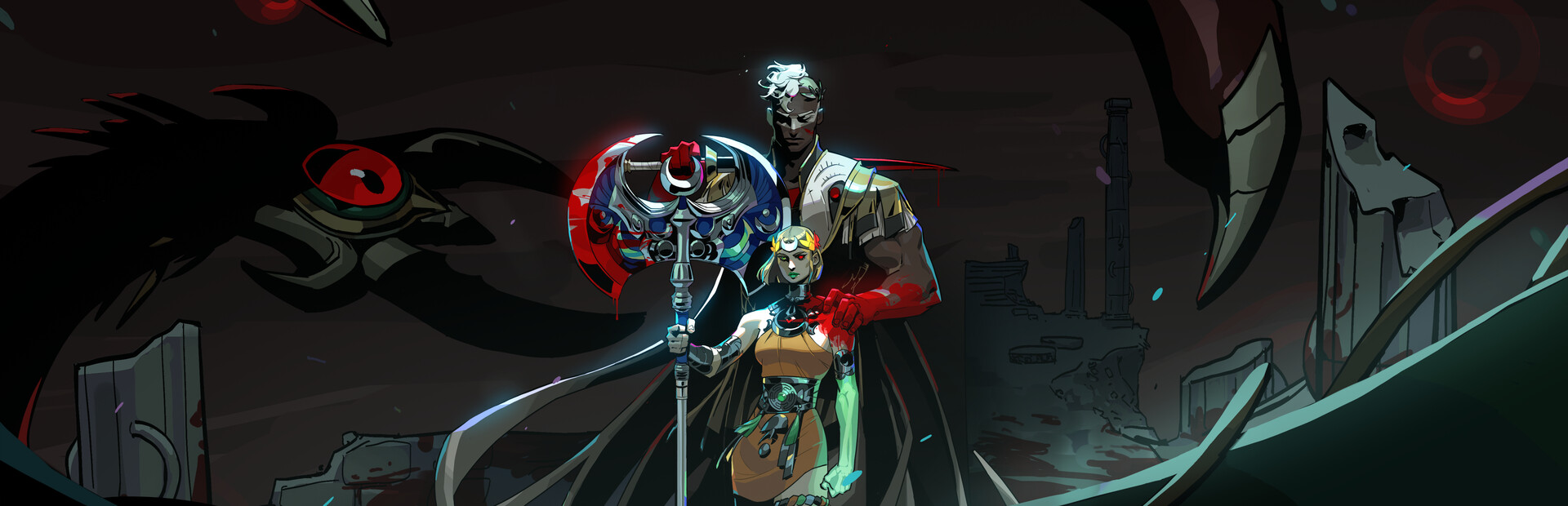
The Sequel That Earns Its Existence
Hades II had an enormous target on its back before a single line of production code was committed.
The original Hades didn't just win Game of the Year accolades — it fundamentally redefined what a roguelike could be, weaving a fully voiced, emotionally resonant narrative into a genre previously associated with cold mechanical repetition. Every run in the first game felt like progress: story beats unlocked, relationships deepened, Zagreus's relationship with his father Hades evolved through dozens of attempted escapes. It was a design achievement that felt singular and complete.
Following that up was, by any reasonable measure, one of the hardest sequel challenges in modern gaming. Supergiant couldn't simply make more Hades and call it a day — the first game ended. The story concluded. The mechanical vocabulary had been fully expressed. A direct continuation risked being redundant at best, a shadow of its predecessor at worst.
Supergiant delivered anyway — and did something far more ambitious than a safe iteration.
Hades II v1.0 is not a cautious sequel. It expands outward in every direction: new protagonist Melinoë (daughter of Hades, hidden sister to Zagreus), an entirely different underworld to navigate, six original weapons with no overlap from the first game, a new resource system, a completely reimagined progression layer, and a narrative that stands fully independent of the first game while rewarding those who know its predecessor intimately.
The result is a game that doesn't just justify its own existence — it makes a compelling argument that the original, great as it was, was merely the opening act.
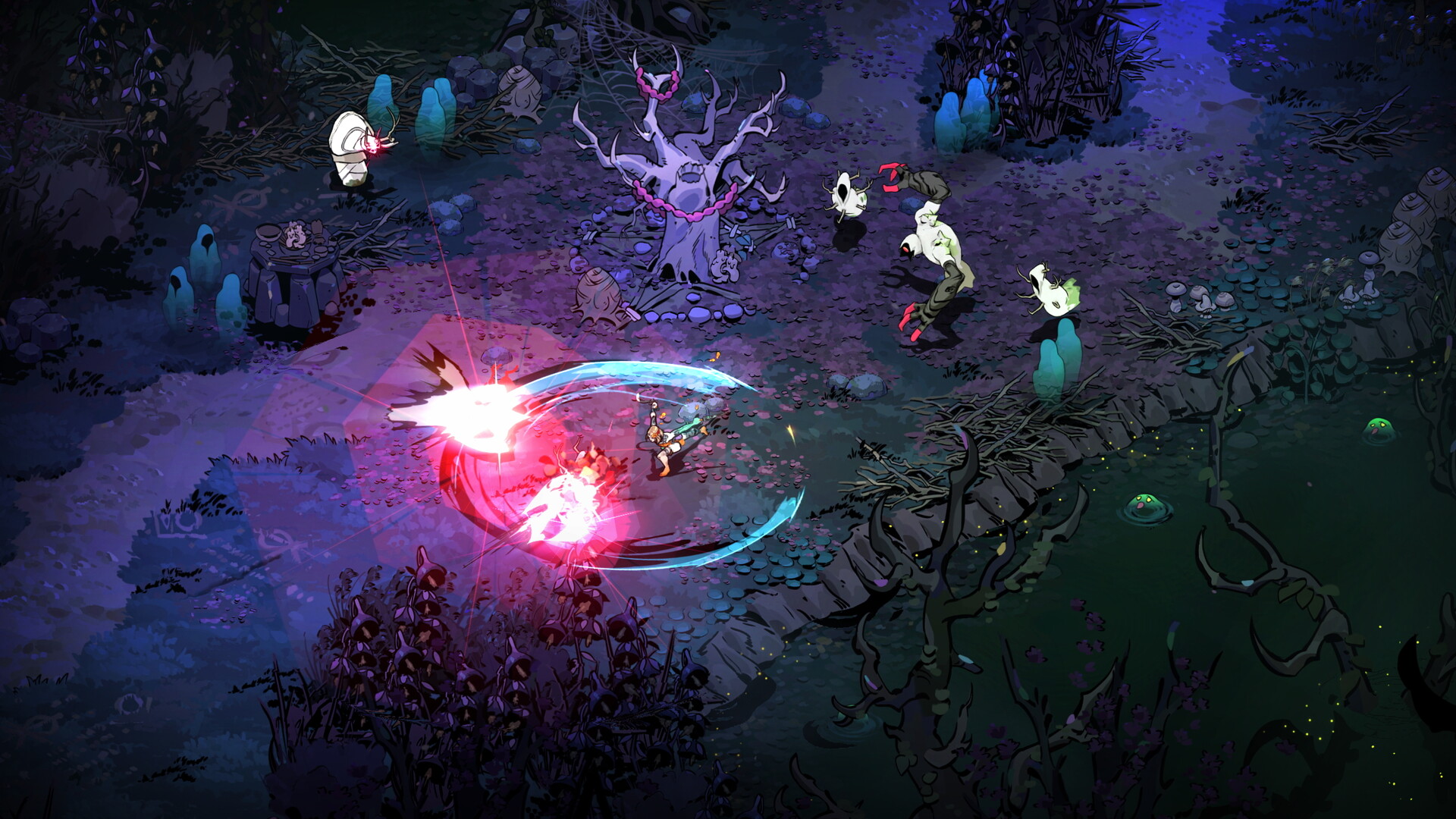
Meet Melinoë: A Different Kind of Protagonist
Zagreus was searching.
He didn't know who he was — a son of Hades who didn't belong, a god who couldn't die but couldn't live, reaching toward a mother he barely remembered and a freedom he couldn't fully articulate. His journey was defined by that uncertainty, and his relationships with the underworld's denizens were colored by mutual curiosity and cautious warmth.
Melinoë begins with conviction.
She is the hidden daughter of Hades and Persephone — hidden so thoroughly that even her parents don't know she exists. Raised by Hecate in the safety of a secluded training ground, she has spent her existence preparing for a single purpose: defeat Chronos, the Titan of Time, who has seized Olympus and imprisoned Zagreus himself. There is no searching, no uncertainty about who she is or what she must do. She is a soldier raised for a war she didn't choose, and her emotional arc isn't about finding purpose — it's about what happens to a person built entirely around a singular goal when the path to that goal keeps breaking.
This shift in protagonist philosophy gives Hades II a fundamentally different emotional register. Zagreus's story was warm and searching. Melinoë's is colder, more driven, and more complex in ways that only become visible over dozens of runs. The companions around her reflect this: where Zagreus's cast was large and immediately welcoming, Melinoë's circle is smaller and harder to crack.
Mechanically, this character difference is expressed through the Magick resource. Melinoë's magical affinity means every build decision involves managing both your health pool and your Magick — the fuel for her special attacks and cast abilities. Play aggressively and you'll burn Magick fast; play conservatively and you'll find yourself unable to use your most powerful tools when you need them most. This tension between aggression and economy sits at the heart of every run.
The Six Weapons: An Entirely New Arsenal
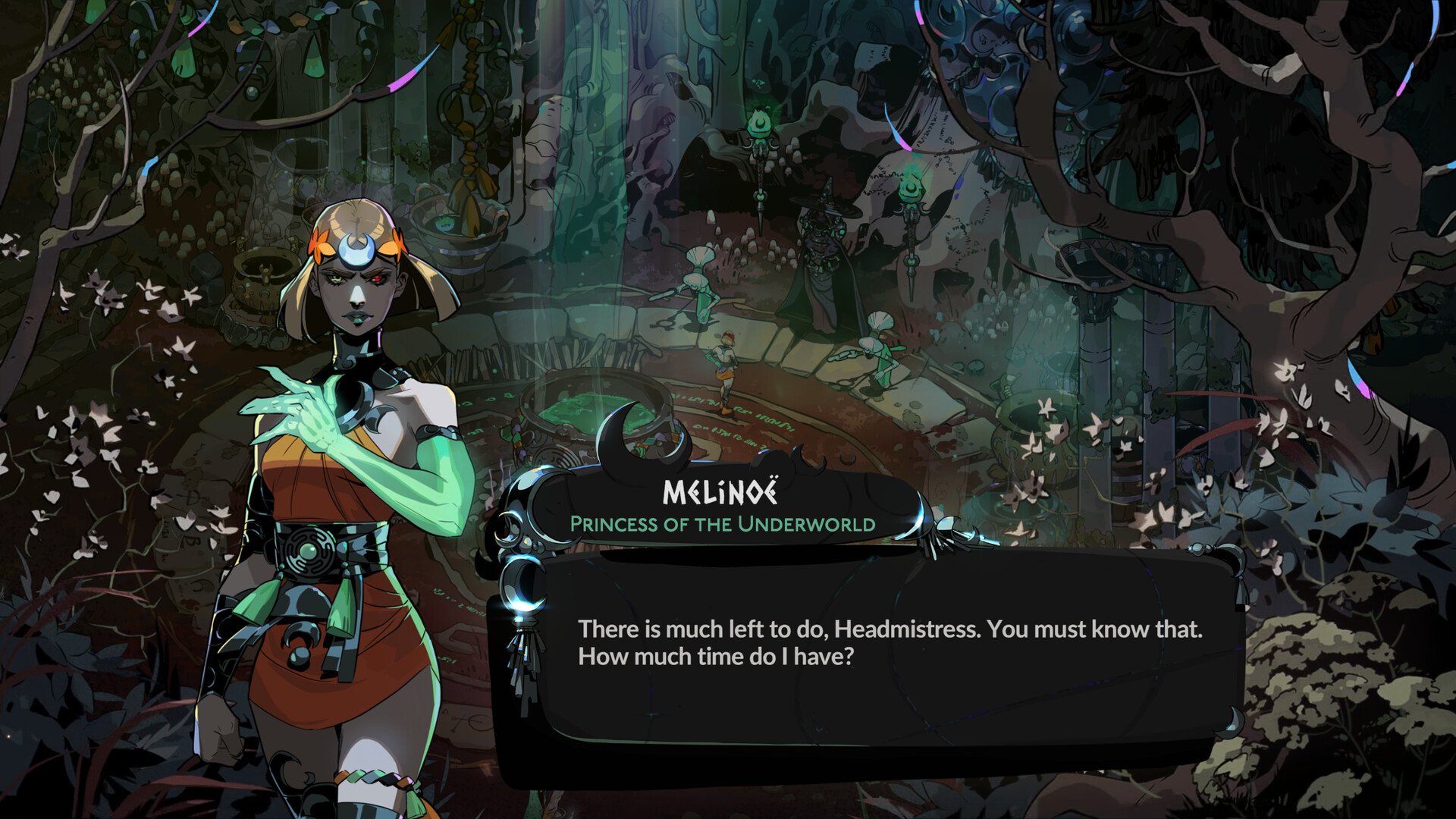
Hades II makes no concessions to the first game's weapon roster. There is no Stygian Blade, no Coronacht, no Twin Fists of Malphon. Melinoë's six weapons are original instruments with their own mechanics, their own Aspect variants, and their own skill ceilings. Here is a detailed breakdown:
Witch's Staff
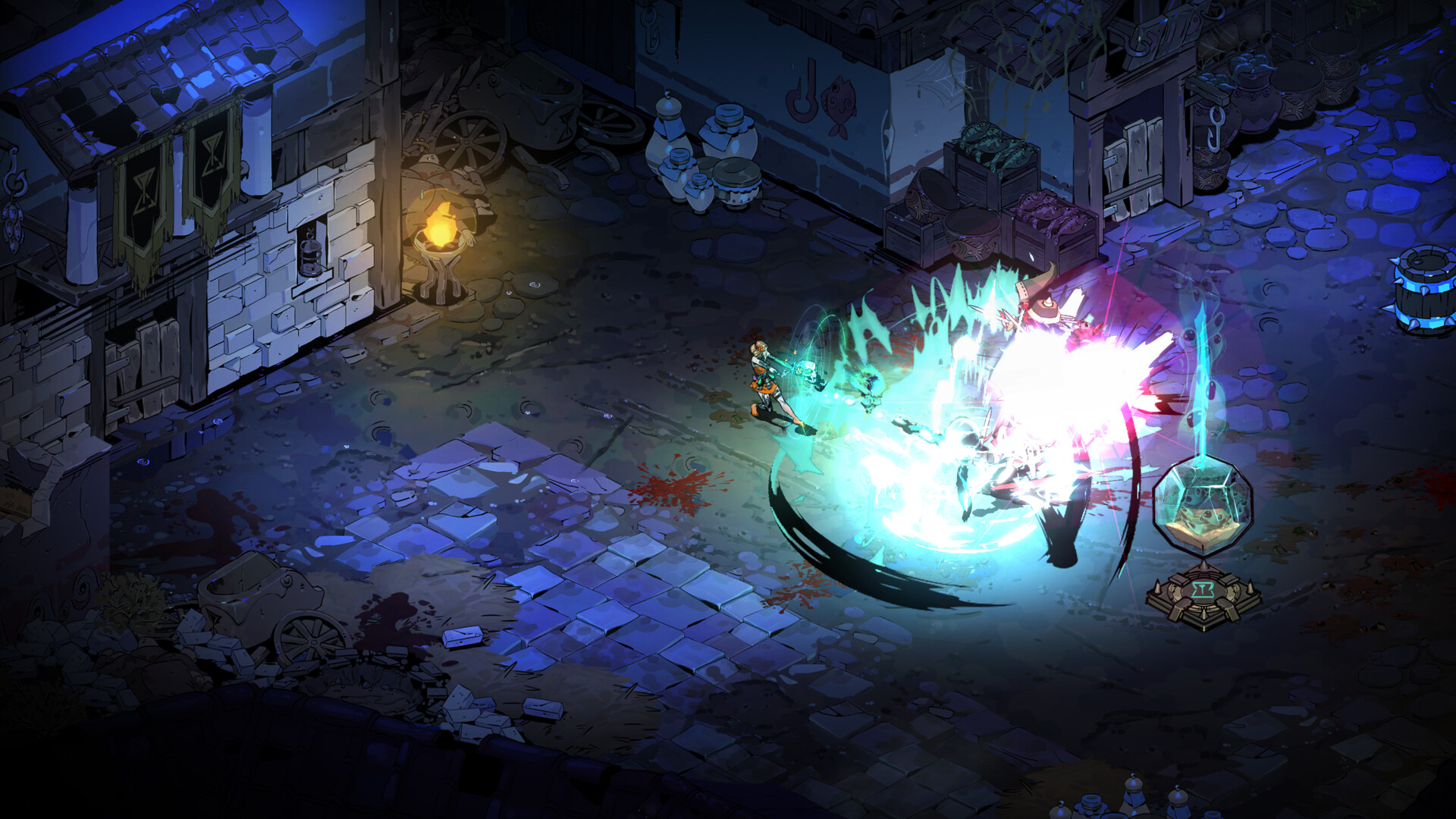
The introductory weapon and arguably the most versatile in the roster. The Staff has excellent range, a charged-attack mechanic that fires a homing bolt of magical energy, and forgiving hitboxes that make it effective at most skill levels. It rewards players who understand spacing but doesn't punish those who don't as harshly as some other options. Most players will spend their first five to ten runs here, and it remains competitive deep into late-game builds centered around Magick consumption. Each Aspect changes the staff's identity significantly — some emphasize the charged shot, others transform it into a spinning melee weapon with different engagement ranges entirely.
Argent Skull
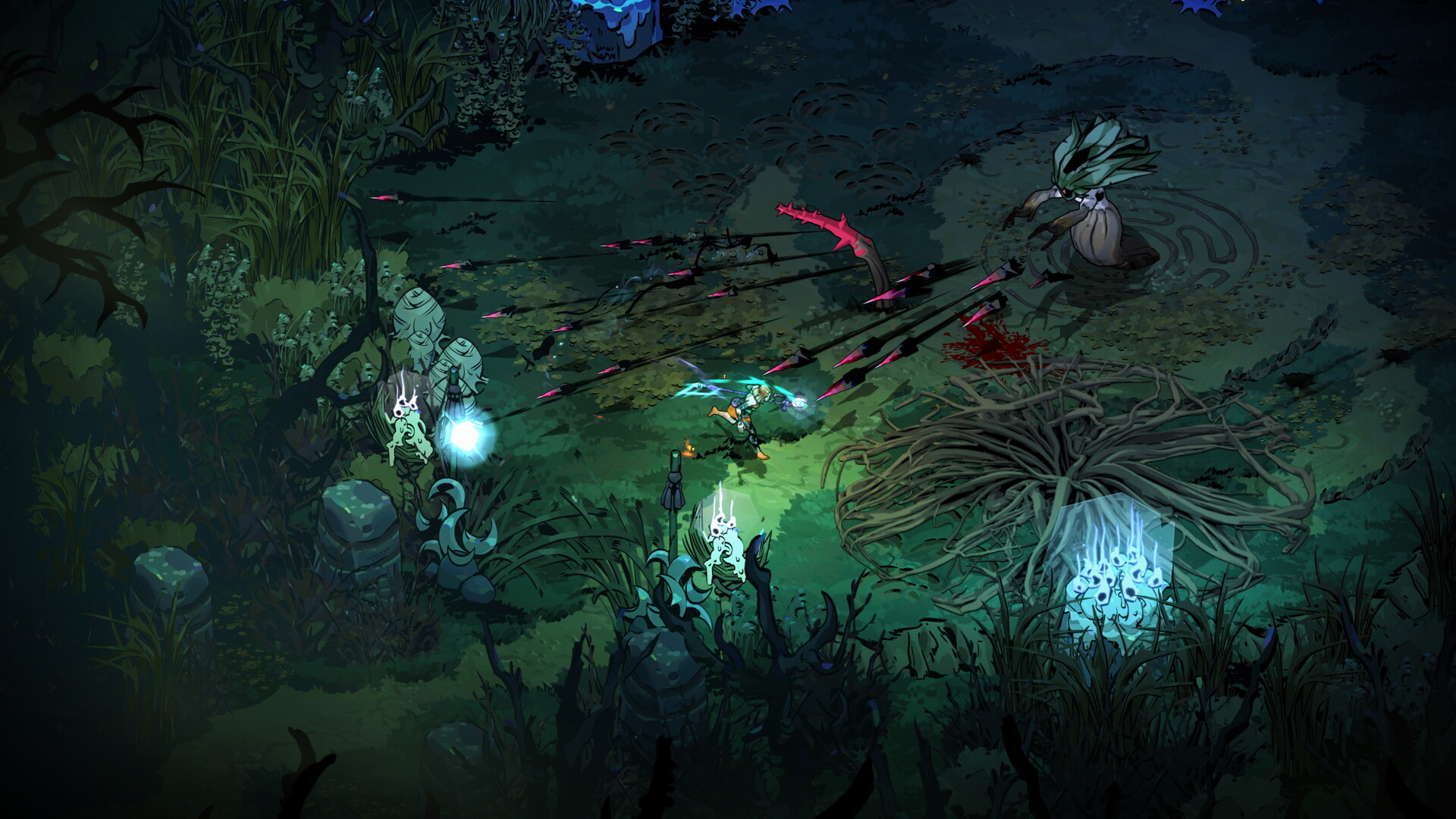
A throwing weapon that bounces off enemies and surfaces, with a charged explosion mechanic that detonates after a delay. The Skull has the steepest learning curve of the starting weapons — its bouncing trajectory is difficult to read in chaotic encounters, and the charge timing for maximum explosion damage requires practice. But players who invest the time discover a weapon with exceptional crowd-control potential and screen-clearing capability. Its Aspects push it toward either pure bouncing chaos or controlled detonation setups that pair well with specific boons.
Umbral Flames
Dual fire weapons that excel at area-of-effect damage. The Flames have a rhythm-based mechanic: alternating between the two torches builds heat stacks, and managing that heat optimally is what separates good Flames runs from exceptional ones. The AoE coverage is unmatched in the roster, making Flames devastating in tight corridors but slightly awkward in large open rooms. It pairs particularly well with boons that spread or amplify status effects.
Sister Blades
Ultra-fast daggers built for positioning. The Blades have the shortest reach in the roster and the lowest single-hit damage, but their attack speed is extreme — with the right boons, they generate hits faster than almost anything else in the game. The positioning requirement is non-negotiable: you need to be inside an enemy's attack range to deal damage, which makes the Sister Blades the highest mechanical-skill-ceiling weapon in the game. But when a Blades run clicks — when you have dash-strike damage, a boon that triggers on rapid successive hits, and enough dodge ability to stay in melee range — few things in Hades II feel as satisfying.
Moonstone Axe
The heavy option. Slow, powerful, designed for single large targets. The Axe has a charged overhead strike that deals the highest single-hit damage in the game, and landing it on a boss at the right moment produces some of the most cathartic moments the game offers. It struggles against swarms of small enemies in a way the other weapons don't, and its slow recovery between attacks punishes mistimed swings badly. Players who prefer deliberate, powerful gameplay over speed will find the Axe their home weapon.
Twin Fists
Close-range weapons with a parry mechanic that sets them apart from everything else in the game. A well-timed parry negates incoming damage and powers up the next attack. This is the weapon that rewards reading enemy attack patterns most explicitly — it's the only weapon in the roster where defensive positioning is just as important as offensive pressure. Players who have extensively played games with parry mechanics will adapt fastest. The payoff when a parry connects — the enemy's attack absorbed, the counter-strike landing — is among the most satisfying mechanical moments in Hades II.
Each of the six weapons has multiple Aspects unlocked through gameplay progression, and many of the advanced Aspects fundamentally change how the weapon plays. The Moonstone Axe's third Aspect, for example, converts it into a short-range spinning weapon — the opposite of everything the base weapon does. The weapon system alone contains more build depth than many complete games.
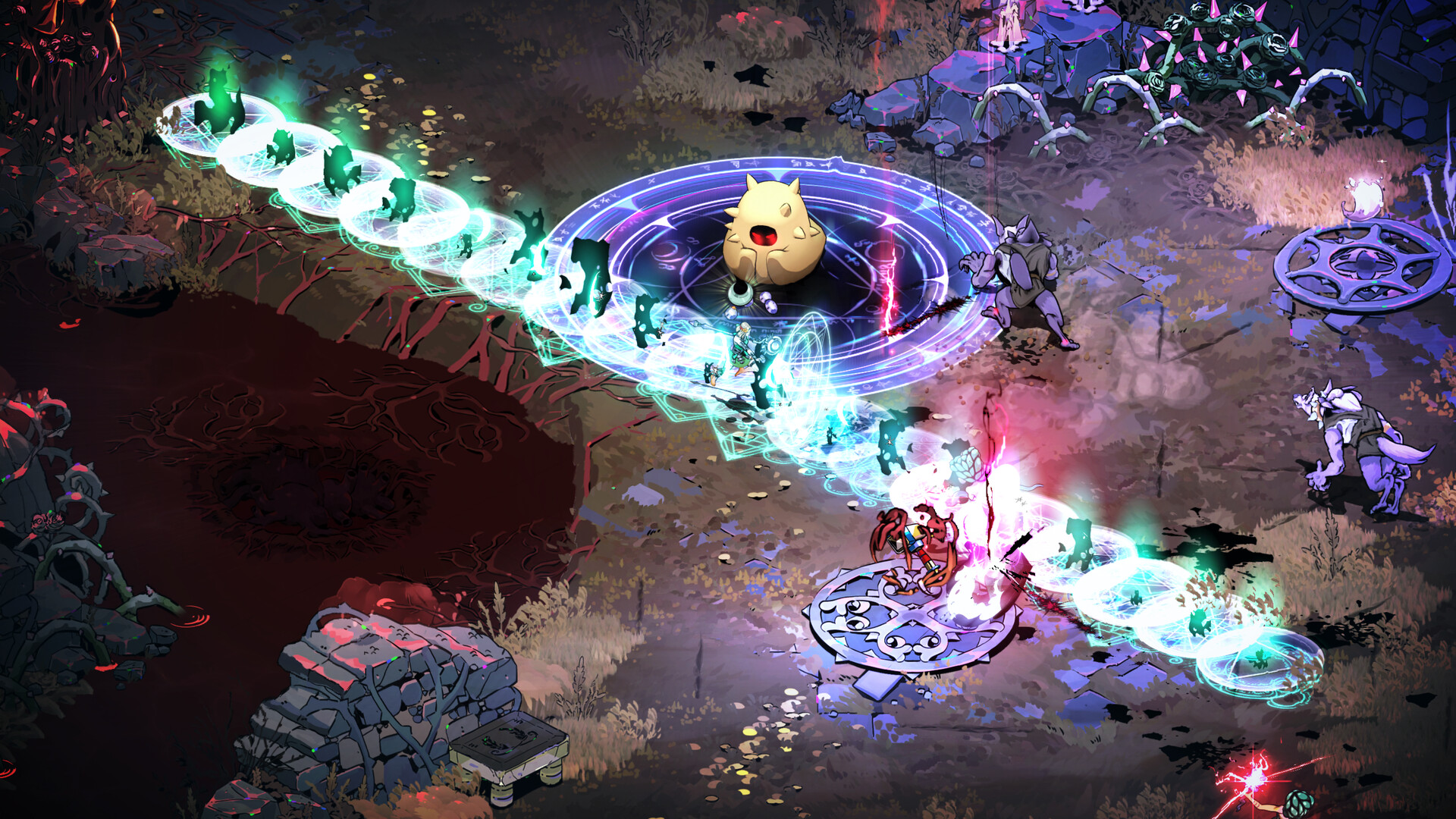
The Arcana Card System: A Deeper Progression Layer
The Mirror of Night from the first game was elegant: spend Darkness, permanently upgrade stats and passive abilities, unlock a second option for each slot to adapt to your playstyle. It was clear, navigable, and deeply satisfying.
The Arcana Card system is more ambitious in every dimension.
Twenty-two cards based on the Major Arcana of the tarot form Melinoë's permanent progression layer. Each card has meaningful effects — some provide direct stat boosts, others create conditional bonuses that only activate in specific circumstances, and several fundamentally alter the rules of runs in ways that can define an entire build direction. The Moon card, for example, changes how Magick regenerates during combat. The Strength card creates bonuses tied to your health state. The Tower card provides aggressive offensive bonuses at the cost of survivability.
The critical constraint: you have a limited number of Arcana Slots. You cannot activate all twenty-two cards simultaneously. You must choose which cards to run, and that choice is itself a form of build crafting that happens before you even select a boon. A run where you're building toward a Magick-heavy cast-focused build requires different Arcana selections than a run where you're prioritizing raw melee damage.
Unlocking cards requires Ashes — a resource gathered during runs. Upgrading them to their second tier costs Psyche — a rarer resource that requires more intentional farming. The resource management layer adds another dimension to the meta-progression: you're not just unlocking everything linearly, you're making choices about where to invest first based on your preferred playstyle.
The end result is a progression system with roughly three times the build space of the original Mirror of Night. Players who engage with the Arcana system deeply — who understand which cards synergize, which cards create conditional bonuses that pair with specific boons, which second-tier upgrades are essential for certain weapon builds — will find themselves still discovering new combinations after hundreds of hours.
The Bosses
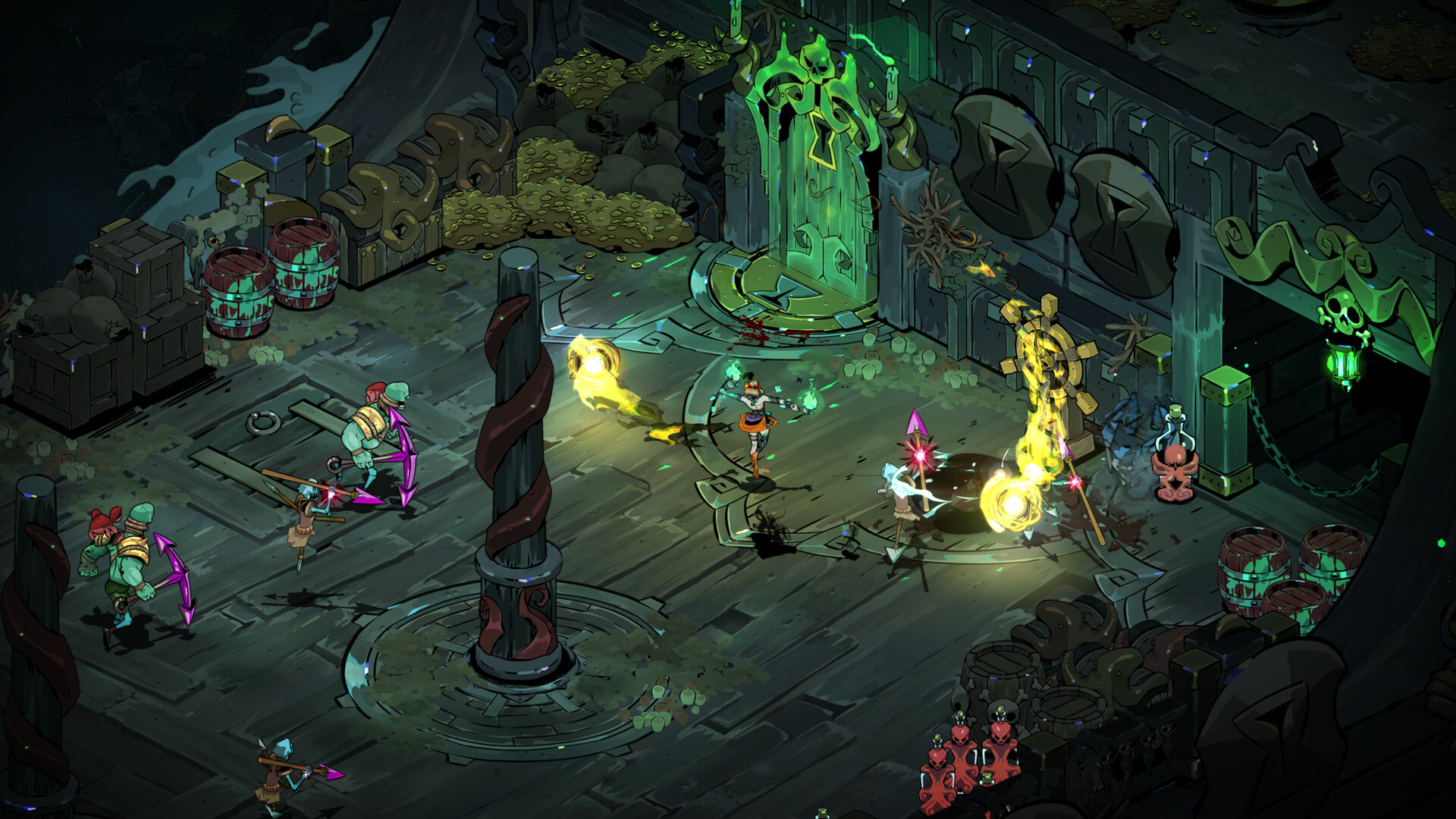
Hades II's boss roster is one of its strongest elements, and three encounters in particular stand out:
Scylla and the Sirens serve as a mid-game guardian encounter that ranks among the most creative boss designs in the genre. Scylla and her bandmates each have distinct attack patterns, the arena changes during the fight, and the encounter has multiple phases that demand you adapt on the fly. The band-themed aesthetic — the Sirens as literal rock band members with amplifiers and mic stands serving as environmental hazards — is visually distinct from anything else in Hades II's underworld aesthetic, and the music during the fight reflects this with one of the soundtrack's best tracks. Players and critics alike have called this the best single boss encounter in the game.
Hecate, Melinoë's mentor and guardian, becomes a recurring trial boss that you must defeat repeatedly across different phases of the game. This is Hades II's answer to one of the original's emotional core elements — the Meg fights that opened every run. Like Meg, Hecate is not an enemy; she is testing you, pushing you to grow, and the emotional texture of her dialogue during and after these encounters develops across many runs. The dynamic between mentor who clearly wants you to succeed and the trials she puts you through anyway creates real character work.
Chronos, the Titan of Time, is the final boss. He has seized Olympus, captured Zagreus, and represents the oldest and most powerful of the ancient divine generation. The Chronos fight is multi-phase, extensively telegraphed, and involves time-manipulation mechanics that require you to read and respond to attacks on a fundamentally different timing than every other encounter in the game. On first encounter he is overwhelming. After a dozen encounters he becomes a satisfying test of everything the game has taught you. The story revelations during the Chronos fight reward players who have paid close attention to the narrative threads across dozens of runs.
Story: A Mythology Worth Inhabiting
Melinoë's narrative premise — hidden daughter of Hades and Persephone, even from her own parents — is a bold starting point that Supergiant handles with characteristic care. The emotional weight of that premise accumulates over runs: characters who know pieces of the truth, characters who are searching for the same answers Melinoë is, and a slow-burn revelation structure that rewards players who talk to everyone after every run.
The connection to Hades 1 is meaningful without being required. Players new to the series will have a complete, satisfying story. Players who remember the first game's ending will encounter details that carry additional resonance — Zagreus's imprisonment by Chronos, the references to what Hades and Persephone's relationship eventually became, the way Melinoë's existence changes the meaning of events from the first game. These are Easter eggs in the truest sense: hidden details that enrich rather than gatekeep.
The supporting cast around Melinoë is smaller than Zagreus's but equally well-realized:
Hecate serves as both mentor and trial-giver. Her warmth toward Melinoë is real, and watching their dynamic develop across many runs — from student and teacher to something closer to equals — is one of the game's great slow-burn rewards.
Nemesis is a cynic who trusts no one, including Melinoë. Her arc toward loyalty is gradual and earned. She delivers some of the game's sharpest dialogue, and her eventual investment in Melinoë's success feels genuinely meaningful because it was so hard-won.
Moros, the god of doom, brings dry humor to a cast that could otherwise tip toward grimness. His observations about fate and inevitability provide tonal relief without undercutting the story's emotional weight.
Echo, a nymph robbed of her voice, communicates entirely through gestures and expressions. Team Cherry's decision to create a fully characterized companion without any spoken dialogue is an impressive design achievement. Echo's reactions tell you more about the world than many characters' words.
Dora, a friendly ghost haunting the camp, provides domestic warmth. She and Melinoë's interactions are small and gentle, and they matter.
Music: Darren Korb Does It Again
Darren Korb's soundtracks are rare things: music that is both deeply atmospheric and technically excellent. The original Hades featured what Korb called "Mediterranean underworld" — ancient instrumentation mixed with modern electronic production in a way that felt genuinely original. His work on Hades II takes the same layered approach and applies it to two distinct sonic worlds.
The underworld retains the dark electronic textures that defined the original. There is a continuity of sonic identity that makes the transition feel natural for returning players. But the surface world — Olympus and the areas above — introduces warmer, more mythic tones. Strings become more prominent, the electronic elements recede, and the overall feeling shifts from enclosed darkness to something more expansive and ancient. The contrast reinforces the narrative: the underworld is Melinoë's home, familiar despite its danger; the surface is foreign territory she is fighting her way toward.
Boss music maintains Korb's signature quality of immediacy. You are already fully engaged before you consciously register the shift in the score. The Scylla and the Sirens track in particular uses the band-themed encounter to create something genuinely novel in Korb's catalog — music that is diegetically justified by the boss's design while still functioning perfectly as a combat score.
What Critics Said
“"Hades II is a masterwork of game design. Supergiant understood exactly what made the first game special and built something that honors it completely while charting entirely new territory." — IGN, 10/10
“"The bar was set impossibly high. They cleared it. Melinoë stands fully alongside Zagreus as a protagonist worth spending hundreds of hours with." — Eurogamer, Essential
“"More weapons, more boons, more narrative, more heart. Hades II is the rare sequel that justifies its own existence on every level." — GameSpot, 9/10
Metacritic: 95 | Steam Rating: 97% Overwhelmingly Positive
Community Reception
The player response to Hades II since its full v1.0 launch has matched the critical reception.
The Arcana Card system was the most discussed element in the early weeks after launch — players who initially found it overwhelming reported a consistent pattern: after 50 to 100 hours, the system revealed itself as significantly deeper than the Mirror of Night, and the initial friction was worth the investment. Community guides for Arcana synergies proliferated almost immediately, with experienced players identifying card combinations that create powerful build foundations before boons are factored in.
The Scylla and the Sirens boss fight became an immediate community favorite, frequently cited in "best boss fights in gaming" discussions on r/gaming and r/HadesTheGame in the weeks following launch. The multi-phase design, the environmental storytelling, and the music all converged into something that reviewers and players considered among the best boss design in the genre.
Melinoë's reception was a point of genuine discussion: some players missed Zagreus immediately. By the 30-40 hour mark, the consensus in community spaces had largely resolved — Melinoë's more complex emotional arc, the way her conviction masks deeper vulnerabilities that slowly surface, won over players who initially found her less immediately approachable than her brother.
The broader praise was directed at Supergiant's sequel craft: the studio made a genuinely different game while maintaining complete tonal and mechanical continuity with the original.
Tips for New Players
Manage Magick carefully. Unlike health, Magick doesn't regenerate naturally between encounters. Boons and Arcana cards are your primary recovery tools. Build with Magick costs in mind — a build that looks powerful on paper can fall apart if it burns through your Magick in the first two rooms and leaves you using basic attacks for the rest of the run.
Unlock Arcana cards before upgrading them. The second-tier upgrades (costing Psyche) are powerful, but unlocking a broader selection of cards first gives you significantly more flexibility. A wide shallow Arcana selection beats a narrow deep one during your first 20 runs.
Try every weapon at least three times. First impressions in Hades II are misleading. The Sister Blades feel weak on first contact because their damage per hit is low — the design only reveals itself once you have boons that reward rapid hitting. The Moonstone Axe feels impossibly slow until you understand its charged attack timing. Give each weapon enough runs to understand its native rhythm.
Talk to companions after every single run. Dialogue in Hades II refreshes frequently and advances character arcs in ways that are easy to miss if you skip conversations. The Nemesis arc in particular — getting her from cynical observer to genuine ally — requires consistent engagement over many runs.
Don't ignore the gathering activities. The surface world includes gathering mechanics (fishing, foraging, excavation) that provide rare resources, including Psyche for Arcana upgrades. Players who skip these activities find their Arcana progression significantly slower.
Don't rush toward Chronos. The game rewards runs where you take time to explore optional rooms, take on optional encounters, and farm resources. A run that takes longer but fills your Arcana Card slots and resource pools leaves you better positioned than a fast run through the critical path.
Verdict
Hades II is the best roguelike currently available. It is a stronger argument for the genre than its already-exceptional predecessor, and a rare example of a sequel that justifies its existence not by being more of the same but by finding something genuinely new to say about its world, its characters, and its mechanics.
If you played the original Hades, this is not optional — it is essential. If you haven't played either game, both work as starting points. Starting with Hades II means you'll almost certainly want to go back and play the first; starting with Hades I means Hades II will hit with additional emotional resonance. Either path leads somewhere worth going.
At $29.99, this is the easiest recommendation in gaming.
PC System Requirements (Minimum)
- CPU: Intel Core i5-4670K / AMD Ryzen 3 2200G
- RAM: 8 GB
- GPU: NVIDIA GTX 1060 / AMD RX 580
- Storage: 15 GB