This video is no longer available (removed or made private by the uploader).
May 7, 2024, will be remembered as one of the darkest days in recent gaming history. Microsoft announced the closure of four game development studios in a single afternoon: Arkane Austin, Tango Gameworks, Alpha Dog Games, and Roundhouse Studios. Hundreds of developers lost their jobs. Games in development were cancelled. And the gaming community was left grappling with a brutal irony: Tango Gameworks, the studio being closed, had released Hi-Fi Rush just 16 months earlier to near-universal acclaim — only to be shut down anyway.
Background: The Bethesda Acquisition and Its Promise
When Microsoft acquired ZeniMax Media (parent company of Bethesda Softworks) for $7.5 billion in 2021, it was framed as a massive strengthening of the Xbox first-party library. ZeniMax's portfolio included some of the most respected studios in the industry:
- ▶id Software — creators of Doom and Quake
- ▶Bethesda Game Studios — creators of Fallout and Elder Scrolls
- ▶Arkane Studios — creators of Dishonored, Prey, and Deathloop (with two locations: Austin and Lyon)
- ▶Tango Gameworks — founded by Resident Evil creator Shinji Mikami
- ▶MachineGames — creators of the modern Wolfenstein series
- ▶Roundhouse Studios — founded by former Human Head Studios veterans
The acquisition promised to give Xbox a deep bench of creative talent capable of producing the kind of quality single-player experiences that had been a relative weakness for the platform.
Redfall: The Catastrophic Failure
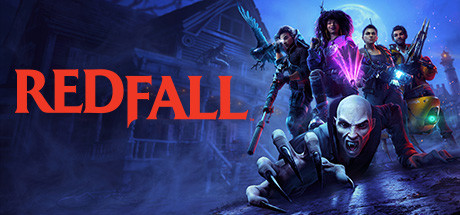
The story of the May 2024 closures begins with Redfall. Developed by Arkane Austin — the Texas-based branch of the storied French studio — Redfall launched on May 2, 2023, to catastrophic reviews. A co-operative open-world shooter set in a vampire-infested town, Redfall received criticism on virtually every axis: broken performance, shallow design, poor AI, and a fundamental mismatch between Arkane's strengths as an immersive sim studio and the live-service co-op shooter it had been directed to make.
Phil Spencer personally apologized for the game's quality. Xbox promised major patches. The game entered Game Pass at launch, masking the scale of its commercial failure, but player numbers remained persistently low. Redfall became a symbol of Microsoft's Game Pass strategy problem: games built not to sell but to fill a subscription service, at the expense of creative integrity and quality.
| Redfall vs. Expectations | Detail |
|---|---|
| Metacritic score at launch | 55/100 (PC) |
| Player peak on Steam | ~6,000 concurrent (extremely low for Xbox flagship) |
| Development time | ~4 years |
| Genre shift from Arkane's strengths | Immersive sim → co-op open world shooter |
| Publisher response | Apology from Phil Spencer, promised patches |
Tango Gameworks: The Cruelest Cut
If Arkane Austin's closure could be explained by Redfall's failure — however harshly — the closure of Tango Gameworks defied any business logic the community could identify.
Tango Gameworks had released Hi-Fi Rush on January 25, 2023, as a surprise Xbox Game Pass launch. The rhythm action game, created by a small team led by John Johanas, became an instant critical favorite. It scored 87 on Metacritic, sold over 3 million copies across all platforms, and was widely cited as evidence that Microsoft's studio acquisitions were producing genuine creative quality.
Hi-Fi Rush won multiple awards. It was celebrated as the kind of unexpected, creative risk-taking that players wanted to see more of. Tango was working on a follow-up. The studio had demonstrated exactly what Xbox's acquisition strategy was supposed to produce.
And then Microsoft closed it anyway.
The announcement left the gaming community speechless. If Hi-Fi Rush — a critically acclaimed, commercially successful, award-winning game — couldn't protect its studio, what could? The closures sent a chilling message about the arbitrary nature of corporate decision-making regardless of artistic or commercial achievement.
Community Reactions
“"Microsoft bought studios to get exclusives, made them publish games to fill Game Pass, then closed them when the quarterly numbers didn't satisfy shareholders. This was never about games. It was about content for a subscription service."
— u/IndustryObserver on r/games (8,900 upvotes)
“"Tango just made one of the best games of 2023. They won awards. They were making a sequel. And Microsoft closed them. I genuinely don't understand what the message is here."
— @GameDevReacts on Twitter/X
“"Hi-Fi Rush sold 3 million copies. The studio gets shut down. If that's the standard, no studio under Xbox is safe. The acquisition era is over."
— Streamer Cohh Carnage, live reaction on Twitch
The Other Closures
While Arkane Austin and Tango Gameworks dominated the conversation, two other closures occurred simultaneously:
Alpha Dog Games: A small mobile studio based in Halifax, Canada, known for casual mobile titles. Its closure attracted less attention but represented more jobs lost and more ongoing projects cancelled.
Roundhouse Studios: Founded in 2019 by former Human Head Studios staff, Roundhouse had been working on an unannounced project that was cancelled with the studio's closure. Roundhouse employees were reportedly offered the option to transfer to other ZeniMax studios.
The combined effect of all four closures was the elimination of hundreds of development positions across multiple games in various stages of production.
The Human Cost
The closure announcements came with minimal warning. Many developers at the affected studios learned about their studios' fates through the same gaming news outlets that broke the story to the public. Former Tango employees described feeling blindsided — a project was ongoing, no performance improvement plans had been issued, and creative leadership had been given no indication the studio was at risk.
In the days following the announcements, former staff at Tango, Arkane Austin, and the other studios began posting publicly about their experiences. The gaming industry's layoff tracker — already busy in 2024, which saw over 8,000 layoffs across the industry — grew substantially.
The Broader Context: Game Pass Economics
The closures brought into focus a structural tension in Microsoft's gaming strategy that had been building for years. Game Pass, Microsoft's subscription service, changed the economics of Xbox game development. When a game enters Game Pass at launch, it doesn't need to sell copies — it needs to justify its cost through subscriber retention and acquisition.
This model created pressure for continuous content output at quantity. It arguably incentivized safe, genre-conventional games that would attract broad audiences over creative risks that might win awards but serve smaller audiences. Redfall was — arguably — the product of this pressure: a studio forced to make a different kind of game than it knew how to make, in order to fill a content pipeline.
Tango's Hi-Fi Rush, paradoxically, may have been too successful as a model for what Game Pass games could be and not successful enough as a driver of subscription metrics. A game that players finished, loved, and moved on from may generate less subscriber retention value than a live-service game with ongoing engagement — even if the linear game is artistically superior.
Impact and Legacy
The May 2024 closures marked a symbolic endpoint for the optimism that accompanied Microsoft's studio acquisition era. The acquisitions — framed as a strategy to build the best game development portfolio in the industry — had produced Redfall (catastrophic), Redfall's studio closure, the closure of a studio that made one of the year's best games, and a broader cultural atmosphere of fear and uncertainty in the studios that remained.
Microsoft subsequently announced that Arkane Lyon — the French branch, separate from Arkane Austin — would remain open. But the closures had already sent an irreversible message to the industry about the gap between acquisition announcements and the long-term commitment to the studios acquired.
Bethesda's vice president of communications Pete Hines departed shortly after the announcements. Phil Spencer's public communications grew more measured. The era of high-profile acquisition announcements, met with gaming community celebration, had visibly ended.
The closure of Tango Gameworks — the studio behind the critically acclaimed and commercially successful Hi-Fi Rush — became a symbol of the disconnect between game quality and corporate survival under Microsoft's Game Pass-focused strategy. The event prompted widespread industry debate about the sustainability of subscription service economics for game development.