Editor's note: this article summarizes published reviews, store data and community reception. GamePeak did not run its own playtest, so no GamePeak score is given.
Steam Rating: Overwhelmingly Positive (600,000+ reviews) | Metacritic: 83/100 (PC)
Developer: Re-Logic | Release Date: May 16, 2011 | Steam Price: $9.99
“Terraria came out in 2011. At the time of writing, it has over 600,000 reviews on Steam at "Overwhelmingly Positive" — a rating maintained across a decade of free updates. Players describe it as "the best $10 I've ever spent on anything," "2,000 hours and still discovering new things," and "not 2D Minecraft — it's a completely different game that happens to also be 2D." Re-Logic has released no paid DLC in 13 years. The base game has grown by orders of magnitude through free patches. That alone tells you something about the people who made it.
What Is Terraria, Exactly?
This is genuinely hard to answer, and the difficulty is part of the game's charm. The Steam store page says "Action-adventure sandbox game." That's technically accurate and completely fails to communicate what playing Terraria is actually like.
Terraria was developed by a two-person team at Re-Logic and released in May 2011. The world generates procedurally: different biomes, layouts, and item placements every time. You spawn on the surface with a copper pickaxe and a copper short sword, and you figure out the rest.
What that rest turns out to be: mining for resources, crafting progressively better gear, building structures for NPCs to inhabit, exploring underground caves and biomes, hunting boss monsters in a specific order, and eventually entering Hardmode — a mid-game shift that floods the world with stronger enemies, new ores, and a roster of bosses that will absolutely kill you the first time you encounter them.
Call it a 2D action-adventure with sandbox elements, a progression RPG with crafting mechanics, a boss-rush game with a world to explore between fights. It's all of those things simultaneously and fully committed to each of them.
The World: A Vertical Adventure With No Map Ceiling
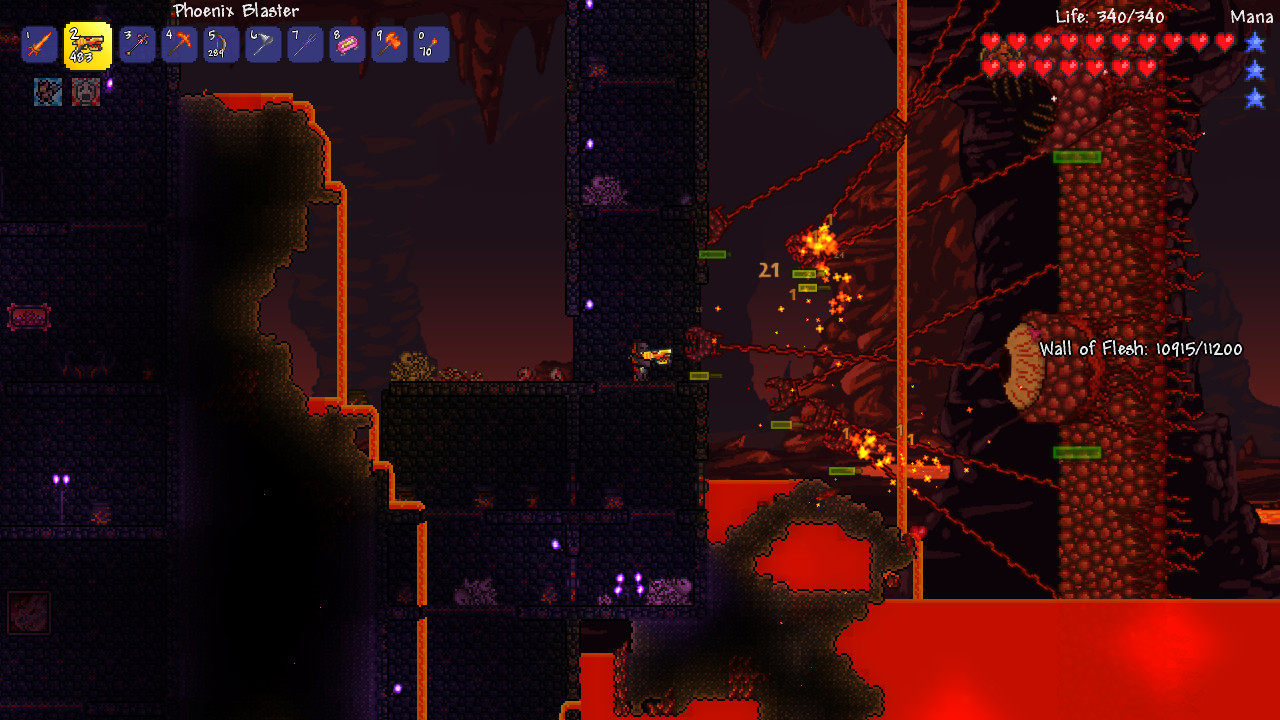
Terraria's world layers downward from a familiar surface into progressively more hostile and rewarding environments.
Surface layer: Forests, deserts, snow biomes, jungles, and ocean edges. Manageable during the day; increasingly dangerous at night. The Corruption/Crimson and Hallow biomes spread slowly across the surface, changing which enemies and drops are available in their zones.
Underground: The cave systems beneath the surface, filled with ore veins, underground cabins with random loot, spider nests, underground jungles, mushroom biomes, and the ever-present threat of getting lost and running out of torches somewhere far from home.
Cavern layer: Deeper. Stronger enemies. Rarer materials. Lava becomes a persistent hazard rather than an occasional annoyance.
The Underworld: The lowest layer, a fire-and-shadow realm presided over by the Wall of Flesh — the pre-Hardmode final boss. Killing it triggers a global event that permanently transforms the world into Hardmode, spreading Corruption/Crimson aggressively, spawning new enemy types at the surface, and unlocking three new ore tiers that require new gear to access.
The game does not hand you a map of what's down there. Discovery is the mechanic.
Bosses: 20+ Encounters That Actually Matter
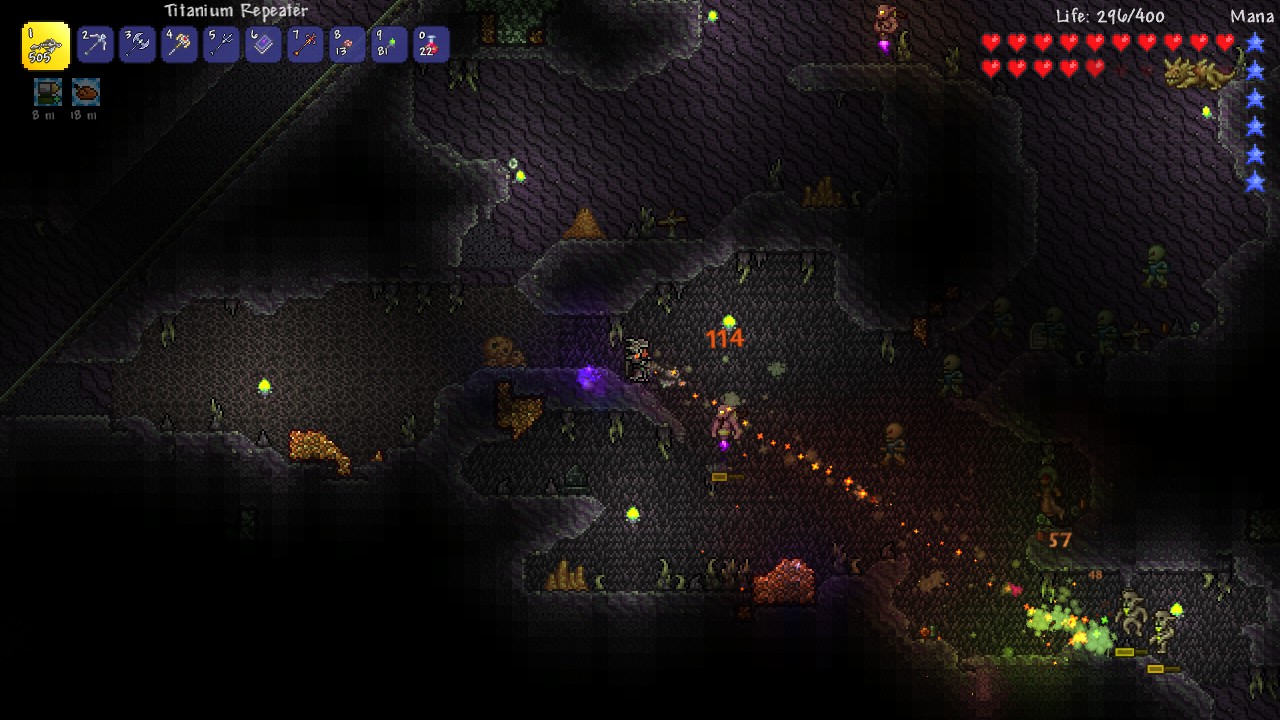
Terraria has over 20 boss encounters, and they function as the game's progression gates. You can't access certain materials or NPCs until specific bosses are defeated; the world's loot tables change after each major kill.
Pre-Hardmode bosses (defeat these to unlock Hardmode):
- ▶Eye of Cthulhu: The intro boss, often spawning naturally on your first few nights
- ▶Eater of Worlds / Brain of Cthulhu: World-type determines which you get; first real gear check
- ▶Skeletron: Guards the dungeon, which contains some of the best pre-Hardmode loot
- ▶Queen Bee: Optional but rewarding; spawns in Underground Jungle bee hives
- ▶Wall of Flesh: The Hardmode threshold. A moving wall that chases you across the Underworld. You fight it by walking backwards and shooting.
Hardmode bosses (fought in loose order after Hardmode triggers):
- ▶The Mechanical Three (The Destroyer, The Twins, Skeletron Prime): Three separate fights, all required for Plantera access
- ▶Plantera: A turning point that changes what enemies spawn in the dungeon
- ▶Golem, Duke Fishron, Lunatic Cultist: Escalating difficulty toward the endgame
- ▶Moon Lord: The final boss, whose defeat provides the best gear in the game
Every boss fight rewards exploration and preparation. Arena construction (a flat platform with adequate spacing, campfire and heart lanterns for regeneration, proper gearing for your class) separates the players who bounce off Hardmode from those who clear it.
Crafting and Building: 5,000 Items, Zero Excuses for Boredom
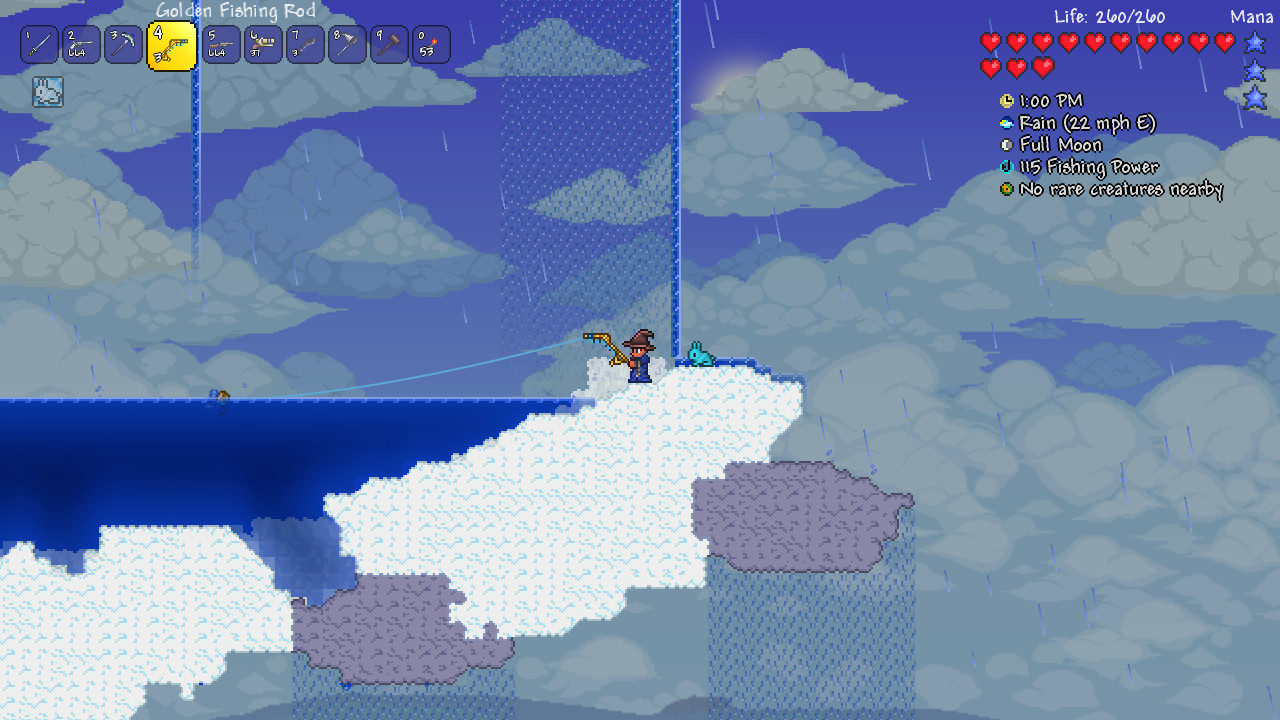
Terraria has over 5,000 items and 500+ crafting recipes. Early-game crafting is simple material conversion; late-game crafting involves combining materials from multiple biomes, boss drops, and crafting stations chained together.
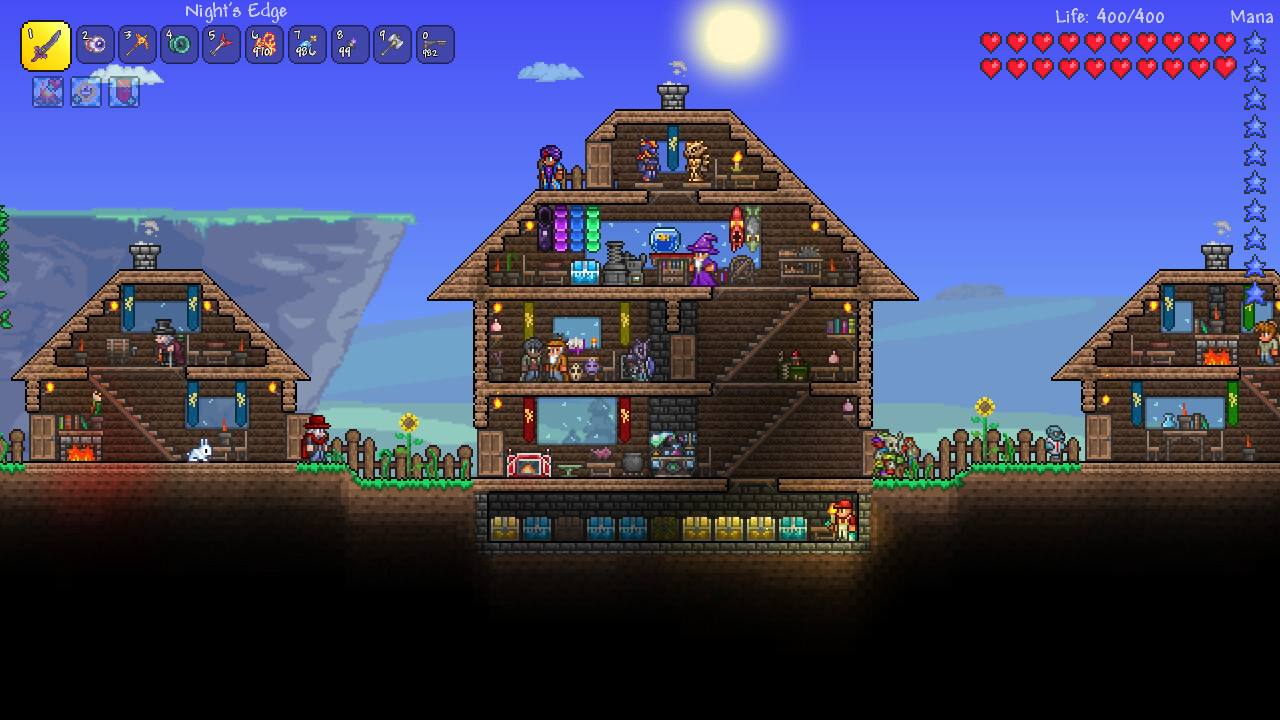
The NPC system rewards building. As you progress, over 25 unique NPCs unlock and move into your world — provided you've built them suitable housing. Each NPC sells unique items and services; Patch 8 added a Happiness mechanic where NPCs placed in their preferred biomes with preferred neighbors provide discounts and bonus items.
Building goes as far as you want to take it. The Steam Workshop has architectural projects that required hundreds of hours to complete: to-scale recreations of real-world buildings, functional machines wired together with Terraria's electrical wire system, entire towns with thematic coherence across dozens of structures.
Class System: Four Completely Different Games in One
Terraria has no formal class selection screen. Instead, gear shapes your playstyle. The four recognized paths:
- ▶Melee: Close-range weapons (swords, spears, flails, yo-yos) with high defense via armor. Straightforward and reliable; the safest introduction to Hardmode
- ▶Ranged: Bows, guns, and launchers with ammo management. High sustained damage from a safe distance; strong for most boss fights
- ▶Magic: Mana-limited spellcasting with massive burst potential. Glass cannon; dangerous if you run out of mana mid-boss
- ▶Summoner: Minion and whip-based combat; your summons fight while you focus on positioning. The most complex class to learn and the most satisfying when it works
Each class has a complete gear progression from copper through endgame, and each one changes how boss encounters play out. Hardmode with a Summoner feels like a different game than Hardmode with a Melee build. Running all four in sequence or parallel is a large part of Terraria's replay value.
Re-Logic and the 13-Year Free Update Record
In 2020, Re-Logic released Journey's End (version 1.4) with an announcement that it was the game's final major content update. It added new bosses, a full Journey Mode (a sandbox-oriented mode with item research and duplication), new NPCs, and the Aether biome. It was a complete, excellent game.
In 2022, Re-Logic released Labor of Love (version 1.4.4) — another large free content update for the game they had declared finished. New items, new mechanics, rebalancing, quality-of-life improvements.
The pattern: Re-Logic finds more to add. They add it. They charge nothing. Since 2011, Terraria has received more free content than most games ship in a paid season pass cycle. The studio has released no paid DLC, no season passes, no microtransactions. The $9.99 you spend today buys everything that's been released in 13 years of updates.
Mods: The Game Gets Bigger
Terraria's mod ecosystem runs on tModLoader, an officially supported free launcher available as a separate Steam app. Installation is one click per mod.
Popular mods:
- ▶Calamity Mod: 50+ new bosses, two new biomes, post-Moon Lord progression that effectively doubles the game's length. Broadly considered the gold standard of Terraria mods
- ▶Thorium Mod: Adds Bard and Healer classes plus hundreds of items; integrates seamlessly with vanilla content
- ▶Overhaul: Completely revamps combat physics, movement, and visual effects for a more modern feel
With mods, Terraria's effective content volume is essentially unlimited.
Official Korean Language Support
Terraria supports official Korean through Steam's language settings. All item descriptions, NPC dialogue, crafting tooltips, and UI elements are translated. Korean support was fully integrated in the 1.4 Journey's End update.
Note that some community guides use English item names from before the localization became standard — consulting the Terraria Wiki alongside the Korean in-game text helps reconcile any naming discrepancies.
Steam Community: What Players Actually Say
Terraria holds 98% positive across 600,000+ reviews — one of the highest approval ratings in Steam's library. Representative comments:
- ▶"I've spent 3,000 hours in this game and paid $9.99 for it. No game has ever come close to this value."
- ▶"Started as a Minecraft alternative recommendation. Turns out it's a completely different game. Better bosses, better progression, more satisfying gear acquisition."
- ▶"Beat the final boss, immediately started a new world with a different class. This has happened seven times."
- ▶"Re-Logic updates a 12-year-old game for free while larger studios charge $40 for DLC that breaks on launch. The industry should be embarrassed."
Tips for New Players
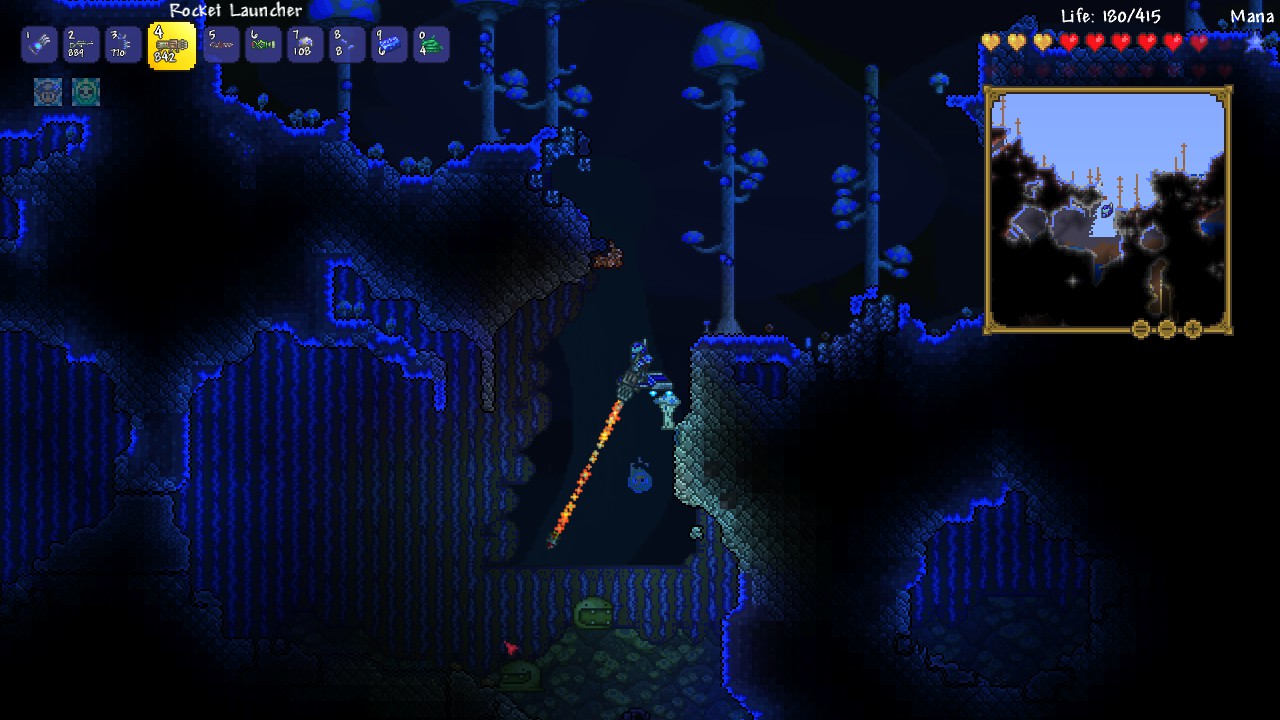
Terraria is deliberately light on tutorials. The Guide NPC tells you what you can craft with materials you're holding — use this constantly in early game.
- 1Build homes for NPCs immediately: Each NPC needs a valid room (walls, floor, ceiling, a door, a light source, a chair, a table). Getting the Merchant and Nurse settled early changes what's available to you
- 2Mine horizontally before vertically: Tunnel through the shallow underground to find Heart Crystals (permanent +20 health per use, up to 400 max). Fight bosses only after health is maxed for that tier
- 3Prepare arenas before boss fights: A flat 300-block platform with campfires and heart lanterns placed every 30 blocks drastically improves survivability for every boss
- 4The Terraria Wiki is your friend: This is not a cop-out — the game has 5,000 items and they aren't all obvious. Wiki use is the community consensus
- 5Enter Hardmode with Molten Armor: The best pre-Hardmode melee set provides enough defense to survive early Hardmode enemies while you locate the new ore tiers
- 6The Hallow is not dangerous: Despite looking threatening, the Hallow biome isn't actually more hazardous than regular surface Hardmode. Corruption/Crimson is the active threat
Verdict: The Best $10 in Gaming History
No game has demonstrated the relationship between price paid and hours of genuine content like Terraria. At $9.99 — frequently on sale for $2.50 — you receive a game that a substantial portion of its player base has put over 1,000 hours into. The mechanics are tight, the progression is rewarding, the boss design is consistently clever, and Re-Logic's 13-year commitment to free updates is an act of sustained generosity that the gaming industry should study.
Play it in the order the world encourages: surface, underground, bosses, Hardmode. Let yourself get lost. Die to the Wall of Flesh the first time and understand why. Then beat it.